


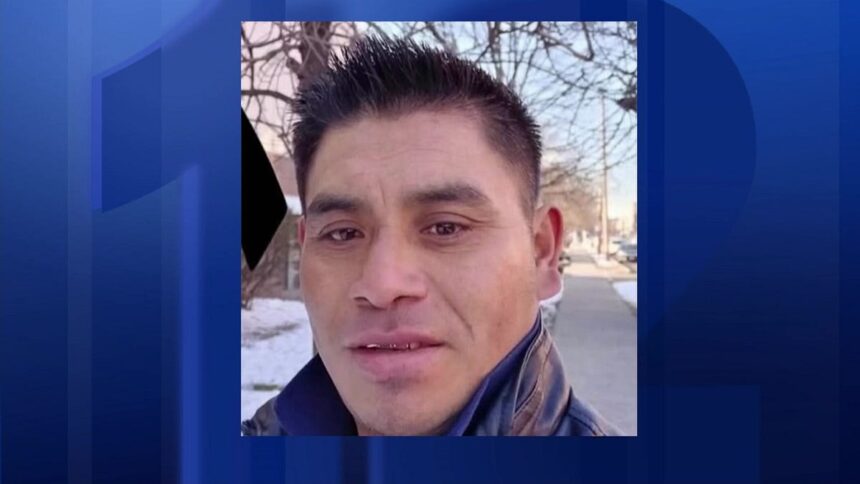
On July 18, Jose Chajon-Raxon, an Guatemalan immigrant, sat in New Jersey’s Delaney Hall Detention Center after being arrested by ICE agents. On July 19, he was hospitalized after experiencing “seizure-like activity.” On July 22, he disappeared after being released from the hospital.
On August 12, ICE publicly confirmed he was dead. The agency did not elaborate further but stated that “ICE is not responsible when an individual passes away weeks after leaving their custody.” Department of Homeland Secretary Markwayne Mullin said Chajon-Raxon had “no medical records of cardiac problems” but then admitted he was given hypertension medication. The story isn’t adding up for lawmakers, who are joining a growing crowd of Americans demanding the center be shut down.
Is this the safety and steady hand Mullin promised the American people?
ICE atrocities dominated headlines and the national consciousness at the onset of 2026. Then-DHS Secretary Kristi Noem’s reign of terror turned some of Trump’s staunchest supporters against him, costing the administration control of public narrative. It didn’t matter that she was executing orders — she was making Trump look bad. Noem was scapegoated and pushed out.
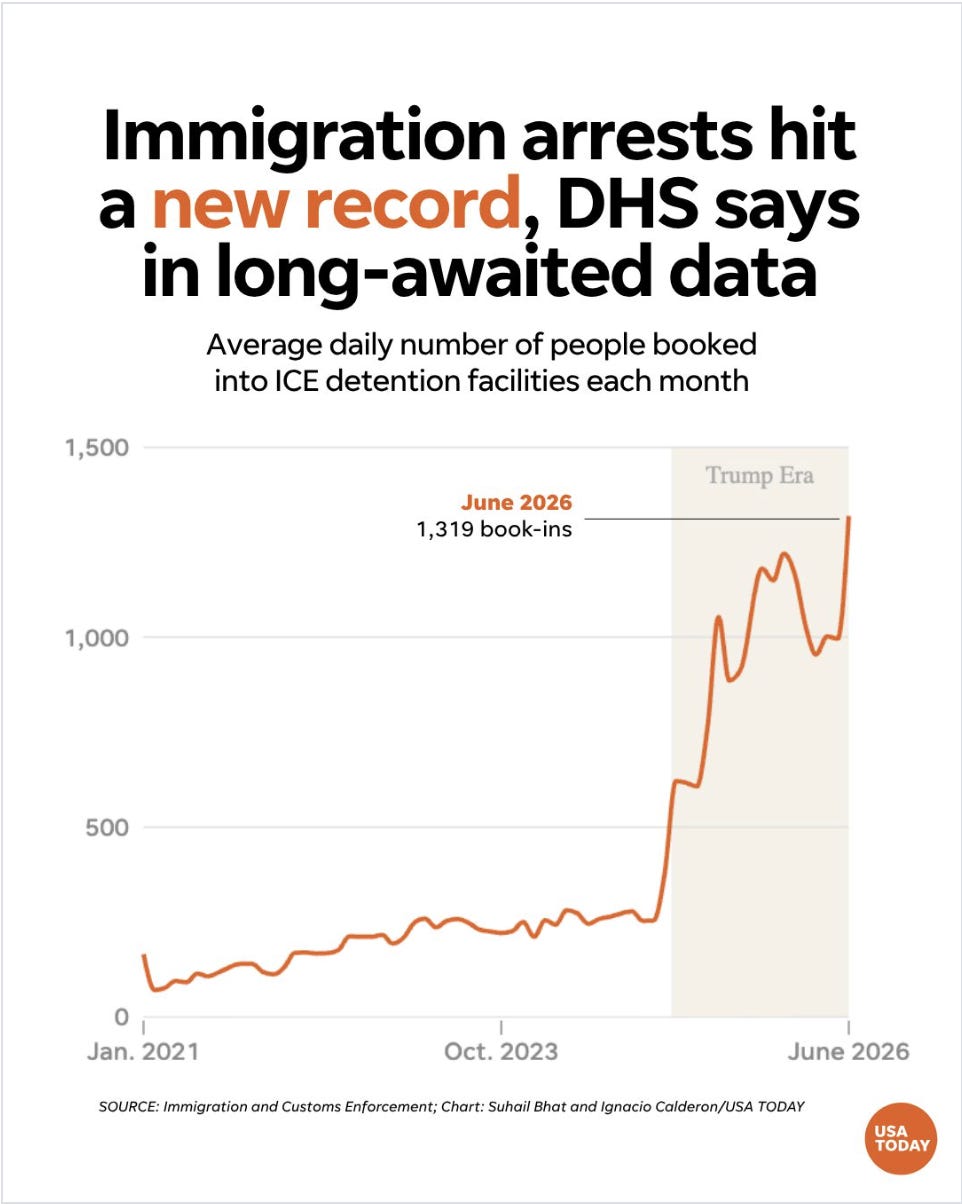
Mullin, her replacement, pitched himself as a steady hand. He pursued a low-profile strategy to keep the department out of headlines. At first, it worked. He scrapped detention warehouse plans in favor of bulldozing public lands for the border wall and stayed away from immigration operations. Arrest rates skyrocketed by 32 percent to a daily arrest average of 1,300 people with little resistance or media attention. The noise has quieted down so much that border czar Tom Homan felt emboldened to admit on Fox News that “about half” of those arrested weren’t even criminals.
The day after Homan’s remarks, ICE shot and killed Lorenzo Salgado Araujo in Houston, slamming the agency back into the limelight. Johan Sebastián Durán Guerrero was killed in Maine less than a week later, and a Florida man days after that. Public outcry, including many protests, and congressional pressure cornered DHS into suspending most ICE vehicle stops — for one day. Trump blasted the reversal, forcing Mullin to reinstate the vehicle stops.
We know now that legal status is not a safeguard. ICE has amplified airport round-up operations, snatching immigrants at domestic flight gates, including people awaiting green cards or holding work permits. This month, ICE arrested Argentinian Miami United soccer player Matias Alejandro Pourrain, even though he is seeking asylum and has a work permit.
Outside an ICE field office in Ohio, Monsanto Malay, a temporary protected status (TPS) holder from Haiti, cried as ICE agents snapped a monitor around his ankle and confiscated his passport. Haiti is one of the twelve countries — active war zones and crisis states — Trump recently removed from the TPS program. Former TPS holders are now treated like criminals despite “coming in legally.”
Children are not spared. Despite legal obligations, the Trump administration refused last month to renew funding for lawyers representing unaccompanied immigrant children. Programs across the country are rolling back legal aid for unaccompanied children. Without legal aid, approximately 200,000 of these children may be forced to represent themselves in court. Children as young as 2 could now face a judge alone in a federal courtroom.
Meanwhile, Our Rescue — a polemical “anti-human trafficking” organization founded by Tim Ballard, who exited the organization amid sexual misconduct allegations he denies — was awarded a $158 million no-bid contract to represent unaccompanied minors. Our Rescue, now headed by former DHS executive director Derek Benner, has no documented experience doing this work. A VICE News investigation before Ballard left identified a pattern of “distorting and exaggerating” the group’s roles in law enforcement operations.
And just last week, an ICE agent stuck a gun in a U.S. citizen’s face over name-calling.
Virginia resident Carolina Molina called these agents a “ho” as she drove past them, confirmed by footage from her dashcam. An ICE spokesperson claimed Molina “then attempted to harm officers by weaponizing her vehicle against them.” No publicly available evidence corroborates this claim.
What happened to Molina was not an isolated incident. But we might not know how many similar events are happening across the country. FBI memos circulated in July stated that the bureau would no longer investigate ICE confrontations. With federal oversight absent, the agency is free to supercharge its already hostile arsenal.
And supercharge it is: ICE is set to acquire upward of $20 million worth of electrified gloves for agent use. The G.L.O.V.E, or Generated Low Output Voltage Emitter, is marketed as an “invisible partner,” “Force Multiplier,” and “The New Protocol in Peace Keeping” by its maker, Compliant Technologies.
The gloves allow ICE agents to “deliver a pain stimulus” to an individual to “gain compliance.” Advertised publicly as “nonlethal,” the Compliant Technologies manual states that glove deployment “may cause or contribute to death or serious injury.” Moreover, the company recommends the shock devices not be used on vulnerable populations, such as children and people with severe disabilities, and warns that the shocks may contribute to physiological changes that can cause sudden death. Can the public trust agents to use these gloves properly? As Molina proved, anything can put you in ICE’s line of fire.
And, of course, ICE detention centers continue to rattle the consciousness of our country. Confrontations erupted last year at Delaney Hall Detention Center in New Jersey over accusations of inhumane conditions and abuse by guards. Now, Delaney Hall is back in hot water after detainee Chajon-Raxon’s death. His was at least the third medical-related death of a detainee at Delaney Hall in the past year. As New Jersey’s congressional Democrats wrote in a letter to DHS on August 6: “at this point, the question is no longer whether ICE knows what is happening inside Delaney Hall.”

The Contrarian’s Tom Dickinson reported on a disturbing and frank assessment by Human Rights Watch and the ACLU of Camp East Montana, detailing horrifying abuses, including disappearances, inhumane treatment, excessive use of force, and life-threatening medical neglect.
Clearly, Mullin has failed to keep his department out of the headlines. As Rep. Seth Magaziner (D-RI) said on the House floor last month, “you’re back on the goddamn front page now.” The American people are increasingly disillusioned with the Trump administration and ICE specifically. Protests are surging in response to the constant influx of tragedy. The outcry is so loud that resolutions on abolishing ICE are beginning to break through party committees.
Maybe that is why Mullin is appearing on Fox News, asserting that “ICE didn’t make these laws…. We’re simply enforcing the laws that Congress passed. If Congress doesn’t like that, then they have the ability to change it.” Following orders? Sounds familiar.
It’s unlikely that reining in ICE was Mullins’s goal, considering his boss’s marching orders. However, it’s also clear that if the Trump administration really wants ICE out of headlines, it needs to stop these Gestapo-style operations and heed demands for oversight, accountability, and reform. Or, maybe, just retire the agency altogether.
Ciera Stone is a reporter and editorial associate at The Contrarian.