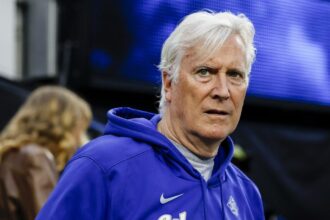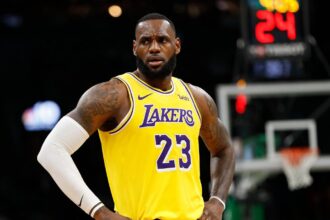


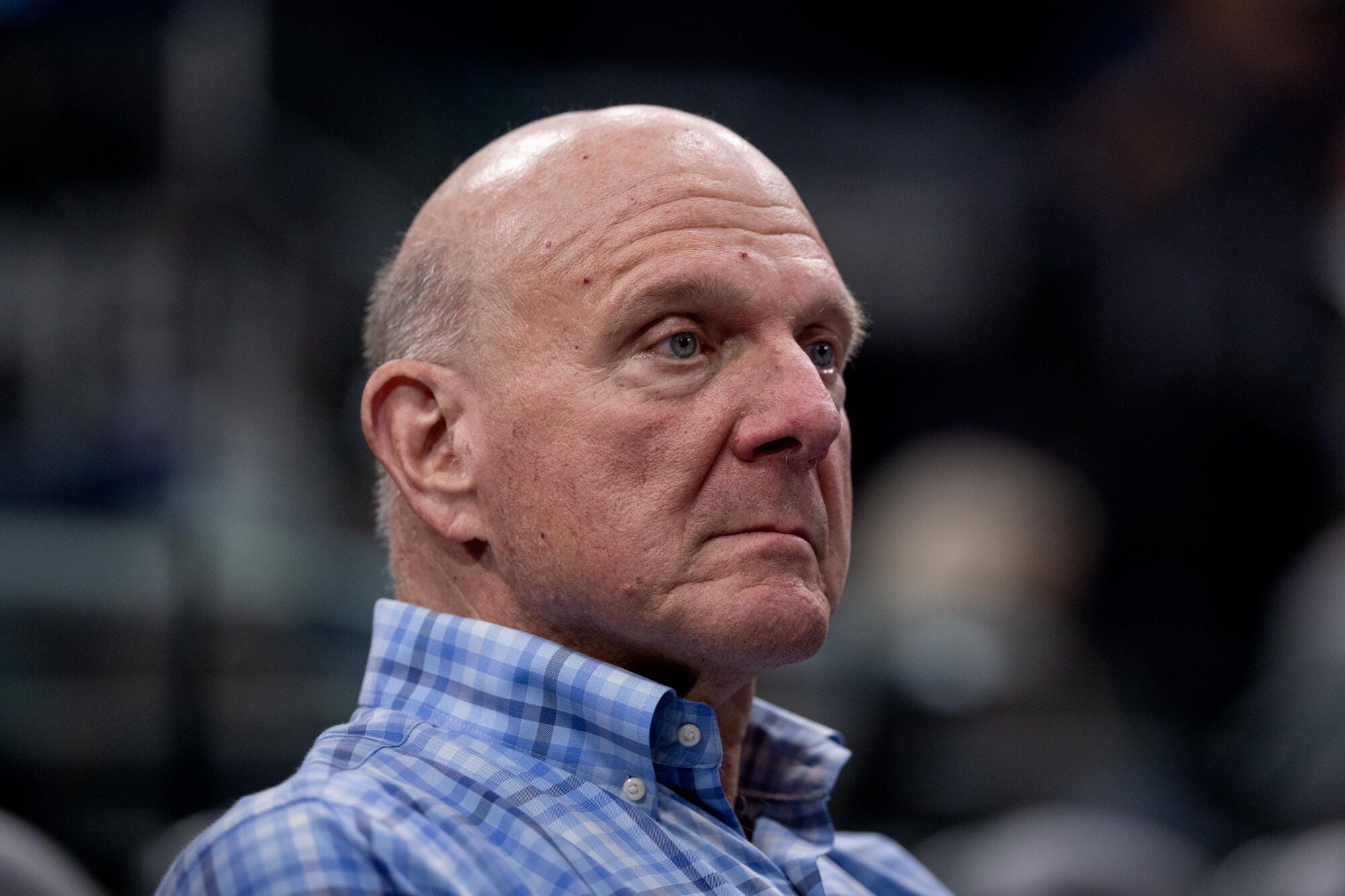
Let’s cut to the chase. The NBA has finished its investigation into the Clippers salary cap circumvention, and the penalties are severe. Five first-round draft picks are gone, and the team faces a $30 million fine. Clippers owner Steve Ballmer is also suspended from all league activities for one year, meaning he can’t enter the $2 billion arena he just built for at least 12 months. Kawhi Leonard must pay the league $700,000, and several Clippers executives have also been suspended.
The Clippers are calling the investigation a “witch hunt” and have announced plans to fight it. We’ll talk more about that later, but I spent last night and this morning reading through the entire 36-page investigation report. You can read the report here, but instead of writing one of our typical articles breaking down the details, I’ve summarized some of the report’s most important findings below.
-
The NBA’s law firm, Wachtell, Lipton, Rosen & Katz, conducted 73 interviews with 60 people, including Clippers owner Steve Ballmer, President of Business Operations Gillian Zucker, and President of Basketball Operations Lawrence Frank. Investigators also reviewed 200,000 pages of documents.
-
The Clippers hired outside counsel to represent the team during the NBA’s investigation, while lawyers for the players association represented Leonard.
-
Wachtell Lipton says that during Kawhi Leonard’s free agency in 2019, Leonard’s uncle and business advisor, Dennis Robertson, made numerous requests to the Clippers and other teams for benefits that were prohibited under the CBA, including equity in teams, housing, access to private transportation, and off-court income such as endorsement deals.
-
Within months of signing with the Clippers, Dennis Robertson told Steve Ballmer, Gillian Zucker, and Lawrence Frank that Kawhi expected the team to facilitate endorsement deals worth $10 million per year.
-
In April 2020, Dennis Robertson complained to Steve Ballmer and Lawrence Frank about what he perceived to be a lack of effort by the Clippers to facilitate off-court business opportunities for Kawhi, saying “I [Dennis Robertson] can’t [sic] wait on [Ms. Zucker] – I have to get paid.” Steve Ballmer then responded to that complaint by telling Dennis Robertson that he and Clippers personnel were all “collective workers to try to help [Kawhi Leonard] achieve his financial goals,” and Gillian Zucker assured Dennis Robertson that Steve Ballmer would “follow through on his promise.” As a follow-up, Dennis Robertson requested a “3-6 month plan” for more lucrative introductions from the Clippers, a list of “5-6 companies” in the “pipeline” for “potential introductions,” and more frequent communication from Zucker.
-
Wachtell Lipton says it found evidence that during a six-day span in early June 2020 — within the timelines demanded by Dennis Robertson — Gillian Zucker made a series of email introductions connecting Robertson to executives at three companies with which the Clippers were in active conversations about potential business relationships: Boingo (a provider of wireless and other communications networks), Daktronics (a manufacturer of scoreboards and video displays), and Lockton (an insurance brokerage).
-
In each email, Gillian Zucker wrote that these introductions were made in response to a request from the relevant company for an introduction to Kawhi. But Wachtell Lipton says it found no evidence that those requests were ever made, and it believes Zucker said that only to create the appearance that the Clippers were complying with circumvention rules, as investigators believe it would be highly unlikely three separate companies all asked to be introduced to Kawhi Leonard within six days of each other, in the midst of the COVID-19 pandemic, and while the NBA season was suspended.
-
During the six-day period in which these introduction emails went out, Wachtell Lipton says a limited liability company (LLC) called “KL2 LBS LLC” was created. This entity, which includes Dennis Robertson and Kawhi Leonard as members, later became the counterparty to Kawhi’s endorsement deals with Boingo, Daktronics, and Lockton. Wachtell Lipton says it is “significant” that Robertson was already taking legal steps, anticipating that Kawhi would be paid, because the LLC was created within 1-2 days of the initial introduction and before any negotiation could reasonably occur.
-
In early July 2020, within a month of Gillian Zucker connecting Dennis Robertson with Boingo, Daktronics, and Lockton, Kawhi Leonard signed multi-year, multi-million dollar endorsement agreements with two of the companies on the same day. By the end of August 2020, he had signed a similar endorsement deal with the third company. And by early September 2020, Leonard had received payments from each of the three agreements.
-
In addition to each of the three endorsement agreements being negotiated and finalized in an “unusually short amount of time,” Wachtell Lipton says the three agreements shared several other peculiar and noteworthy characteristics:
-
Each deal was signed during the COVID-19 pandemic, when companies rarely signed such agreements, particularly with endorsers with whom they had no existing relationship.
-
Each agreement was signed by a company that had never before (and has never since) signed an endorsement agreement of remotely the same financial magnitude as the one it entered into with Kawhi, and none of the companies has ever signed any other athlete endorsers of Kawhi’s caliber.
-
Each agreement imposed minimal performance obligations on Kawhi Leonard relative to the amount he was paid.
-
None of these agreements were publicly announced, which would defeat the purpose of signing a multi-million dollar athlete endorsement deal.
-
Investigators couldn’t find evidence that the companies exercised their rights in a meaningful way to activate their endorsement deals with Kawhi. They found only that Kawhi visited a military base on one occasion under one agreement and signed memorabilia under another.
-
-
Boingo, Daktronics, and Lockton paid Kawhi $18 million, and Kawhi received all of that money by August 2021, one year after the introductions.
-
Wachtell Lipton says none of these three companies — Boingo, Daktronics, and Lockton — had commercial agreements with the Clippers when the initial introductions were made, but all three were in active discussions to provide business services to the team or its arena. Then, within weeks of the introductions, either before or on the same day as the companies signed endorsement deals with Kawhi, all three companies entered into a multi-million dollar consulting agreement with the Clippers. Two of the companies received almost the entirety of their consulting fees up front — in payments of $10 million each — before entering into endorsement deals with Kawhi, and the third company received its first annual consulting fee of $2 million one day after making its first payment to Kawhi under its endorsement deal.
-
Wachtell Lipton found that Gillian Zucker had personal relationships at two of the companies that Kawhi signed endorsement deals with. Her husband was chair of the board of directors at one company, and she had a longstanding relationship with the company president at another, the same person who signed off on the company’s endorsement deal with Kawhi.
-
In the spring of 2020, Wachtell Lipton says Daktronics put together a proposal to win a lucrative contract to supply digital scoreboard and signage technology at the Intuit Dome. The Clippers agreed to go with Daktronics as its partner, but the team wanted Daktronics to agree to a “spend back” arrangement in which Daktronics would provide some business back to the Clippers. Zucker then suggested to a Daktronics executive that this “spend back” could be accomplished through an endorsement deal with Kawhi.
-
During a phone call in May 2020, a senior Clippers executive told a senior executive at Daktronics that the team expected the company to sign an endorsement deal with Kawhi worth $3 million per year for two years.
-
Before the first year of the Daktronics-Leonard deal ended, the same senior Clippers executive told Daktronics that because the team had spent more than it anticipated with the company, Daktronics should increase the value of its endorsement deal with Leonard by $2 million. Daktronics agreed.
-
A few weeks after Kawhi re-signed with the Clippers in 2021, Steve Ballmer and the Clippers entered into a series of agreements with Aspiration, the fake tree-planting company that Pablo Torre initially exposed. Wachtell Lipton says Aspiration agreed to pay $382.5 million over 23 years for a patch on the Clippers jersey and the title of founding arena partner at the Intuit Dome. There was also a 23-year, $72 million agreement for Aspiration to provide sustainability services to the Intuit Dome, and Steve Ballmer even agreed to make a $50 million personal investment in Aspiration.
-
One day after meeting with Aspiration co-founder Joe Sanberg, Gillian Zucker reached out to a business agent to help with the deal. Within minutes of speaking with Zucker, that agent emailed internal colleagues. The subject line read “Aspiration and Kawhi,” and the email said, “[Mr. Sanberg] is making an offer to Kawhi to be a spokesperson for 5 million cash plus 7 million in stock per year for 4 years as long as he is with the Clippers. Can someone please come up with a wish list [Mr. Sanberg] should ask for from [Mr. Leonard]? [. . .] [Mr. Sanberg] doesn’t really know what to ask for.”
-
The business agent’s colleagues drafted a term sheet for Aspiration and Kawhi. The agent then emailed the term sheet to Gillian Zucker and wrote, “Let me know your thoughts on this.” After speaking with Zucker, the agent sent revisions to his team based on her input. The agent then sent the revised term sheet to Aspiration; Zucker scheduled a phone call with Dennis Robertson and, the next day, sent a formal introduction email to Dennis Robertson and Aspiration’s Sanberg. Investigators allege that while the email was written to appear responsive to Aspiration’s request in exploring an endorsement deal with Kawhi, a formal term sheet was already put together with input from the Clippers before the introduction was ever made.
-
Wachtell Lipton says the signed endorsement agreement between Kawhi Leonard and Aspiration was worth $7 million in cash and $5 million in equity per year for four years — a total of $48 million.
-
When Joe Sanberg brought the deal to his C-suite executives, everyone was confused. One wrote “I have no idea why we’d do this,” while another wrote “this is not a good investment of our capital…It’s $48M over 4 years for Kawhi, who is not a big name…not sure why we would make such a commitment considering we are already paying a huge sponsorship fee to the Clippers.”
-
When these concerns were raised to Sanberg, he told the Aspiration executives that “the Clippers are asking us to do this with Kawhi Leonard” and that the team would provide additional business to Aspiration to help offset the financial impact. In an email exchange among Aspiration’s CEO, CFO, and general counsel, one wrote, “[Mr. Sanberg said] that the Clippers are promising to increase the amount they pay us per quarter in line with what we pay this guy [i.e., Mr. Leonard].” Another responded: “Thanks for verifying. . . . We should be fine if it’s cashflow neutral.”
-
The Clippers later agreed to a sustainability-related deal with Aspiration that would “zero out” the Forum’s historical carbon emissions, but no analysis or calculation was completed to determine those emissions. Instead, the Clippers just agreed to spend $7 million annually with Aspiration — the same amount as the cash portion of the Leonard-Aspiration endorsement deal. The Clippers Chief Commercial Officer and Chief Financial Officer were concerned, writing over email that they “never wanted this deal” and that there were “red flags,” but that they were just “doing what they were told.”
-
As the Clippers moved slowly to finalize the sustainability deal, which would have offset Kawhi’s endorsement deal, Sanberg said he would tear up the Clippers contract, do nothing with Kawhi, go into litigation, and tell Dennis and Kawhi why they aren’t doing a deal with them. Clippers executives communicated this threat, and Steve Ballmer approved the deal weeks later.
-
During the investigation, Wachtell Lipton also found hundreds of instances in which the Clippers paid for personal air and ground travel, accommodations, gifts, and tickets for Kawhi without properly deducting those expenditures from Kawhi’s pay (as required by the CBA).
In summary, Wachtell Lipton found that the LA Clippers and Kawhi Leonard violated the salary cap circumvention rules contained in the league’s collective bargaining agreement. The Clippers initiated off-court income opportunities for Kawhi and four companies doing business with the team — Aspiration Partners, Boingo Wireless, Daktronics, and Lockton Insurance — and those companies paid Kawhi tens of millions of dollars without requiring nearly any work in return.
The Clippers will fight this. Ballmer released an aggressive statement last night saying that he personally spent $50 million on the NBA’s investigation. He says that the team produced more than 30,000 documents and provided more than 20 witnesses who sat for 30 interviews. Ballmer called the claim “baseless” and said the investigation was “designed to substantiate a predetermined outcome.” He also said these introductions are commonplace in the league, and if the NBA spent $50 million investigating other teams, they would find the same thing.
But since the NBA’s ruling is final — there is no formal appeal or arbitration process available to the Clippers with the league — Ballmer’s only option to fight the punishment is to bring it to court. We’ll see if he decides to go that route.
If you enjoyed today’s newsletter, share it with a friend.