

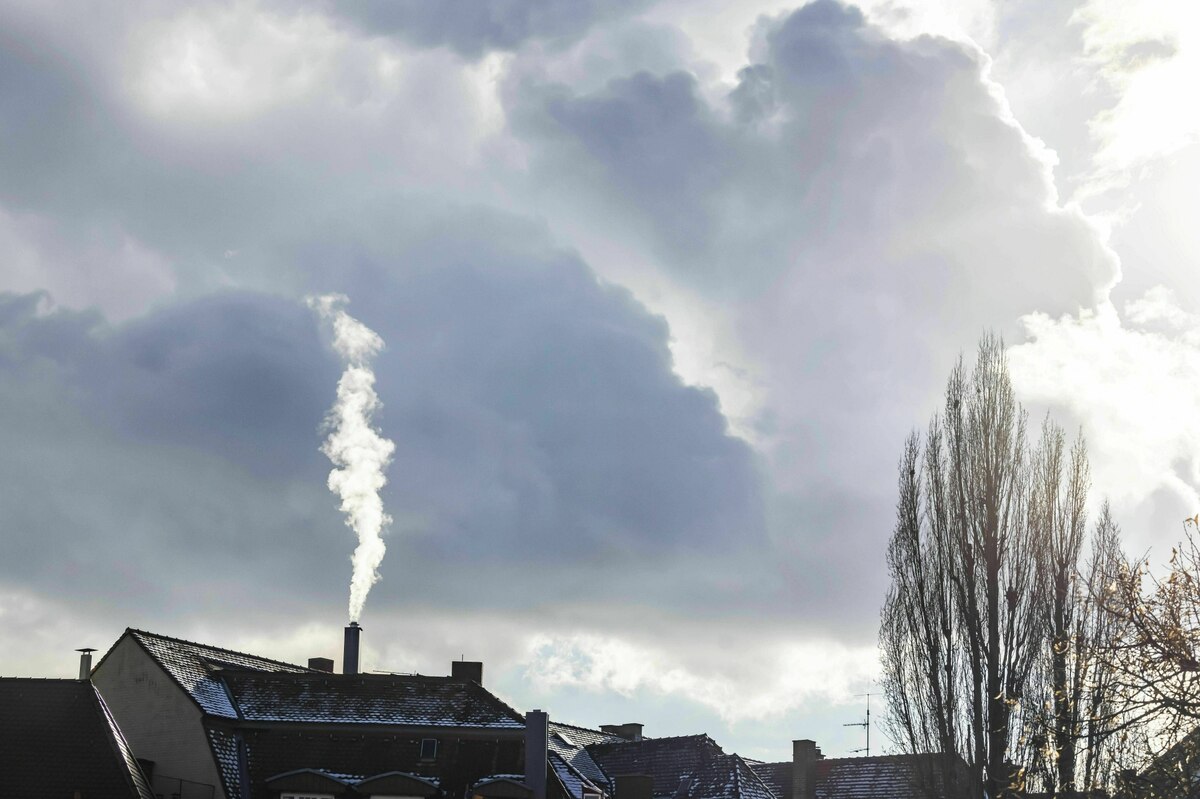
The air over large parts of Germany is currently strong Fine dust charged. At the weekend were Data from the Federal Environment Agency According to this, fine dust limit values were exceeded at numerous measuring stations. This was the case in Berlin, Thuringia, Saxony, the south of Schleswig-Holstein, Mecklenburg-Western Pomerania and Hamburg, among others. The rainfall has reduced the burden again in many places. However, it is still high, especially in the west.
Fine dust pollution had been building up since last week. The reason for this was cold days with little wind. Added to this were man-made fine dust emissions. The Federal Environment Agency says that a fifth of the fine dust is caused by traffic and another fifth by wood heaters that private households use to keep their homes warm. In addition, further emissions arise from energy production and industry.
“The emission of fine dust in Germany is far too high and means that the fine dust pollution in large parts of Germany is regularly in the health-damaging range,” says Robin Kulpa, who works on traffic and air pollution control at Deutsche Umwelthilfe (DUH). The association has filed a lawsuit against the federal government’s national air pollution control program. Kulpa said he expects the Federal Administrative Court’s decision this year.
Fine dust is made up of different particles. These include pollen. Traffic produces particulate matter through, among other things, tire and brake wear from motor vehicles. In addition, wood heating systems are responsible for the particularly high load of the past few days.
Dementia, asthma, diabetes
Fine dust poses health risks, especially for people with previous illnesses, the elderly and children. The particles can travel throughout the body, even into the brain. There they can promote dementia or diseases such as asthma elsewhere. Fine dust can promote inflammation and also affects the cardiovascular system. It can increase the risk of high blood pressure or type II diabetes.
Fine dust also affects the environment. Soot particles absorb heat and, according to the Intergovernmental Panel on Climate Change, heat the atmosphere many times more than CO2. It could also reduce crop yields, according to a report by the World Weather Organization.
“We have to move away from burning fossil fuels. We are also critical of heating with wood as a renewable alternative, because it is the largest source of health-damaging fine dust and soot particles in Europe,” says Kulpa.
Fine dust pollution in Germany has fallen continuously in recent years. According to the Federal Environment Agency, the legal limit values are being met. Maria Jung, research associate at the Center for Planetary Health Policy (CPHP), works on air quality in Germany. She says that Germany is complying with its limit values - but only nationwide since 2024 and is also favored by weather conditions with low fine dust levels.
Germany must do more
The European Union introduced new limits two years ago enshrined in a guideline. Germany must pass it into national law by the end of the year. It will come into force in 2030. The new limit values require emissions to be halved again. According to Jung, various measures would be conceivable to achieve this, such as a city toll, environmental zones or fewer wood stoves. Free public transport can also help in the short term. Kulpa from the DUH says that particle filters also need to be retrofitted in traffic.
The World Health Organization (WHO) recommends even stricter limit values on a scientific basis. At the Federal Environment Agency, these requirements are currently difficult to implement. Marie Jung from the CPHP says: “The WHO specifications are actually a challenge. But 20 years ago it was thought that the current limit values could not be achieved.” Therefore, these specifications will also be realistic in the future, says Jung. Especially since our European neighbors now also have to regulate their fine dust pollution more closely.
The so-called background pollution plays an important role here. It involves fine dust that is not emitted locally, but blows in from abroad or even from other continents via air movements. The WHO recommends a limit of 10 micrograms of fine dust per cubic meter of air. According to the Federal Environment Agency, background pollution already accounts for half of this. If it falls globally, it will be easier for everyone to reduce particulate matter pollution to a minimum.