

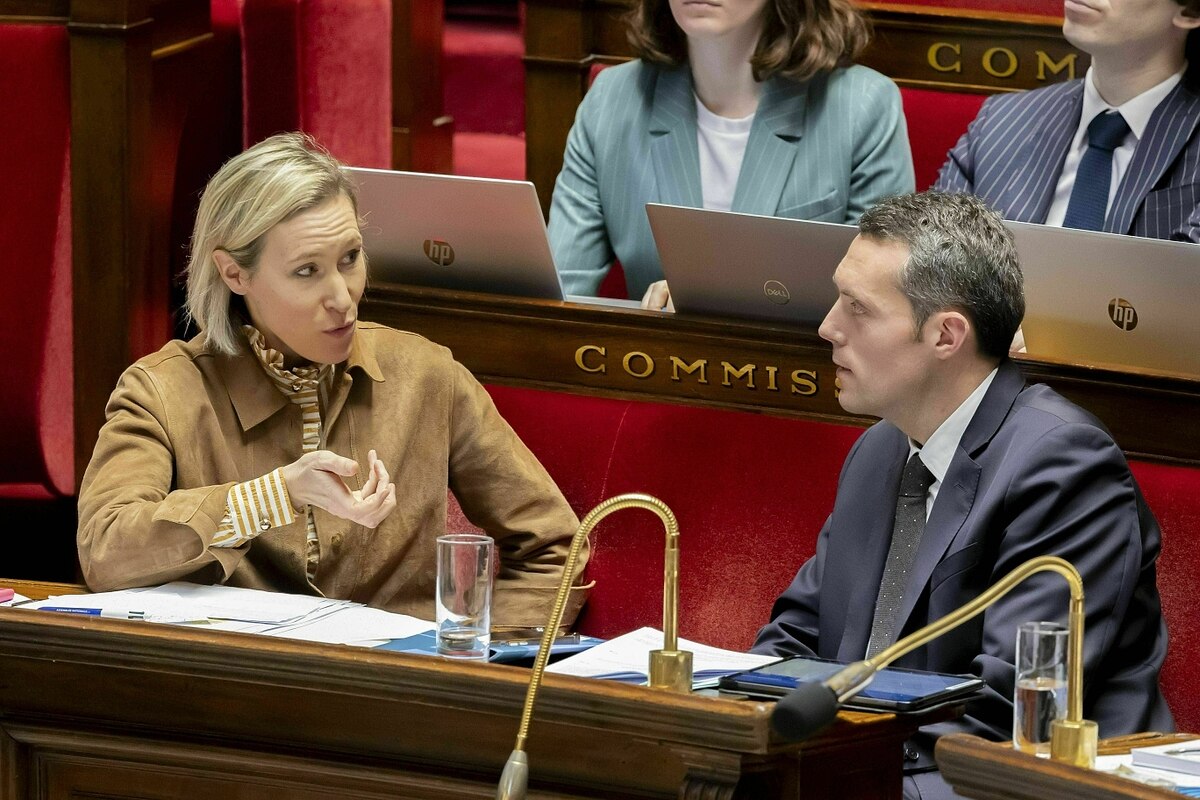
The MPs of the French The National Assembly passed a law in its first reading that would allow young people under 15 years of age to have access to the Networks like Tiktok, Snapchat and Instagram prohibits. In addition, the use of cell phones is now also largely restricted in the upper secondary school level, the Lycée. The bill, which may violate EU rules in certain parts, now goes to the Senate.
The text of the law explicitly stipulates that “access to social network services from online platforms is prohibited for young people under the age of 15”. If possible, the government would like to put such an age restriction on the use of these networks with their (some adult) content into effect from the start of the next school year at the beginning of September. A systematic and “efficient” check of the age of all users, including existing accounts, is scheduled to take effect from January 2027.
The networks and platforms are threatened with very chilling “sanctions” if they do not respect these new rules. Fines could also amount to “up to 6 percent of sales.” It is not entirely clear whether this also includes platforms such as YouTube or web servers. Because of the lack of precision, the French constitutional judges or the EU could declare certain provisions invalid.
Mobile phones already banned in France
Today in France, mobile phones have already been banned from primary and secondary schools. The new law is intended to reduce the current omnipresence of smartphones in lycées. Internal rules are intended to define possible exceptions. In principle, however, cell phones would be banned from lessons, classrooms and school corridors and would only be tolerated outside in the school yard.
“Because our children’s brains cannot be sold. Neither to American platforms nor to Chinese networks,” says French President Emmanuel Macron happily – himself online. He had long been calling for restrictive measures in this area. He is likely to hope that a ban on social media for the protection of minors approved by parliament will improve his otherwise poor domestic political track record.
Not everyone is equally buoyed by the bill, which was approved by the National Assembly late on Monday evening and with a sparse presence of MPs by 130 votes to 21. Members of the left-wing La France insoumise (FI) were particularly against this legal ban. They see these restrictions as overly “simplistic,” a “restriction of freedom” and, as their spokesman Arnaud Saint-Martin said, a “form of digital paternalism.”
Concerns about the benefits and effectiveness as well as additional risks are expressed in the newspaper The Echoes also cybersecurity specialist Yasmina Douadi: “Age verification simply encourages the transfer of millions of personal data to other providers whose security level we do not know.”
In order to better protect young people from addiction, bullying via the Internet and harmful content, she recommends: “It is the state’s responsibility to use campaigns to encourage parents to use the many control instruments available.”
Not very encouraging for French lawmakers are the first experiences of a ban in Australia mentioned in the debate. It shows that young people under 16, who are prohibited from access through age verification, easily circumvent this hurdle or switch to other, previously less well-known networks. However, that didn’t bother the French MPs. They see their proposal as a “first stage”.