

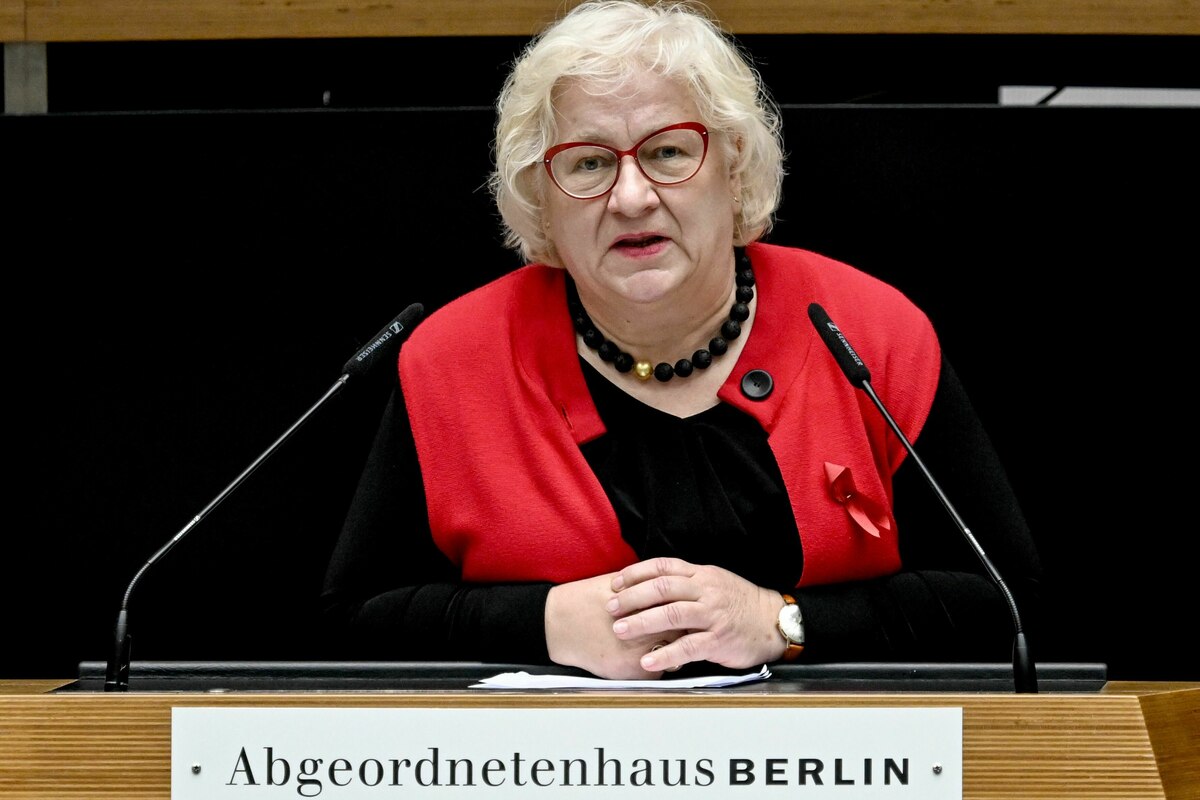
How was funding allocated to combat anti-Semitism? There should be answers in a report to parliament by the summer.
dpa | The committee of inquiry into the allocation of funding for projects against anti-Semitism has begun its work. Its members met for the constituent session in the House of Representatives after being elected on Thursday. In the future, the committee will meet on Fridays of the week in which there is also a plenary session in the House of Representatives, said Left MP and committee chairwoman Manuela Schmidt to the dpa.
“The goal is to submit a report to parliament by the summer,” explained Schmidt. At the first meeting, among other things, the schedule and procedural rules were agreed upon. “We have already submitted the first request for evidence.” This involves requesting files that individual MPs have already inspected.
“This topic in particular is not only important politically, but also for the city of Berlin,” said Schmidt. “How do we want to live with our Jewish neighbors if we can’t even manage to properly allocate funding for such important work?”
It’s about tax money
Schmidt pointed out another aspect: “We decide here about tax money. This alone means that people have an obligation to be able to rely on these funds being allocated correctly and transparently.”
The investigative committee was set up at the request of the Left and the Greens. They accuse the former Senator for Culture Joe Chialo (CDU) and his successor Sarah Wedl-Wilson (non-party) of having awarded funding for projects against anti-Semitism according to unclear criteria and under pressure from the CDU parliamentary group, thereby violating budget rules.
We have already submitted the first request for evidence
Manuela Schmidt, left
This involves an amount of more than three million euros from a cultural administration budget for “projects of particular political importance”. The CDU parliamentary group has rejected the allegations.
In addition to the chairwoman, the committee includes three MPs from the CDU, two from the SPD and the Green parliamentary groups. In addition, there are also the deputies.
There was no majority for the two proposals from the AfD parliamentary group when the members were elected. The AfD parliamentary group leader Kristin Brinker announced a lawsuit at the Berlin Constitutional Court. According to the current legal situation, each faction must be represented by a member in the investigative committee.
Together for a free press
As a cooperative, we belong to our readers. And our journalism is not only 100% non-corporate, but also accessible free of charge. We make all articles freely available, without a paywall. Especially in these times, classifications and information must be accessible to everyone. Our readers don’t have to pay anything, but they know that critical, independent journalism doesn’t emerge from nothing. We are very grateful for that. So that we can continue to do our journalism tomorrow, we need more support. Our next goal: 50,000 – and with your participation we can do it. Set an example for the taz and for the future of our journalism. With just 5 euros you are there!
Support now