


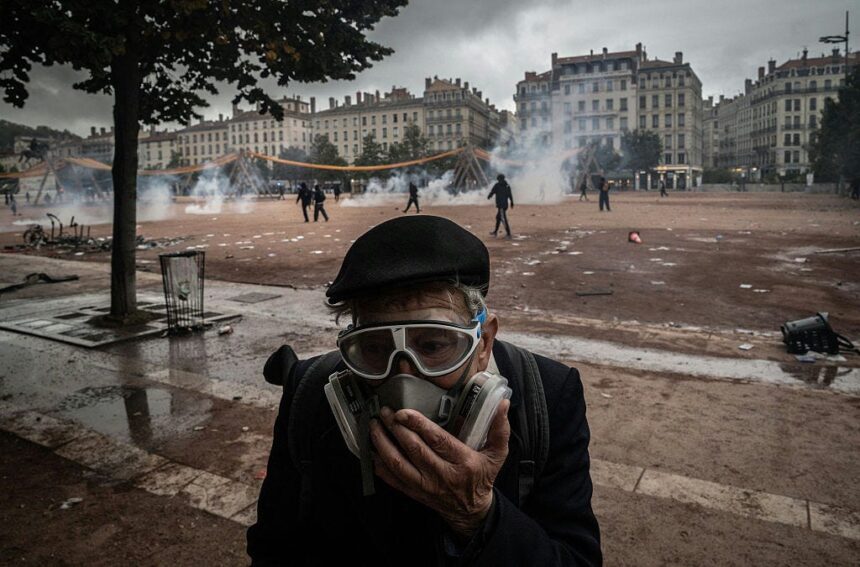
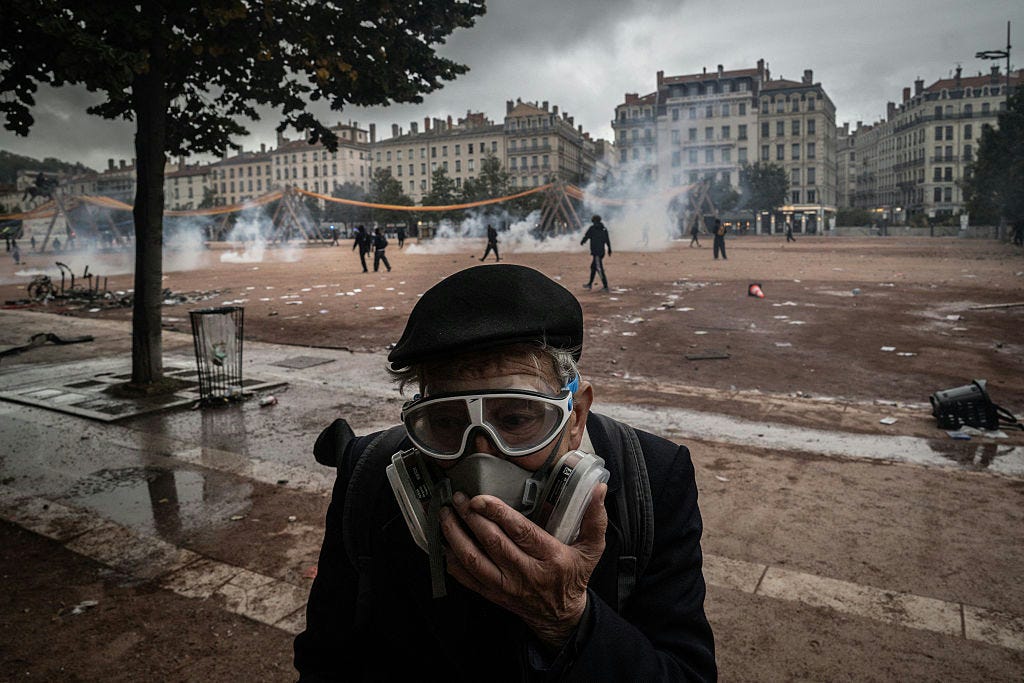
Amid the uproar of the citizen demonstrations of recent weeks in France, and under the influence of leading figures in Jean-Luc Mélenchon’s extreme-left party, France Unbowed (La France Insoumise), one theme is making a powerful comeback: the idea of an invisible, insidious, systemic violence supposedly exercised in democratic societies, which it is legitimate to oppose with the visible, direct, frank violence of the riot.
I know this idea well. It was Jean-Paul Sartre’s concept when, in his preface to The Wretched of the Earth by the anticolonialist ideologue Frantz Fanon, Sartre presented the murder of the colonizer as the response to the oppression of the colonial system. It was the idea of the writer Jean Genet in a famous article, “Violence and Brutality,” published in Le Monde in 1977, in which he presented the terrorism of the Baader-Meinhof gang in Germany as a necessity dictated by the anti-imperialist struggle. And it was already the idea of Georges Sorel who, at the very beginning of the 20th century in his Reflections on Violence, opposed the force of the “bourgeois state” with a “proletarian violence” endowed with supposedly regenerative virtues.
I thought this idea had been discredited by the post-May 1968 intellectual movement, the critique of totalitarianism by the New Philosophers movement which I led, and the reckoning with the fascist, Nazi, and communist catastrophes. But apparently not. And so, we must start all over again.
The first thing wrong with this notion of “counterviolence” is that it never strikes at the heart of the hated regime, but instead at the most exposed and most vulnerable people. The police officer who earns 2,000 euros a month, works night shifts, and protects, at the risk of his life, property, people, and the right to demonstrate. The shopkeeper who earns his gross profit on Saturdays and whose ransacked store was his only capital. The owner of the burned-out car who already struggled to afford a tank of gas and who must now find the money to replace the vehicle or face the obstacle course of dealing with insurance companies. The riot claims to strike at “the system,” but it falls upon women and men who are neither its masters nor its beneficiaries, but its humblest subjects. It claims to avenge the humiliated, but it adds to their humiliation fear, ruin, and the feeling of having been abandoned.
Read more