

The French filmmaker Agnès Varda, like her beloved cats, lived several artistic lives in one: she was a photographer, a pioneer of the New wavedocumentary film maker and installation artist. In the biography “Agnès Varda. Filmmaker. Artist. Feminist”, the American film critic Carrie Rickey traces Varda’s experimental career: Who was she? handywoman in the spirit of the French ethnologist Claude Lévi-Strauss, who tinkered around, improvised, recycled and always found new forms for her art?
This Varda biography, which is also the first to be published in German, looks for answers on around three hundred pages. Rickey writes in her introduction that the director of “Wednesday Between 5 and 7” and “Das Glück” became known to a broader and younger audience, especially in the last years of her 65-year filmmaking process.
The rediscoveries of her documentaries such as “The Collector and the Collector” as part of “Masterclasses” and “TED Talks” would have contributed to this as well Varda’s last collaboration with the French photo artist JR, who is around fifty-five years his junior, in “Moments – Faces of a Journey”.
Carrie Rickey: “Agnès Varda. Filmmaker, artist, feminist”. Translated from English by Bert Rebhandl. Henschel Verlag, Leipzig 2025. 312 pages, 28 euros
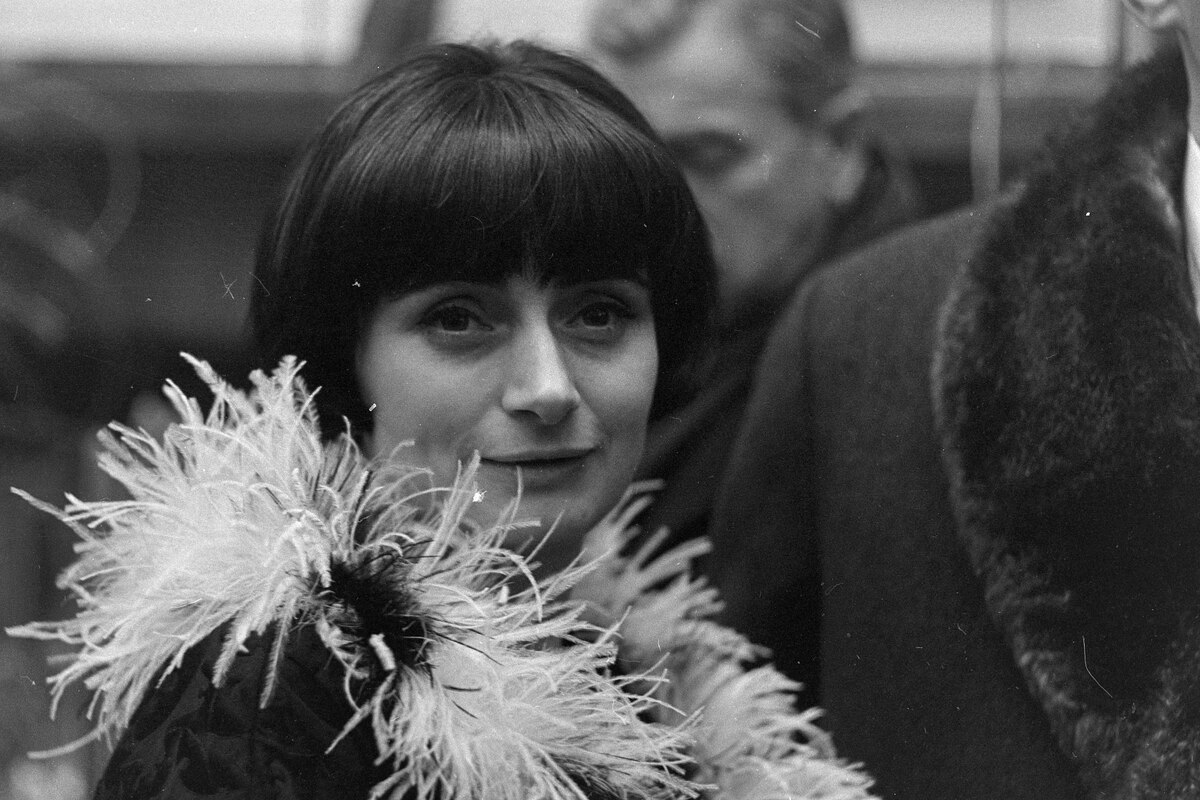
Rickey writes that everyone could have agreed on Varda at the end of her life: feminists appreciated her complex female characters (Mona in “Vogelfrei”) and for her daughter’s generation, Varda was “the bizarre grandma with her documentaries” and the idiosyncratic, two-tone page boy haircut.
But even Varda fans would often fail to recognize the diversity of the work of perhaps the first truly independent filmmaker – a total of 44 feature-length and short films. Just like Varda’s artistic beginnings as a twenty-year-old theater photographer at Jean Vilar’s famous “Thêatre National Populaire” in Paris.

Three artists’ careers
It was precisely that perspective of the portrait photographer who trusted chance that made her subsequent film work so unique, as Rickey insightfully shows chronologically and anecdotally in her three-part biography. Each part is dedicated to one of Agnès Varda’s three artistic careers: photographer, filmmaker and finally installation artist.
The book follows Arlette Varda, who was born in the Ixelles district of Brussels in 1928, and her family first to the French port town of Sète, where they sought refuge from the consequences of the Second World War, and from there to Paris, where Arlette, supported by an artistic family of choice, gradually grows into the self-empowering Agnès.
At the time of her first film, La Pointe Courte, Varda was 26 years old and, as Rickey quotes, “hadn’t seen ten films in her life.” Nevertheless, it was five years ahead of François Truffaut’s directorial debut “They Kissed and They Beat Him” and the beginning of the “Nouvelle Vague” that is commonly associated with it.
As Rickey vividly illustrates, this was essentially due to Varda’s curious, non-dogmatic approach to filmmaking. Because while the guys from the French film magazine Cinema notebookswhich included Truffaut and Godard as well as Rohmer, Chabrol and Rivette, were still mainly based on theoretical considerations, Varda pursued a just-do-it attitude: she founded her own production company, “Ciné Tamaris”, and managed to get Alain Resnais to edit the film – in exchange for a free lunch. Just five years later, he would achieve worldwide success as the director of “Hiroshima, mon amour.”
Turning financial necessity into an experimental virtue
It is anecdotes like these that make Rickey’s book an exciting, comprehensive insight into French, but also feminist, independent film history, which turns financial necessity into an experimental virtue. Rickey states that Varda’s first feature film was repeatedly referred to as “Resnais’s film” and Varda as “Grandmother of the New wave“, although in her early thirties she was hardly older than the most popular representatives of the movement.
Rickey, like Varda, has had to continually look for financing for her films throughout her film career, even after popular successes such as “Vogelfrei” and “Wednesdays from 5 to 7”. This lengthy, often difficult process was one of the reasons why Varda increasingly turned to documentaries – but always with her own unique perspective and tone.
Whether in commissioned works for the French tourism industry such as “Oh Times, Oh Castles” about the castles in the Loire Valley or her own ideas, which could be realized on a small budget, around her places of residence Paris (“L’opéra Mouffe”) and later also Los Angeles (“Wall Pictures”) – Varda broke with the traditionally purely factual and sober documentary genre.
Always on the side of their protagonists
According to their idea of cinemawriting – a filmic writing based on a new visual language – she consciously developed subjective author documentaries that bore her signature through original image compositions and personal, often ironic comments. “Oh Times, Oh Castles” begins with a film sequence of the hands of the castle gardeners, and “The Collectors and the Collector” relates Varda’s own transience using film footage of her wrinkled, age-spotted hands to discarded and now withering potato hearts.
Her most beautiful documentary film, “Daguerreotypes – People from My Street,” tells of the shops run by local couples who are small traders on their street, Rue Daguerre in Montparnasse. As Rickey points out in her descriptions of the film’s creation, Varda was always on the side of the people she was filming: she wanted to be a friend of the people she was filming, Varda once explained her point of view in an interview about making documentaries, not a spy.
Time after time she managed the difficult balancing act of getting close to people – often in outsider roles, on the fringes of society – without excluding her own privileged position as spokesperson. This is probably why Varda never stopped making documentaries as soon as she achieved success with her feature films – unlike Alain Resnais, for example, but also Varda’s own husband Jacques Demy.
Installation artist in a potato costume
For Varda, documentaries were “lessons in frugality.” A frugality that she demonstrated in all matters of life and that enabled her to remain creative for six decades, even in times of lack of financial support. In order to realize her documentary film “The Collector and the Collector”, she used the then newly released P200 compact digital camera. This allowed her to film more personally and alone, rather than relying on expensive camera equipment with sound and technical teams.
And at seventy-five, with an eye disease and at an age when filming for weeks on end became increasingly difficult, she self-deprecatingly reinvented herself as an installation artist in a potato costume at the Venice Biennale in 2003 with “Patatutopia”.
However, Varda remained true to her love of documentaries that show people and communities in all their lovable quirkiness until the end. At the age of 89, she traveled with JR in a unique photomobile through French villages to get to know the everyday people of her country – a postman, a factory worker, a goat cheese maker, a bell ringer, a waitress and the last resident of a street in the former mining area of Bruay-la-Buissière – along with their stories and to get to know them in life-size portraits that are usually reserved for stars and beauties, on house facades, trains or shipping containers to immortalize.
This effort to “make ordinary people greater” distinguished Agnès Varda: as a photographer, filmmaker, installation artist, mother, friend, wife, activist, boss or role model for others Filmmakers like Chantal Akerman or Agnieszka Holland.