

It’s a hustle and bustle in the Brandenburg Hall. Over 70 companies, shops and clubs from Berlin’s neighboring country are at the event this year Green Week represent. There is a cooking studio, the Transparent Dairy and the Fawn Rescue are represented. You would almost have missed the stand at the end of Hall 21a: next to the State Hunting Association and the Nature Forum Brandenburg Rural Women’s Association posted.
A conservative, right-leaning women’s association was expected. Politically similar to the lobby associations of hunters, farmers and forest owners who want to reduce environmental and nature conservation standards.
The surprise is all the greater. On a table at the stand there are small rulers with the inscription: “Not a millimeter to the right”. The Brandenburg Rural Women’s Association has 1,200 members. It can be assumed that this also includes women who voted for the AfD in the last state election. The board, however, has a clear stance: “We work with all democratic parties, except the AFD,” says Antje Schulze, chairwoman of the Brandenburg Rural Women’s Association. “The entire board is behind it.”
This Monday is open the Green Week Brandenburg Day. Regardless of this, every day at the trade fair, which runs until Sunday, a different district or local rural women’s group will be presenting itself at the Brandenburg Rural Women’s Association stand.
New perspectives after the fall of communism
Unlike in the former Federal Republic, rural women’s associations in the eastern federal states have only existed since the fall of communism. They were founded in 1992, says Schulze. After the end of the GDR, many women who had worked in the LPGs became unemployed due to the restructuring. The rural women’s associations supported these women in developing new professional perspectives, not just in the agricultural sector.
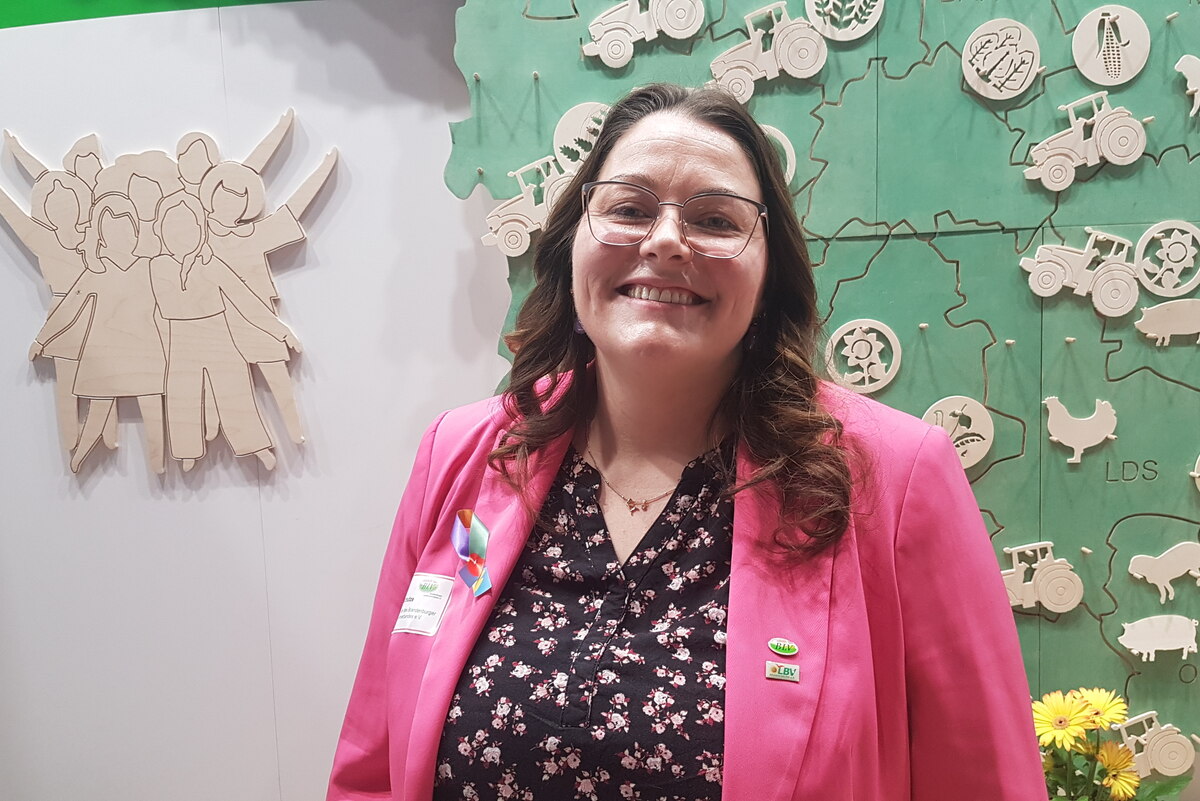
Schulze, black floral blouse, pink jacket, shoulder-length brown hair, is a woman who radiates energy. She doesn’t hide behind empty words, she speaks straight. The 40-year-old has been chairwoman of the Brandenburg Rural Women’s Association for five years and is therefore very young – even by national standards. It is a volunteer position. Her main job is in the city administration of Nauen.
Networker and hinge
The in Havelland district The city, located on the edge of Berlin’s suburbs, has 20,000 inhabitants. Including 14 districts, Nauen is one of the largest municipalities in Germany. Schulze is the district representative in the city administration. Hinge and networker between city and country, as she explains in the conversation at the Green Week.
Networker and influencer – this is how Schulze and her colleagues understand their role in the rural women’s association. 14 women from the association were trained to become ambassadors for democracy and tolerance. This was achieved with the support of the Tolerant Brandenburg Coordination Office, which is located in the State Chancellery in Potsdam and conducts training and events on strengthening democracy and preventing extremism.
According to the latest election survey by INSA, which was published on Sunday, the AfD in Brandenburg is now at 34 percent, the SPD only has 25 percent and the CDU 13 percent. BSW and the Left are tied at 8 percent, the Greens have 5 percent. After the government alliance with the BSW collapsed, the SPD is seeking a new coalition with the CDU. The high poll numbers for the AfD in Mecklenburg-Western Pomerania and Saxony-Anhalt, where state elections are taking place in the fall, loom over everything.
Take a position
This is the background against which the rural women’s association’s ambassadors for democracy and tolerance operate. Everyone in Brandenburg has to deal with people who voted for the AfD or who sympathized with it, says Schulze. If you want to win people back, you have to take positions. “We often lack the courage to fight back, we tend to duck away,” she knows.
During the training, the women were given material and learned to argue. There are many opportunities. At the village festivals, setting up the beer tent, at the harvest, with the volunteer fire department. Going into the conflicts, not excluding anyone, bringing people back, working for democracy, that is the goal.
Does she have an example? The rural women’s association advocates healthy eating provide information about food and eating habits in schools and daycare centers. There is also talk about role models, according to which, for the AfD, for example, women belong at the stove and have no say. “We stand for the independence of women in rural areas and for equality,” says Schulze.
Selfishness is increasing
The chairwoman admits that it is not an easy undertaking. The big problem is the lack of trust many people have in politics. And that politicians are not able to communicate achievements with better public relations, because they exist too.
Schulze also sees the problem with people themselves: egoism. She has been observing this more since Corona. “Everyone only sees themselves. Everything, including the world situation, is evaluated based on what you have in your own wallet. The first question is often: What’s in it for me?”
Strengthening “we” is what it’s all about, says Schulze. “Because in rural areas we can only make a difference in community.”