

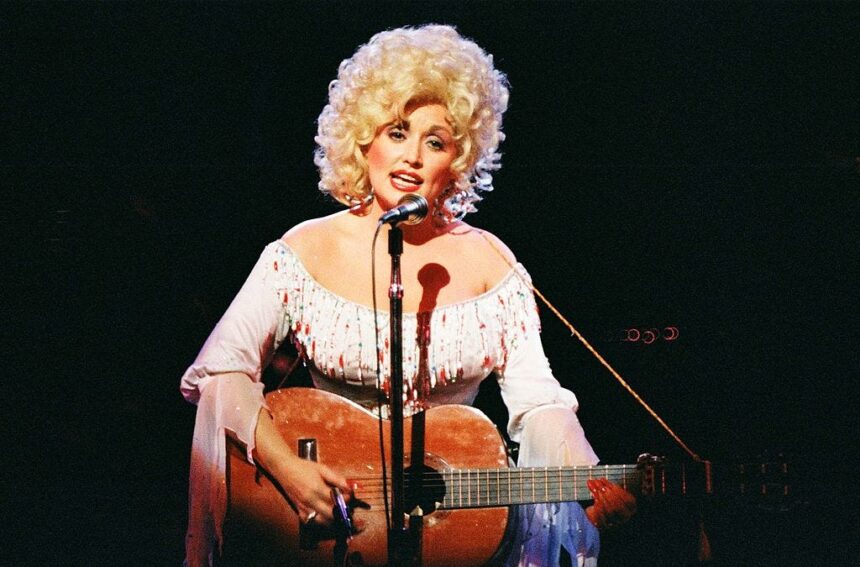
The first concert I ever went to was at the San Rafael Civic Center, and the performer was Dolly Parton. This was the Bay Area, 1977, and the notion that Dolly Parton might have a wide, national appeal—let alone a San Francisco Bay Area appeal—was years away. But my friend Annie and I were two 16-year-old girls who weren’t following the herd. Or even the group, or the half-dozen. When it came to taste, we were on our own. That same year, we’d gone to see professional wrestling at the Cow Palace. We were weirdos, and we knew what we liked.
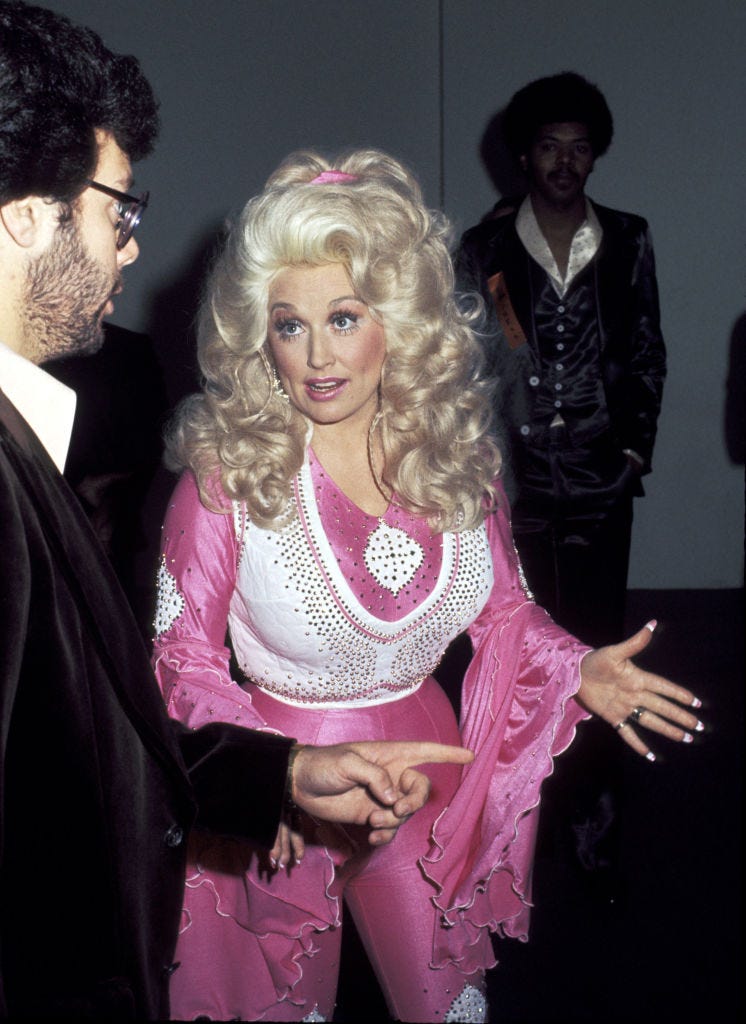
Berkeley had many cults, but the Dolly Parton cult was a two-girl operation. This was before the movie 9 to 5 gave Dolly Parton some national recognition. In those days, the South and the rest of America were eager to ignore each other’s existence. There was a weekly variety show called Hee Haw, which was meant as a deep-South version of Laugh-In, except that Laugh-In was cool—it had go-go dancers and nightclub comics—and Hee Haw was beyond square. We were right that the comedy was cornpone. But some of the best music in the country was performed on that show every week: Tammy Wynette and Johnny Cash and Charlie Pride and sometimes a young Dolly Parton.
The thing about Dolly—the reason Annie and I loved her so much, and from the very beginning—was that that woman could sing. She could really, really sing. If you don’t know what we fell in love with, stop everything and listen to her recording of Mule Skinner Blues (Blue Yodel No. 8). Any questions you might have about how she got so far in her life will be answered. At the root of that massive career that came to stand for so many things was a great voice and a childhood drenched in one of the great American art forms: bluegrass music.

Dolly Parton was born in 1946 in a Tennessee holler, the fourth of 12 children born to an illiterate sharecropper turned subsistence farmer, in a one-room cabin on the banks of the Little Pigeon River, a way of life so remote from the modern American one that it seems like something from a children’s book.
Read more