

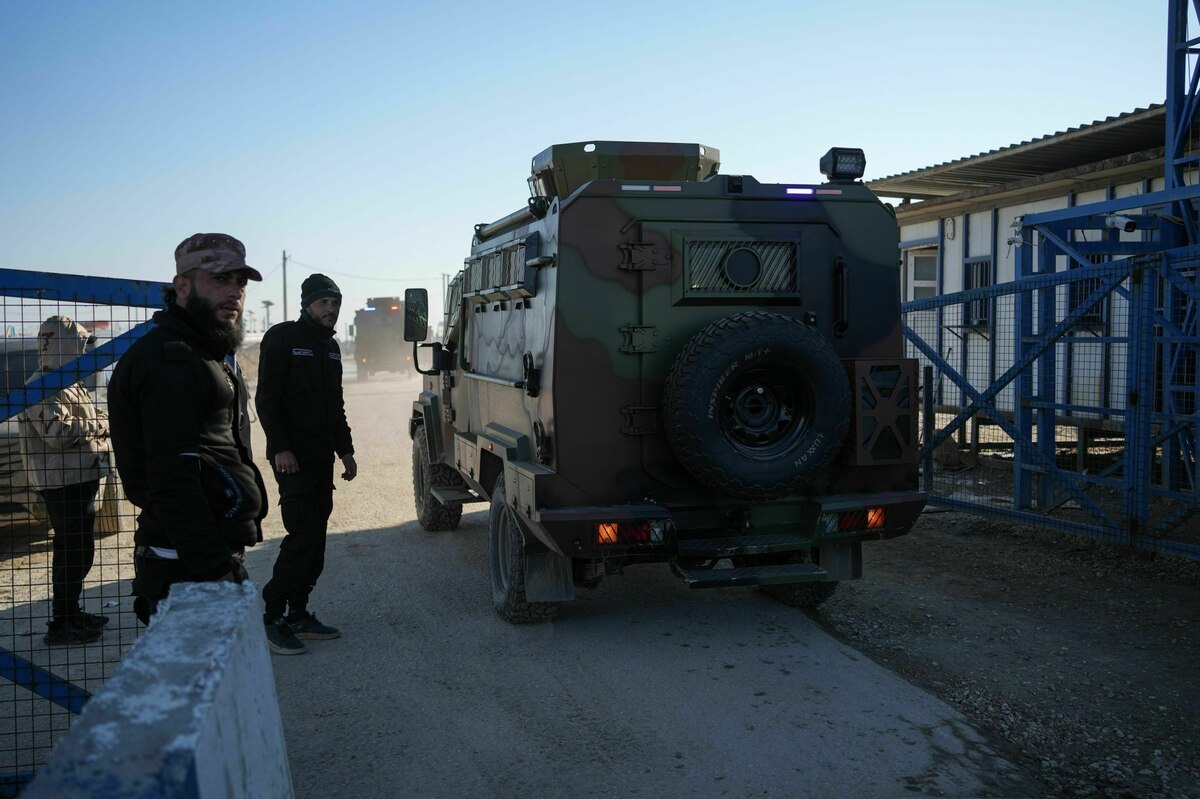
The Al-Hol refugee camp, which resembled a prison, is now in the hands of the Syrian Army. The Interior Ministry in Damascus said this on Telegram. The previous director Jihan Hanan also confirmed the takeover of the camp by government troops to the taz upon request. Until now, the Kurdish-dominated forces of the Syrian Democratic Forces (SDF) have been monitoring the refugees. They withdrew from the camp on Tuesday.
More than 30,000 people are housed in the Al-Hol refugee camp in northeast Syria. Several thousand of them are wives and children of former foreign IS fighters. It is unclear how many of them still have an ideological affinity with the radical Islamist terrorist organization “Islamic State” (IS).
She herself has been gone since the SDF withdrew in the refugee camp Hanan explains. But reports of riots, arson and the escape of inmates had reached them. The people in the camp tried to take advantage of the security vacuum.
A woman who works for an international non-governmental organization (NGO) in Al-Hol and wishes to remain anonymous confirmed to taz via chat that refugees and some ex-IS inmates had broken out of the prisons. Some have now been caught, others are currently being searched for.
There are also Germans among the ex-IS supporters
In the north-east of Syria there are not only several refugee camps in which family members of IS fighters live, but also prisons for ex-IS supporters themselves. The government in Damascus said on Tuesday: Around 120 ex-IS fighters had escaped from the prisons, 81 of whom the army was able to catch again.
The young NGO employee continues to write that her organization’s work in the camp has now been stopped because the security situation is unclear. But even Jihan Hanan cannot say what will happen next with the camp. “Yesterday I was still the director. Today I don’t know what the administrative instructions will be,” she writes from northeast Syria.
In refugee camps like Al-Hol and in the Kurdish prisons there are not only Arab but also European IS fighters and their family members. There were even some Germans among them. The Kurdish armed forces, which have fought IS for years, have repeatedly urged the foreigners’ home countries to take back their citizens in recent months. But this happened only hesitantly.
When asked in May last year, the German Interior Ministry said that there were no plans to bring back German ex-IS fighters. For their wives and children, a voluntary return is possible after careful examination. When taz visited the camp last spring, Concerns about a takeover of the camp by the new Syrian rulers were clearly heard in security circles, for example due to the risk of an outbreak.
Ceasefire with restrictions
A four-day ceasefire has been in effect since Tuesday evening at 8 p.m. local time between the SDF and the government army. However, Syrian Defense Minister Marhaf Abu Qasra accused the SDF on Wednesday of arbitrarily arresting residents in the Hasakah region a day after the ceasefire. And called for an end to the arrests.
So far, government troops appear to have actually paused their offensive. However, there are reports of further fighting by tribal militias linked to the army, which cannot be independently confirmed. The young NGO employee also confirms that government troops did not enter the nearby town of Hasakah.
The conflict between the SDF and the Syrian army in northern Syria has been escalating for over three months. The background: The Syrian government wants the Kurdish units and Integrate regions into the Syrian statebut the SDF hesitates. A corresponding agreement from 2025 has not yet been implemented.