

The global shortage of fresh water is so dire that the United Nations University is calling the world “water bankrupt.” In a new report She writes that in large parts of the planet, people use more water than comes from rain and melting snow. In this way, they exploit the “saved” groundwater, which in some places takes thousands of years to replenish.
“Our current account, the surface water, is empty,” said report author Kaveh Madani, a researcher at the UN University. “The savings account that we inherited from our ancestors, groundwater, glaciers and so on: that too is exhausted.” Symptoms of “water bankruptcy” can be seen worldwide.
According to the UN report, three quarters of the world’s population lives in regions that do not have safe access to water all year round. 4 billion people are experiencing severe water shortages for at least a month. 2 billion people live on soils that are sinking because rock layers carrying groundwater, the so-called aquifers, collapse.
Talking about a water crisis is no longer enough, the report says. “Crises” have to be overcome in the short term and then return to normal. But “long-term use of water has exceeded renewable inflows, resulting in irreversible damage.” Water supplies and the functioning of ecosystems cannot be restored everywhere.
Regional differences remain important
“Inadequate global water security is no longer a state of emergency in many regions, but a constantly deteriorating permanent condition,” said Rike Becker, a researcher at Imperial College London, the Science Media Center (SMC). However, this “should not trigger a feeling of resignation and failure”. National and local approaches often offer the most effective and quickest solutions because they are adapted to regional needs.
Thorsten Wagener from the University of Potsdam also emphasized to the SMC that the term “water insolvency” was a good summary of the situation, but that the large regional differences were important. “It is difficult to describe the world with an average when it comes to water,” he said.
Germany, for example, “generally has more water supply than we use”. In regions like Brandenburg However, there are always water problems that “can spread throughout Germany or even Europe in dry years”.
Becker is critical of German water consumption for another reason, as it “predominantly takes place abroad”. Over 80 percent of German water consumption is “imported” water from countries such as India, Pakistan and Egypt.
This means that goods and food are produced abroad using excessive amounts of water and then sold in Germany. As a result, “we contribute significantly to the overexploitation of aquifers, high levels of groundwater extraction and water pollution in other regions.”
Water conflicts are escalating more and more frequently
While not every country is water-bankrupt, Madani said, “water systems are interconnected through trade, migration, climate impacts and geopolitical dependencies.”
According to the UN report, 1.2 billion people live in regions whose agriculture suffers from severe water shortages. 170 million hectares of arable land – roughly the same area as Germany, France, Spain and Italy combined – are under water stress. The situation is particularly tense in the Middle East, North Africa and South Asia.
Conflicts over water are therefore increasing sharply: according to the report, there were around 70 in 2014 and over 400 in 2024. In addition, water supplies are increasingly collapsing in cities, for example last autumn in Tehran, Iran. where a drought brought the city’s already overstretched water supply to a near standstill. There were similar cases in Cape Town, South Africa, Chennai, India, and São Paulo, Brazil.
Increasing global warming is exacerbating all of these trends, according to the report, as glaciers that store fresh water are melting and swings between extremely dry and extremely wet weather are increasing.
Don’t forget local solutions, warns the researcher
In order to counteract the new state of “water bankruptcy”, Madani and his team are calling for a reorientation of the global approach to water: it must be recognized that some broken water systems cannot be repaired, that future damage must be avoided at all costs and that justice must be at the center of water policy.
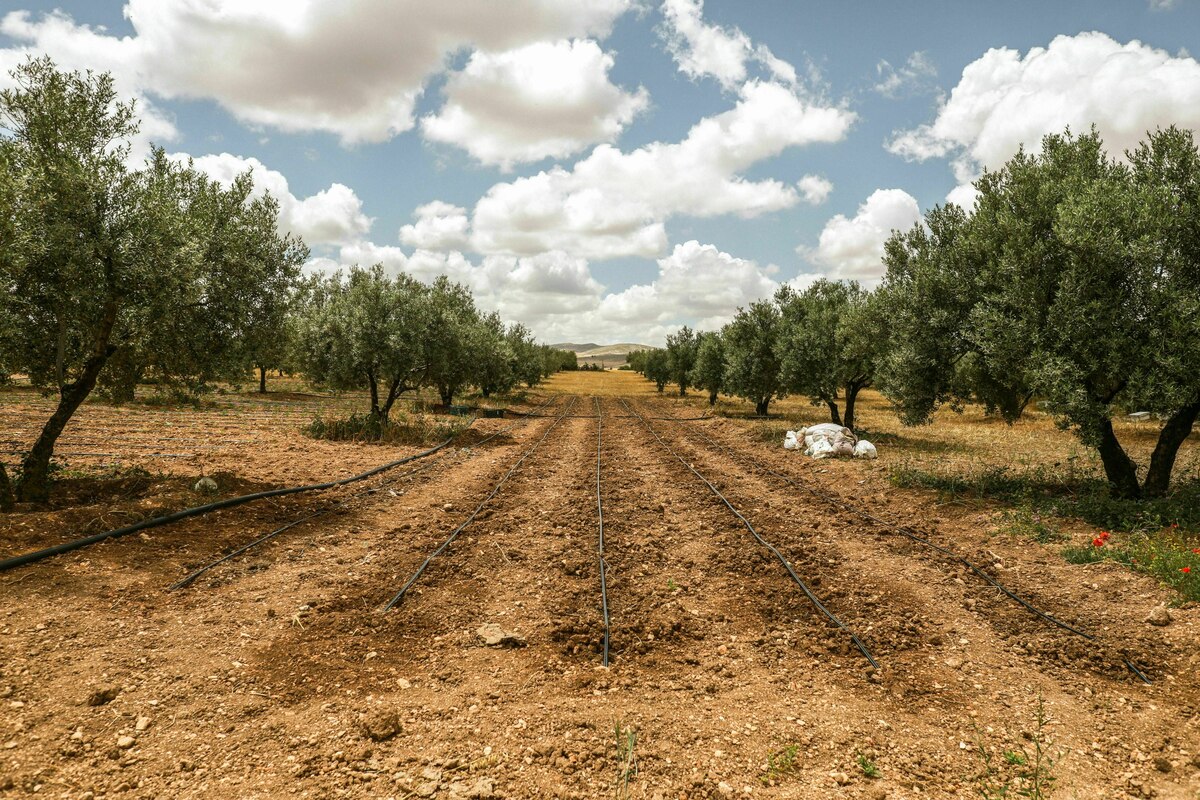
For example, there are certain agricultural practices that are simply no longer possible in a water bankruptcy. For example, certain areas that only produce crops through intensive irrigation would have to be abandoned. The farmers should not then be left alone, but would need help in the form of expertise and loans in the transition to other forms of agriculture or even to new jobs such as in ecotourism.
Local water management must not be pushed into the background
Rike Becker, Imperial College London
In its proposed solutions, the UN report focuses heavily on bringing about a change in awareness worldwide and anchoring it in the various UN processes. This focus on a global agenda, warns the London researcher Becker, is risky: “Given the current geopolitical situation, quick, globally coordinated political decisions are hardly realistic,” she said. “Since the pressure to act is high and the challenges vary greatly locally, local water management efforts must not be pushed into the background.”