

The reflexes have sounded similar everywhere since the debate about a possible boycott of the World Cup in the USA reached the mixed zones of the Bundesliga. “I’m a soccer player and A, I don’t know enough about it and B, it’s not my job to talk about it,” says Robert Andrich, who, as a national player and captain of Bayer Leverkusen, can actually be trusted to have an opinion on the activities of World Cup host Donald Trump.
After the Experiences with the World Cup in Qatar However, there is great concern about becoming entangled again in controversies and the feeling of powerlessness in relation to world events. “I no longer take part in the political discussion. We have noticed that it is not productive for us players to express ourselves too politically,” explains Joshua Kimmich, the captain of the national team, and Leverkusen’s sports director Rolfes says ironically: “I think it worked well at the 22 World Cup that Germany somehow tried to boycott the tournament and the rest of the world saw it a little differently. Politics should do politics and we should do sport.”
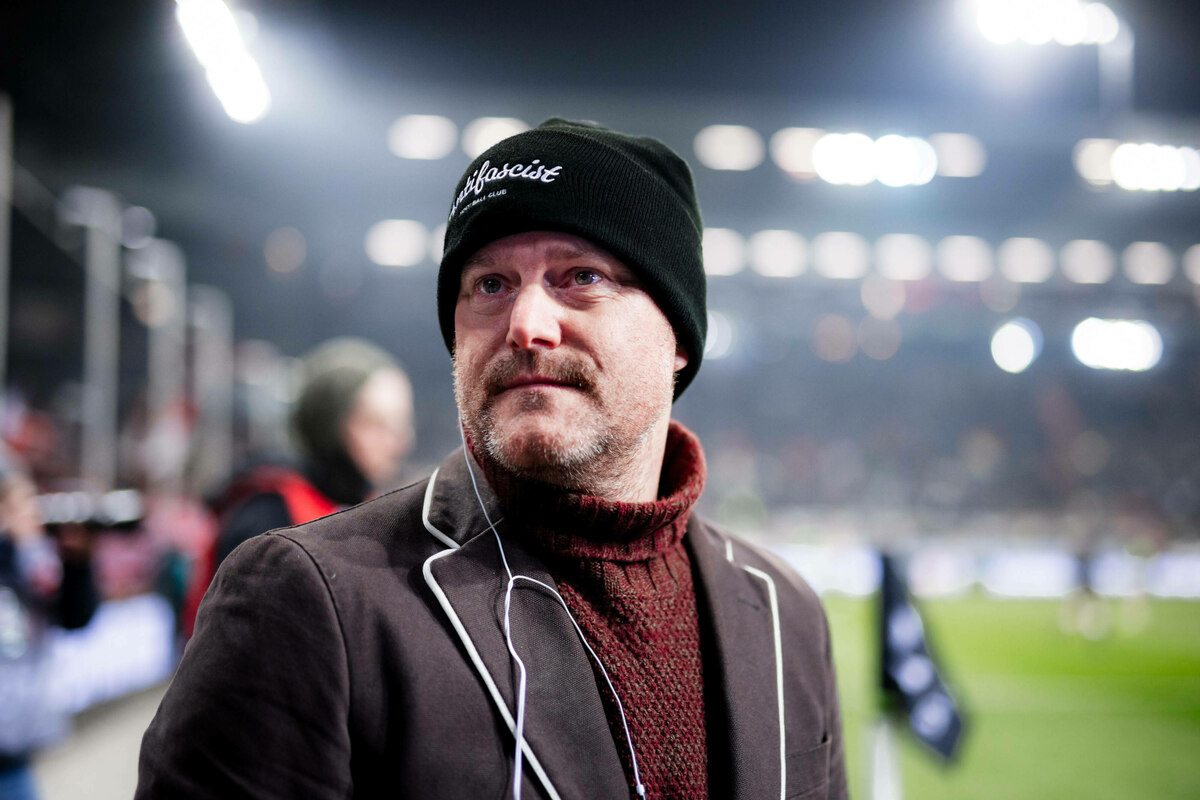
The reference is always the same: At the 2022 World Cup, the German attempts to protest were not only ineffective, they damaged the team’s sporting ambitions and also seemed a little embarrassing. That’s why many people from the Bundesliga don’t like it, that Oke Göttlich, the President of FC St. Pauli, who has been a member of the executive board of the German Football Association for a few weeks, is starting a new debate about a boycott as a reaction to the behavior of Donald Trump’s America: “I’m really wondering when is the time to think about it and talk about it in concrete terms,” says Göttlich der Hamburger Morgenpost and refers to the history of the Olympic Games: “What were the reasons for the Olympic boycotts in the 1980s? In my opinion, the potential threat is currently greater than it was back then. We have to have this discussion.” Göttlich is not explicitly calling for a boycott, he just wants to have an informed discussion about this option, and this process has now begun.
Die Bild has learned from DFB President Bernd Neuendorf’s entourage that he is “not amused” by Göttlich’s initiative. Neuendorf avoids conflicts with the world association Fifa, where he is a member of the influential council. And the experiences of Qatar are still in his bones. However, the comparison to the previous World Cup is completely inappropriate.
Parent dimension
At that time it was about protesting against a host country that violates human rights, exploits guest workers and is ruled autocratically. All of these accusations can also be made against the USA, but in the current case there is an overarching dimension: there are imperial aspirations in the USA, Trump would like to own Canada and Greenland, Europe is threatened. That’s why Göttlich alluded to the 1980 boycott, which was a response to the Soviet Union’s attack on Afghanistan at the height of the Cold War. “In my opinion, the threat potential is currently greater than it was back then. We have to have this discussion,” says the Hamburg official, who, by the way, is not calling for a boycott, but rather an examination of this possibility.
The topic will remain relevant. The talk format “Miosga” was broadcast on ARD on Sunday. There, too, it quickly became clear that, in contrast to Qatar activism, it was only a secondary issue of values and morals. The possibility of a World Cup boycott is one tool in the toolbox of countermeasures, which also includes counter-tariffs and all sorts of deals. Dealing with these possibilities is “a ride on the razor’s edge,” says military historian Sönke Neitzel at “Miosga” and explains: “I think it’s good that this is being discussed, that you can say: If the Europeans don’t play along, you can actually forget about your World Cup. And we can also resort to that.” There is an opportunity to strengthen one’s own position in a global political negotiation situation that is difficult to understand.
Initial surveys among the other European associations clearly indicate that no one is currently seeking a boycott, but here too It’s worth taking a look at the year 1980. At that time, the German National Olympic Committee (NOK) decided to boycott the Olympics. However, this was preceded by a political debate in which Willy Brandt, in the spirit of his détente policy, spoke out in favor of taking part in the Moscow Games. Chancellor Helmut Schmidt also found the boycott wrong, but bowed to pressure from the protective power USA, whereupon the Bundestag and the NOK decided to forego the games.
Just as then, the question now is whether football should be used as a political instrument at the highest level of world affairs.