

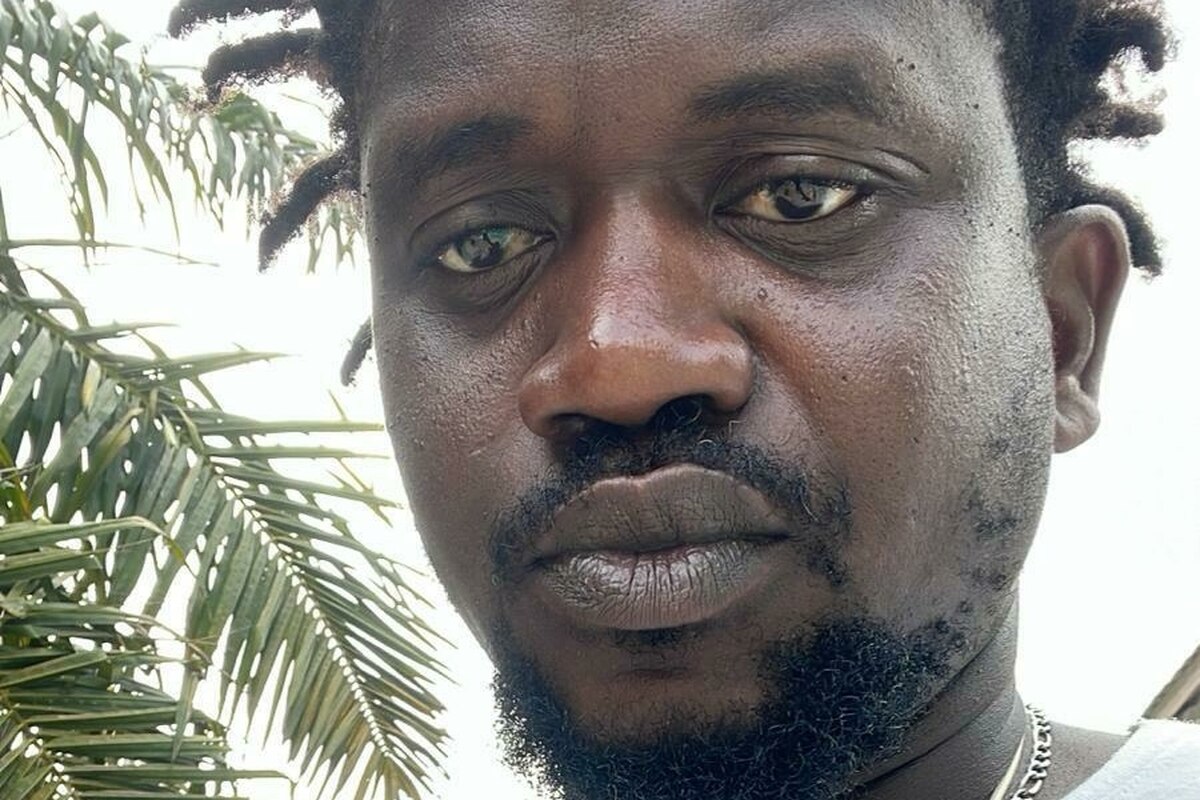
D he brutal operation, in which dozens of police officers drove up to the Ameos Clinic in Osnabrück on January 28, 2025, a Lame K.* (Editorial name known) to be deported to the West African Gambiastill resonates today. The 34-year-old, traumatized by his escape to Europe, with prison and torture, had sought help at Ameos because he was at risk of suicide. It didn’t help him.
The police, assisted by the clinic, pulled out all the stops in their monopoly of violence, including against activists No camp Osnabrückan anti-racist group with a focus on migration and asylum that expressed solidarity with K. K. was transported to Frankfurt am Main and flown out.
Now, a year later, “No Lager Osnabrück” wants to hold a rally to commemorate K., who at that time, in handcuffs, desperately shouted “Kill me!” shouted. “Your focus should be on what happened to K. in Gambia since then“, says “No-Lager” activist Claudia* (Editor’s name known) the taz. She is also a member of the local anti-racism initiative Gambia Solidarity. “He lives there in a country he hadn’t seen since he was a child,” she says.
rally by “No Lager”: January 28th, 5:30 p.m., in front of the Ameos Clinic, Osnabrück
Donation account: After you! eV
IBAN: DE 40 2655 0105 0000 6995 20
Keyword: Lame
“No Lager” considers the deportation to be illegal and demands that Lame K. be brought back to Germany. This is what it says in a statement about the rally. The request to leave the country led to a “threatening retraumatization” at the end of 2024. On the advice of his psychotherapist, K. then went to the Ameos Clinic.
Its main entrance will now become the site of the rally, with banners such as “Ameos – hand in hand with the deportation state” and “Ameos – racism is very important to us”. Leaflets will be distributed in the nearby Bürgerpark.
No therapy, no money and no support
K. now lives in Brufut, a small town on the Atlantic. The taz has a psychosocial report from the local aid organization Peace of Mind (POM) from the end of 2025. It states that K.’s psychological state remains “fragile” and fluctuates “between phases of exhaustion, despair and acute fear, which are directly related to his precarious living conditions and the lack of stable prospects.”
There is a fear of “chronification and progressive deterioration of his mental health and, at regular intervals, the risk of decompensation or suicidal behavior.”
With POM, K. is not receiving regular therapeutic treatment. The organization’s ability to work for free is limited; K. doesn’t have any money. A POM social worker provides voluntary help.
I struggle every day to meet my most basic needs, writes Lame K. “Without stability, without security and without any real prospect of improvement”
The taz reaches Lame K. via Whatsapp. He writes that he lives “in deep isolation.” “I have no family network, no relatives, no friends and no social support in Gambia. This situation puts me at greatest risk.” It is “extremely difficult to survive and escape marginalization.”
K. describes a desolate situation: “For months I had no permanent accommodation and had to constantly move. I almost ended up on the street several times because I was unable to pay off my debts.”
Rent payments are currently due again, otherwise there is a risk of homelessness. K. doesn’t know how he’s going to raise the money. “It’s already a challenge to have something to eat once a day.”
Stranger in the country
K. hasn’t found work. Every job search in Gambia depends heavily on family or social ties. K. doesn’t have that. “In addition, salaries are often below the cost of a month’s rent,” he writes. “Unless you live in a family where resources are shared and you are on your own, you cannot survive on a normal paying job.” The only way is to become self-employed. For K. this is utopian. He has no income whatsoever.

Deportation from the psychiatric hospital: The police take Lame K. from the hospital premises
Photo:
No camp Osnabrück
Stagnation has characterized the twelve months since his forced return. “I struggle every day to meet my most basic needs,” he writes. “Without stability, without security and without any real prospect of improvement.” The Gambia does not feel like a familiar and safe environment for him: “I feel like a stranger here – and people perceive me as a stranger too.”
He “still has difficulty believing that the decision to deport me was made with real knowledge and awareness of my entire situation.” He sees the deportation as a “threat to my integrity and identity.”
Refugee Council calls for the re-entry ban to be lifted
“Of course we continue to assess the deportation critically,” writes Kai Weber to the taz. He is managing director of the Lower Saxony Refugee Council in Hanover. “In our view, being picked up from the psychiatric hospital by the police was a breach of a taboo.”
From the perspective of the Refugee Council, there is “no realistic prospect of return in the foreseeable future”. To do this, the re-entry ban must be lifted. The costs of deportation would have to be paid and qualified employment would have to be found.
Also Ernst-Ludwig Iskenius, member of the “Flight and Asylum” working group of the International Physicians for the Prevention of Nuclear War (IPPNW) and Employees of the IPPNW reporting center “Deportation from inpatient treatment”is involved in the K. case.
35 cases in one year
“The stricter repatriation policy particularly affects sick and traumatized people,” he wrote to the taz in a statement. “In quite a few cases they become suicidal and need a professional shelter, such as the hospital.” As was the case with K., who, according to Iskenius, “was kidnapped from the hospital by the police against medical advice a year ago, put on a plane and sent back to his country of origin.”
According to Iskenius, these “sickening and inhumane deportations” violate the fundamental right to dignity and the right to health. The reporting office, which has existed since the end of 2024, has documented 35 examples so far.
“Our experience is that hospital staff are usually overwhelmed by such a situation and therefore, out of helplessness, give their patients into the hands of police officers. In the vast majority of cases, they have a right to protect their patients from such violent measures.”
Follow-up asylum procedures are still open
The IPPNW informs hospital employees about their options and trains them in workshops so that “if in doubt, they can also enter into conflict with the authorities and police representatives to protect their clients or patients”. According to Iskenius, “greater public pressure is needed to end this scandalous practice.”
Attorney Claire Deery, whose Göttingen “Law firm for migration law” Lame K. represents, writes the taz: “A follow-up asylum procedure is currently underway in court. The outcome of this procedure is still open, so legal questions remain unresolved.” There is still “the possibility of obtaining a return to Germany”. Deery also keeps in touch with Lame K’s fiancé, who lives in Germany.
What remains clear, says Deery, “is that deportations from closed psychiatric facilities must not take place.” This raises “significant legal and human rights questions that, in our opinion, have not yet been sufficiently taken into account.”
K. still has contact with people in Germany who support him. Mostly emotional, occasionally also material. “Sometimes even five euros ensured survival,” says K., describing his living situation. The real future looks different.