
According to US President Donald Trump’s ideas, other states should have little say in the settlement of armed conflicts in the future: Israel, of all people, found this out at the weekend as one of the biggest supporters of the Trump government. On Saturday night – in the middle of the Israeli weekend – Washington announced the appointment of the Executive Council for its “Peace Council” as well as a second Administrative Council for Gaza. Israeli Prime Minister Benjamin Netanyahu, otherwise loyal to Trump, protested against the plan, which was not coordinated with Israel and “contradicts its policies.”
Netanyahu left it open which members of the three planned committees for Gaza he was referring to. The public debate in Israel, however, left little doubt: Criticism rained down from Netanyahu’s right-wing nationalist coalition partners to the opposition, including the board of directors Turkish Foreign Minister Hakan Fidan and the Qatari diplomat Ali Al Thawadi. Israel had spoken out against Turkey’s involvement since the ceasefire in Gaza came into force. It accuses Israel of committing genocide in Gaza.
Gaza is our show
senior US bureaucrat
People in Washington were not very impressed. “This is our show,” a high-ranking US official told the US news portal Axios. Netanyahu has no say.
Similar things could happen to other countries in the future, because Trump’s ambitions for his “Peace Council” seem to extend far beyond the Gaza Strip. Details about the responsibilities of the committees initially remained unclear. The Administrative Council for Gaza, under the leadership of the former Bulgarian UN special envoy Nickolay Mladenov, will apparently take care of the continuation of the 20-point “peace plan”. It will also oversee the work of a 15-member Palestinian technocratic administration.
Illustrious Round
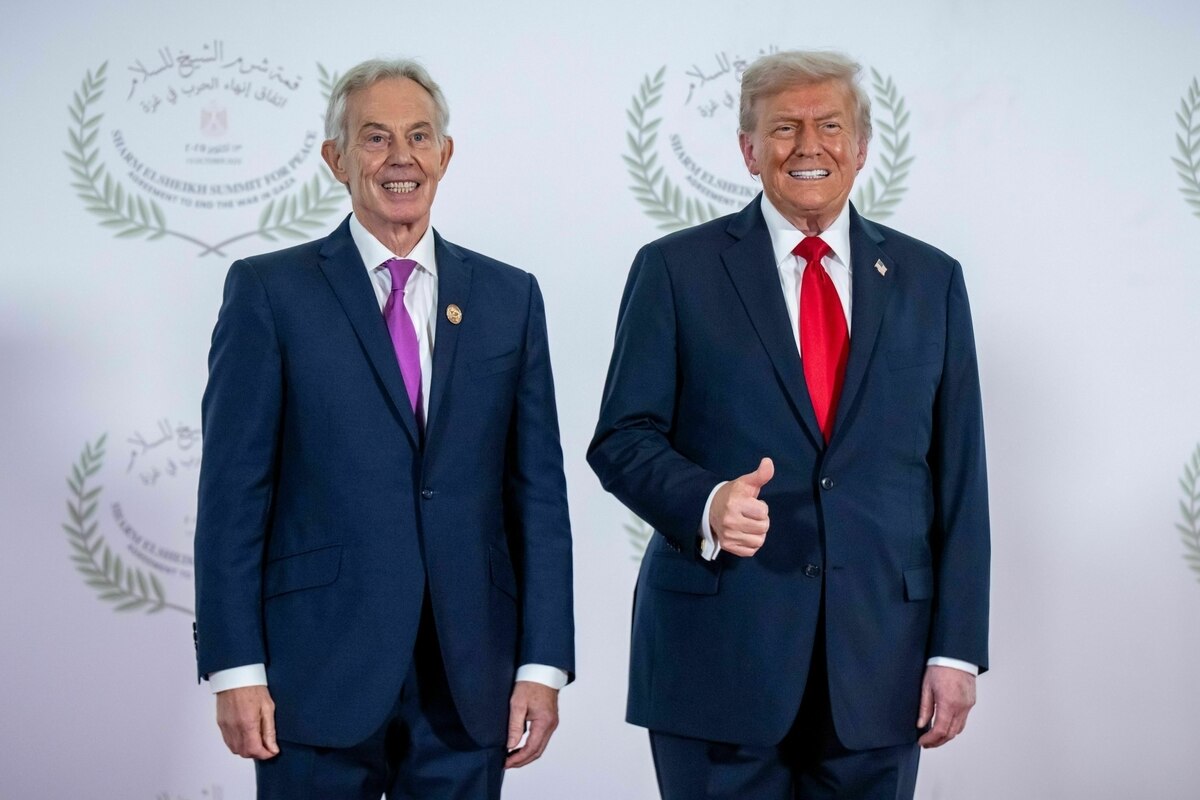
In addition to representatives from Qatar and Turkey, the committee will also include Egyptian intelligence chief Hassan Rashad and Trump’s son-in-law Jared Kushner the US special envoy for the Middle East, Steve Witkoff, belong. Tony Blair’s nomination, despite opposition from several Arab states, also shows that little consideration was given to criticism. The former British prime minister is unpopular in the region because of his involvement in the 2003 Iraq War.
However, the Executive Council’s jurisdiction over the “Peace Council” should not be limited to the Gaza Strip, which is not mentioned in its charter. Instead, the US President apparently has in mind a global institution to resolve armed conflicts. 60 heads of state and government are said to have received invitations to take part. The “Peace Council” will not only “strengthen peace in the Middle East” but also “pursue a bold approach to resolving global conflicts,” said the letter published by Argentina’s President Javier Milei.
The catch: Unlike the UN system, no decision can be made in the “Peace Council” without Trump’s consent. The members can be approved and removed again by Trump. According to the charter, anyone who pays more than a billion dollars into the council’s pot can automatically renew their membership.
The body competes with UN structures that were created after the Second World War to resolve conflicts peacefully. Its charter makes it clear that this is no coincidence: “Lasting peace requires (..) the courage to break away from approaches and institutions that have all too often failed,” it says. It also emphasizes the need for a “more flexible and effective international peace organization.”
Lots of power, little expertise
The “Peace Council” should consist “exclusively” of heads of state and government, reports Financial Times citing a White House official. In addition to Trump, the members of the Executive Council also include Kushner, Witkoff, Blair as well as US Secretary of State Marco Rubio, the entrepreneur and billionaire Marc Rowan and the US government’s deputy security advisor Robert Gabriel. World Bank President Ajay Banga is the only Council member with a career in international institutions.
International law is mentioned once in the Charter of the “Peace Council”. In view of the US attack on Venezuela at the beginning of January, which violated international law, and the currently threatened invasion of Greenland by a NATO partner, this is likely to be little more than lip service.
German Foreign Minister Johann Wadephul declared at the weekend that Germany hoped for a place in this “important institution”. The dilemma: Anyone who takes part in the “Peace Council” runs the risk of undermining the UN system and submitting to Trump’s erratic wishes. In particular, states in the global south, which are at least on paper equal to the economically stronger states in the UN General Assembly, would lose out here. It remains to be seen whether there will be enough states to support the US proposal.
International law expert Kai Ambos from the University of Göttingen calls the proposal a “typical Trumpian exaggeration”. First, the committee in Gaza must show whether it can “establish lasting peace.” In addition, Trump himself secured his plan with a UN Security Council resolution. In doing so, the Security Council has created an international legal personality, which lies “beyond traditional international law categories and which, with its emphasis on investments and the creation of new cities, is more like a multinational company”.
This week the “Peace Council” is scheduled to take place for the first time on the sidelines World Economic Forum in Davos come together. It could then become clearer how the various committees want to advance the ceasefire in the Gaza Strip, which so far hardly deserves its name: more than 450 Palestinians have been killed in Israeli attacks since it began in October.