

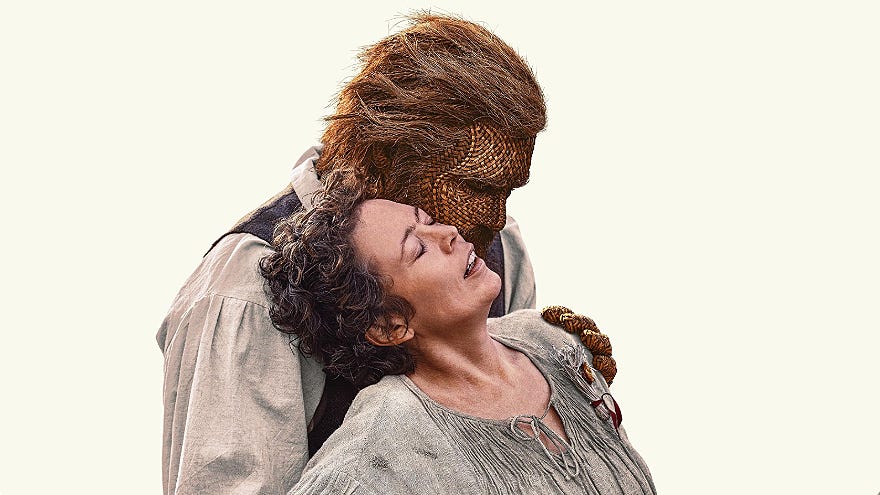
Married writer-directors Alex Huston Fischer and Eleanor Wilson have transitioned from their indie sci-fi roots to helm Wicker, a period fable that explores the complexities of human intimacy and social envy. The film stars Olivia Colman as an outcast fisherwoman who commissions a custom husband, played by Alexander Skarsgård, from a basketmaker portrayed by Peter Dinklage.
Adapted from Ursula Wills’s short story ‘The Wicker Husband,’ the project took shape during a two-week quarantine period in Australia. Fischer and Wilson used the isolation to expand on the source material’s sparse narrative, transforming a 14-page fairy tale into a feature-length exploration of emotional agency. The directors noted that the casting of Colman shifted the protagonist from the ‘ugly girl’ of the original text to a middle-aged woman who has spent a lifetime in self-imposed isolation.
Humanity and the Wicker Husband
A central challenge for the filmmakers was the development of Skarsgård’s character. Unlike traditional romantic leads, the Wicker Husband begins the film as a blank slate. Fischer explained that the character starts at a point of zero consciousness and must learn the nuances of human interaction, including the ability to read subtext and social cues.
‘He is sort of there in service of her, but he slowly starts to learn about the village, learn about the fisherwoman,’ Fischer said. ‘To be in a relationship, you need to be able to listen to what’s being said behind what’s being said.’
The film also addresses the concept of free will. While Dinklage’s character, the Basketmaker, designs the husband to be perfect, he intentionally grants the creation the autonomy to choose his own life. This dynamic allows the relationship between the fisherwoman and her wicker husband to evolve into a genuine partnership based on mutual care and domesticity.
Social Dynamics and Village Envy
The story serves as a microcosm for societal behavior, particularly regarding how communities react to unconventional happiness. In the film, the arrival of the Wicker Husband triggers a wave of envy among the villagers, led by a character played by Elizabeth Debicki. This jealousy prompts other residents to seek their own custom-made solutions for the voids in their lives.
Wilson highlighted the psychological shift in this adaptation, focusing on why the fisherwoman eventually allows outside rumors to affect her relationship. ‘If she felt that she was worthy of love, she would be able to not let that in,’ Wilson said. ‘It’s really about her own inner struggle of being able to accept love into her life.’
The filmmakers also expanded on specific details from the short story to ground the fable in physical reality. A single line about a broken bed in the original text inspired the directors to depict the couple’s wedding night, using the moment to blend humor with genuine attraction.
Collaborative Process and Audience Reception
Fischer and Wilson, who married shortly before writing the script, found that their shared tastes allowed them to navigate the complexities of a dual-director production. While they occasionally differed during the writing phase, they used those disagreements to refine the script’s emotional beats. Directing the film involved technical challenges, such as using a three-camera setup to give a wedding dance scene the feel of live theater.
The film has seen positive early responses at festivals, including Beyond Fest and the Middleburg Film Festival. The directors reported that audiences have responded strongly to the film’s unique tone, which has been described as a heartwarming story that borders on the edge of horror. Wilson emphasized that the industry should trust audiences who are looking for nuanced and unconventional narratives.