

You’ll often hear that all new NFL stadiums look the same. SoFi Stadium in Los Angeles. Allegiant Stadium in Las Vegas. Mercedes-Benz Stadium in Atlanta. US Bank Stadium in Minnesota. The new Nissan Stadium in Nashville. Even the Cleveland Browns are leaving downtown Cleveland to build a $2.4 billion fully enclosed lakefront stadium with a 176-acre entertainment district surrounding it.
The primary cause of this copycat trend is twofold: 1) Pretty much every new sports venue is now designed by the same architectural firms (Populous, HKS, and Manica), and 2) updated, indoor stadiums offer significantly better economics.
Not only do these venues provide the ability to host other large-scale events, like the Final Four, Super Bowl, or premium concerts in the winter, which can be worth hundreds of millions of dollars in additional income (depending on the city), but they are also usually designed in a way that maximizes high-end hospitality seating. The real estate surrounding the venue is then the cherry on top, since that money does not have to be shared with any other NFL teams.
You get the point. Now that sports teams have become legitimate businesses with $5 billion-plus valuations and private equity investors, there is pressure to monetize every square inch of a venue. The easiest way to do that is to build a new stadium with taxpayer money that can host events 365 days per year. Half of the stadium’s cost is then paid off before the venue even opens through naming rights deals, personal seat licenses (PSLs), and multi-year luxury suite rentals.
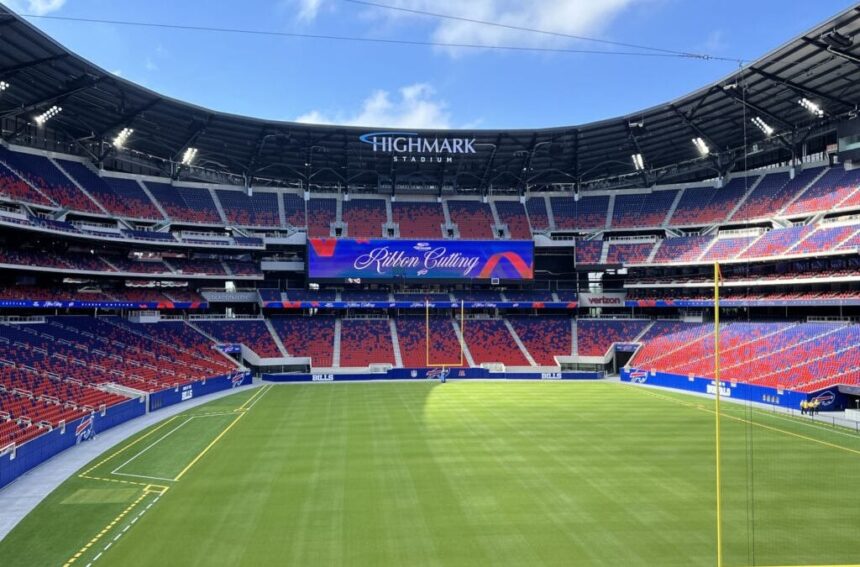
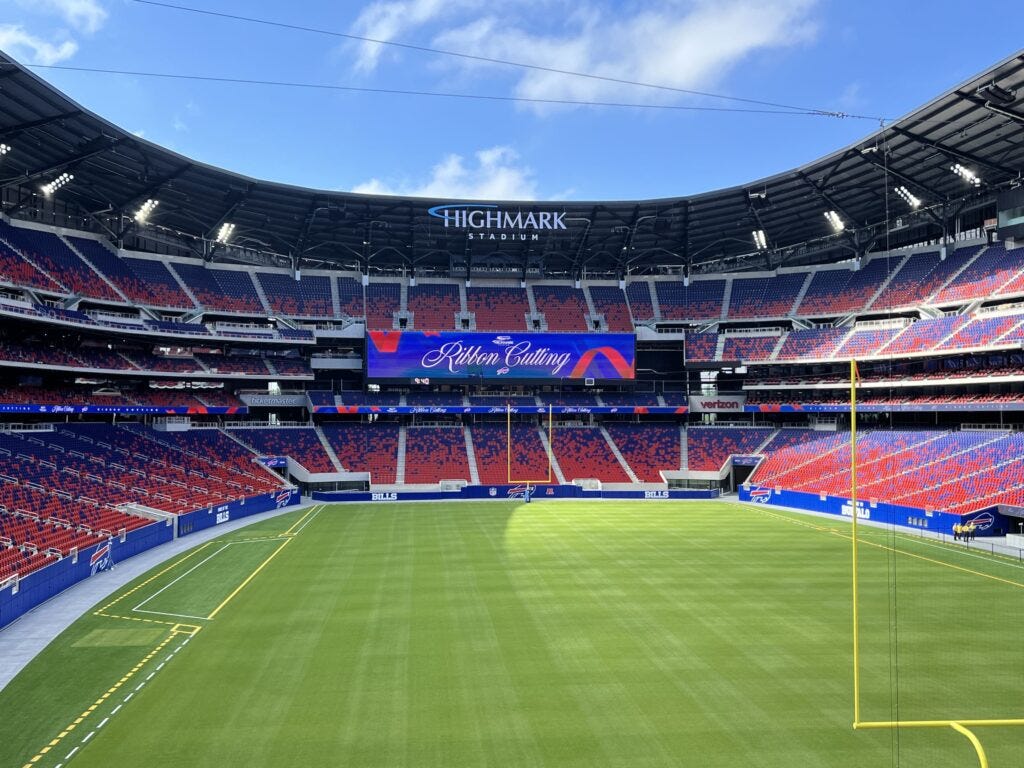
But that’s why I was so excited for Buffalo’s new stadium. Rather than going the indoor route, which would have been understandable given the Bills play in one of the league’s coldest climates, Buffalo committed to building an outdoor venue.
This wasn’t an easy decision. To build a stadium (with a natural grass field) that meets the NFL’s increasingly stringent safety criteria in a cold-weather climate like Buffalo, the Bills had to get creative. For example, in addition to a new heating system beneath the field, similar to the one used in Green Bay and Kansas City, the Bills’ new stadium has a canopy that covers 64% of the seats to protect fans from rain, snow, and wind. This canopy also has the world’s largest snowmelt system, with sensors built into it to detect moisture. The canopy then uses heaters to melt the snow, transporting it outside the stadium via a system of pipes.
And that’s really just the tip of the technological iceberg:
-
In addition to an underground heating system that can be wirelessly controlled down to a single degree, the Bills also installed a giant SubAir system beneath the field. This is the same system that Augusta National Golf Club has beneath all its greens (and even its walkways after a patron slipped and fell at the Masters). SubAir systems are great because they help control the condition of the playing field, using a vacuum to suck out moisture when it’s too wet or pushing air into the grass to help with aeration and overall care.
Read more