

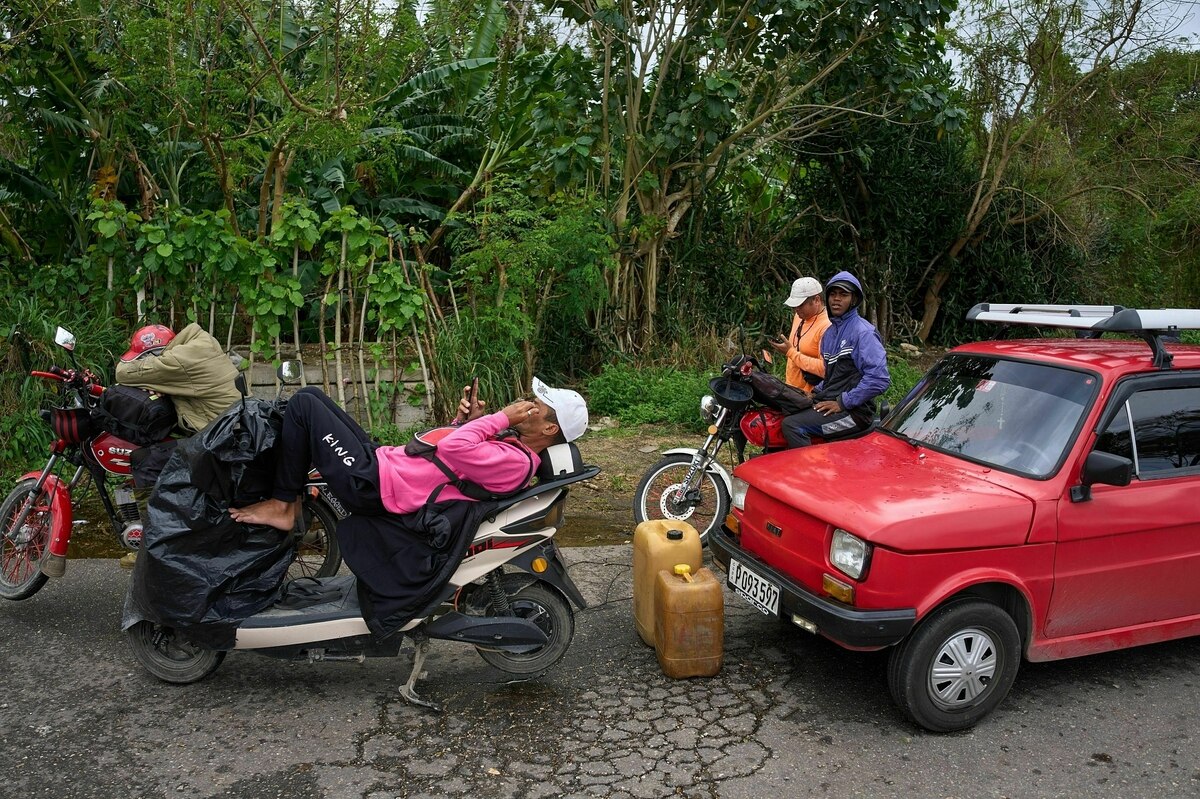
The emergency in Cuba is now a reality. The government in Havana announced measures on Friday to help keep the island running on a low budget. Public transport will be restricted the public administration only works from Monday to Thursdaybus and train journeys as well as ferry journeys are being rigorously reduced, tourists are being relocated to some hotels and universities are suspending face-to-face teaching for 30 days. It is important to counter “the collapse with creative resistance,” it is said in Havana.
How this will work in the medium term is something that is being debated in Havana, but also abroad. Cuban expert Jorge Piñón from the Faculty of Energy at the University of Texas predicts that March will see the entry into the most serious phase of the energy crisis.
According to President Miguel Díaz-Canel, Cuba received its last shipment of fuel in December. Diesel, kerosene and gasoline are already in short supply across the island and that is exactly why Mexico is exploring with the USA whether the friendly Latin American nation can help. Mexican President Claudia Sheinbaum does not want to risk increased tariffs that US President Donald Trump has threatened to impose on all potential oil suppliers to Cuba.
Meanwhile, preliminary talks between Cuban officials and US officials are already underway in Mexico. Alejandro Castro Espín is said to be there. The son of former President Raúl Castro was a close advisor to his father for many years and is a brigadier general in the Interior Ministry. He is considered a key figure and an expert on the USA, about which he wrote a book called “Empire of Terror”.
Party officials are already defining red lines
Statements from high-ranking party officials are already circulating in Cuba defining what is non-negotiable. This includes political prisonersis it[calledThisisalsoconfirmedbyManuelCuestaMorúafromthesocialdemocraticpartyArcoProgresistawhichisillegalinCuba”ThereleaseofpoliticalprisonersisacoredemandofcivilsocietyThereisapetitioncirculatinghereinHavanathatcallsforageneralamnestyforallpoliticalprisoners-toparliamenttheAsambleapopular”
Around 1,500 Cubans, some of them prominent, have signed, around 60 percent of them from the island, the rest from exile. On February 4, the petition was delivered by well-known academician Jenny Pantoja and Yenisey Mercedes Taboada, the mother of a protester on July 11, 2021.
Yunior Garía Aguilar, dramaturg at the Spanish asylum, also signed the petition. “It is important that civil society in Cuba makes itself felt again. It must be heard in the negotiations with the USA,” demands the cultural worker, who called for the “March for the Political Future” in November 2021 and was criminalized. Like many other critical spirits, he is in exile, but they also exist on the island. There, the theater project El Ciervo Encantado (“The Enchanted Deer”) broke away from official cultural policy and left the Council of National Culture.
Examples of what is happening on the island. Manuel Cuesta Morúa estimates that 90 percent of people there are in favor of a quick political solution. “Nobody here wants to languish, to persevere, as it is officially called. We already know all of that well enough from the last few years,” said the 64-year-old historian to the taz. He advocates a real opening and a plural party system. But first we have to survive with the emergency measures.