

Troops of the interim government in Damascus took over additional areas in northeastern Syria militarily on Monday night. These were previously under the control of the Kurdish Syrian Democratic Forces, the de facto armed force of the Kurdish self-governing region in northeastern Syria. All cities and areas west of the Euphrates, including the major cities of Raqqah and Deir ez-Zor, are now under military control of the central government troops in Damascus.
Fewer Kurds and more Arab tribes live in these areas. With support from the USA, the SDF defeated jihadist fighters from the so-called Islamic State (IS) there in 2019. The predominantly Arab provinces of Deir ez-Zor and Raqqah also came under Kurdish control as part of the self-government of northeastern Syria. However, to this day, large parts of the Arab population have not warmed up to the SDF rulers.
The SDF have now retreated behind the Euphrates into the Kurdish core areas. The central government now also controls the border crossings and the lucrative oil and gas fields in the region.
SDF Commander-in-Chief Mazlum Abdi said in a video message on Sunday evening: In order to avoid a civil war and “further senseless bloodshed,” the SDF agreed to the “tactical agreement” and agreed to withdraw its troops from Deir ez-Zor and Raqqah to Hasakeh.
Breakout of IS fighters?
The withdrawal is a key part of a 14-point plan between the central government and the SDF. The Syrian interim president Ahmad al-Sharaa announced this on Sunday. It envisages a ceasefire, the withdrawal of SDF troops, and that the central government Control over the oil and gas fields takes over. The agreement further stipulates that all PKK members withdraw from the areas. The SDF is close to the group, which is banned as a terrorist organization in Germany.

According to the agreement, responsibility for fighting against the so-called IS should now go to the central government in Damascus. A delicate step.
The ranks of the central government’s troops also include foreign fighters, fighters from Turkish-affiliated militias and others Supporters of radical Islamist ideologies. Members of the central government troops were present The massacre of the Alawites, Druze and Kurds involved. Videos show executions by troops subordinate to the Syrian Interior Ministry.
According to the Institute for the Study of War, ISIS fighters remain a “significant threat in Syria.” The Kurdish self-administration is now warning of a possible outbreak of the fighters. Khaled Davrisch, representative of the Kurdish self-administration of northern and eastern Syria in Berlin, said on Monday: There are currently attempts to break out IS members from the Al-Hol camp, where many of them are stuck. Transitional government troops have already freed IS prisoners in Tabqa, Raqqah and Deir ez-Zor.

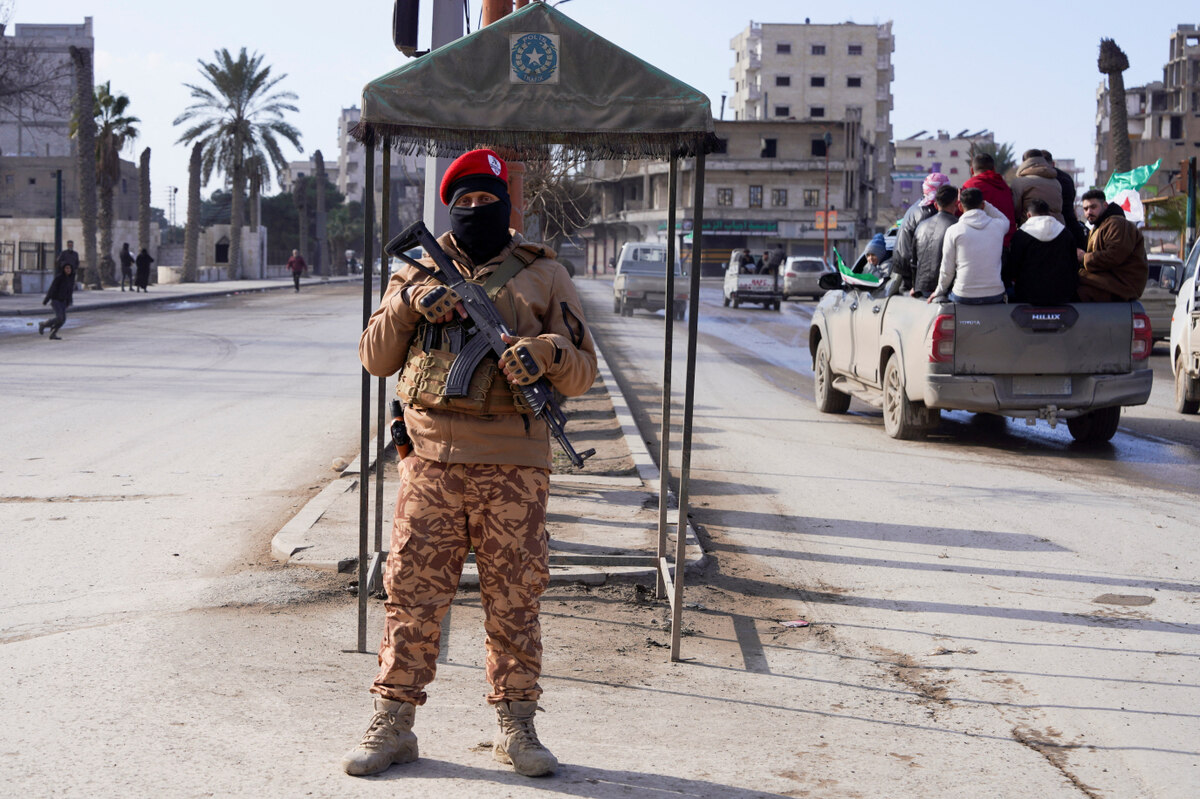
The Assad family’s 50-year rule has been history since 2024. Bashar al-Assad fled to Russia after rebels overthrew the regime. The interim government of HTS leader al-Sharaa is currently in office.
Both sides should break the ceasefire
In March last year, the SDF agreed to integrate its troops into the central government’s armed forces. However, this process reached a dead end.
The SDF media center said on Monday: The central government is breaking the ceasefire and continuing attacks on SDF forces in Ain Issa, Al-Shaddadi and Raqqah. Local sources from Raqqah report that snipers allied with the SDF continued to shoot at civilians until late on Sunday night. The independent online medium reports that more than ten were killed Al-Jumhuriya.
The fighting displaced around 10,000 people – most of them Kurds
One thing is certain: even after the ceasefire agreed on Sunday evening the situation remains precarious: The fighting displaced around 10,000 people – many of them multiple times. Kurds in particular are on the run. According to the United Nations, around 700 families have so far fled to the Kurdish province of Hasakah.
The displaced people need food, drink, shelter, medical care and protection from the cold. An employee of the aid organization Save the Children reports: She saw babies and small children fleeing barefoot and without winter jackets or blankets in temperatures of two degrees Celsius.