

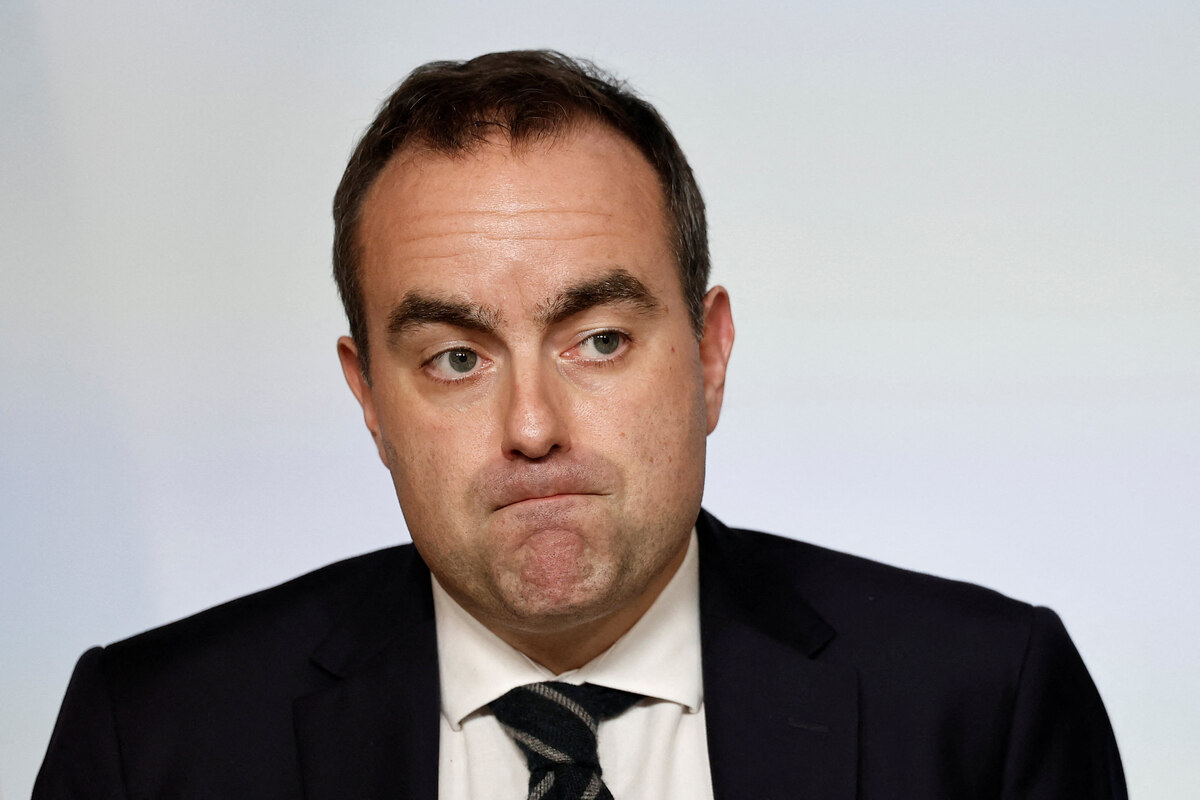
AFP | The French budget is to be passed for a third consecutive time without a final vote in the National Assembly. France’s Prime Minister Sébastien Lecornu announced on Monday that it would use the controversial Article 49.3 to push the budget for the current year through parliament. He originally came into office with the promise to avoid exactly this.
Lecornu said he decided to apply Constitutional Article 49.3 “with some regret and some bitterness.” “We have to be humble,” he emphasized. “It’s half success and half failure.” It is obvious “that we are at an impasse,” he added, referring to the budget discussions.
It is now becoming apparent that the government will probably survive the no-confidence votes associated with Article 49.3. The government recently made several concessions to the socialists, whose votes matter. “These make it possible not to overthrow the government,” said the leader of the Socialist group, Boris Vallaud, to the newspaper The Parisian.
At the weekend, Lecornu announced, among other things, that he would stick to a special tax for large companies that he originally wanted to abolish. In addition, cafeteria food should be further subsidized so that students can receive meals for one euro. “We have managed to ensure that austerity measures amounting to nine billion euros do not have to be borne by the French,” said Vallaud.
Left-wing populists are calling for higher taxes for the ultra-rich
The head of the left-wing populist party La France Insoumise, Manuel Bompard, criticized the government’s continued refusal to impose higher taxes on the assets of the ultra-rich. His party has already announced a first vote of no confidence.
The government suspended the budget debate in the National Assembly last week because no compromise was in sight.
Article 49.3 will probably have to be applied three times – when voting on revenue, on expenditure and on the general budget. In any case, a motion of no confidence can then be submitted. If the government survives the no-confidence vote, the budget could be passed by mid-February.
In December, the National Assembly transferred the current budget to 2026. However, this does not allow for new austerity measures or increased spending on defense, for example.
France is faced with one Record debt of 117 percent of gross domestic product (GDP) is under pressure to rehabilitate its public finances. Lecornu wants to reduce the deficit to less than 5 percent of GDP.