

It’s been over a week now northeastern city Kobanê in Syria surrounded by armed forces. This is what locals and representatives of the Kurdish self-government report. “The situation is very bad. There is no electricity, no water, no internet,” says Aylan, a resident of the region. His actual name is different, but he would like to remain anonymous.
Aylan works at an international NGO. He uses a Turkish network to communicate with me in chat. But the internet is unstable and messages don’t always arrive. There is a siege about 25 kilometers from Kobanê, around the city, and hardly any way in or out.
The residents are gradually running out of food supplies, medicine and fuel. The latter is particularly important in the Syrian winter: it is the main source of heating for the population. Houses usually do not have central heating, but are heated with heating stoves that run on fuel.
Temperatures in Kobanê are currently hovering around zero degrees; a few days ago there was still snow on the streets. According to media reports, up to five children aged between two months and four years are said to have frozen to death. In addition, several thousand internally displaced people from the region have come to the border town, putting additional strain on scarce resources.
Syrian government announces humanitarian corridor
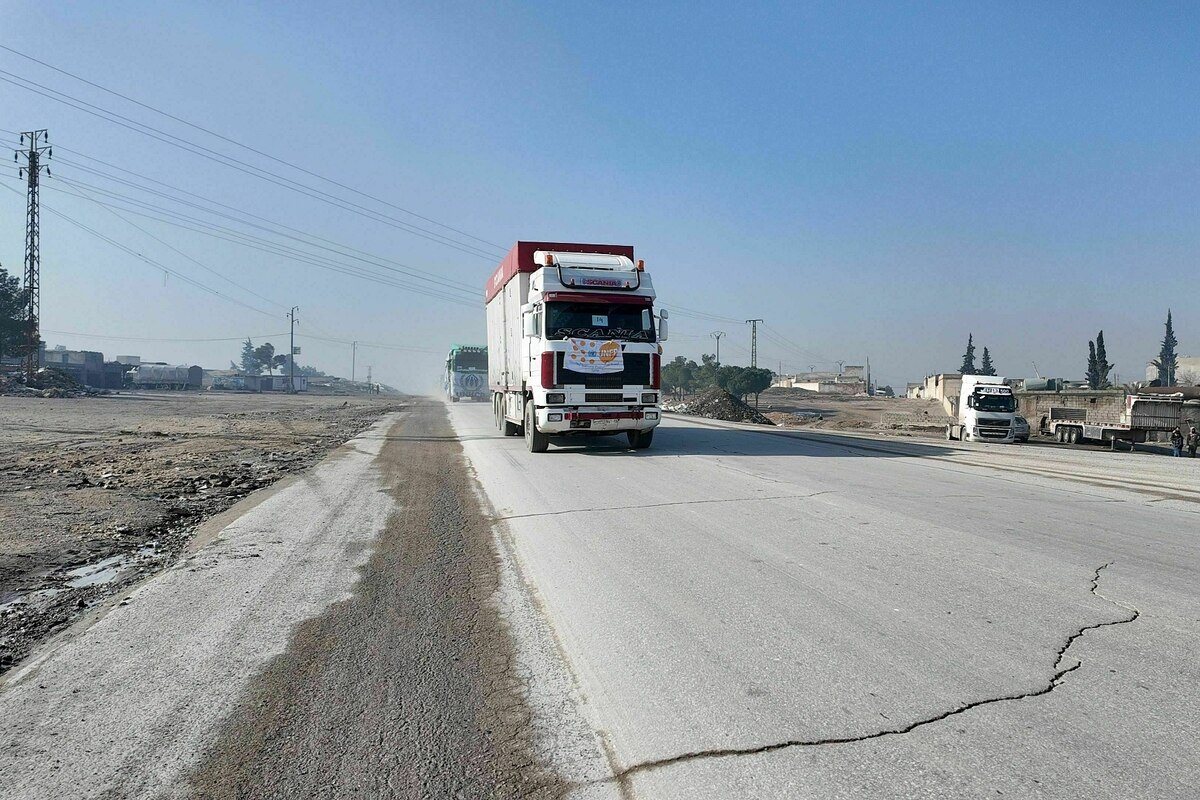
On Sunday, the Syrian government agreed to extend the ceasefire by 15 days. At the same time, a convoy with 24 trucks full of food and fuel drove into the city that night.
The aid delivery was agreed by the United Nations, human rights organizations and the Syrian government, the UN Office for the Coordination of Humanitarian Affairs confirmed. However, the situation in Kobanê remains “challenging” and the flow of people from neighboring villages into the city continues.
The government also announced a humanitarian corridor to Kobani and Hasakah, but did not address the allegations of the siege. She confirmed, however, that she had sent security forces to the villages around Kobanê to “maintain security”.
Kobanê, a small Kurdish town on the Turkish border, has been the scene of several conflicts since the Syrian civil war: its population suffered from attacks by the “Islamic State” (IS), then from the conflict between the Kurdish Syrian Democratic Forces (SDF) and the Turkey-aligned Syrian National Army (SNA). Now she has found herself in the middle of the dispute between the SDF and the Syrian army.
Concern about IS strengthening
Last week, Syrian forces seized more and more territory in the autonomous region of northern and eastern Syria, commonly known as Rojava. The fighting followed months of skirmishes.
Tensions have pervaded the entire region since the fall of the Assad regime. Arab tribes have long harbored frustration and dissatisfaction with the Kurdish SDF. They accuse the SDF of restricting freedom of expression, arbitrarily arresting people and using excessive force. The SDF have denied this in the past.
The Syrian central government now wants to integrate the Kurdish armed forces into the state army and gain control over external borders, oil fields and several self-governing cities. The Kurds are hesitant and fear the loss of their government and business model. Last but not least, there are concerns about violence and a strengthening of IS, which the Kurds have been fighting for years.