

Two exhibitions worth seeing in Schöneberg deal with mental health. It’s about sanatoriums in the 19th century and psychiatry in the 20th century.
I In the Schöneberg Museum, an exhibition that is well worth seeing has just been extended until April. It tells the story of 1861 under the title “Between Wellness and Madness”. Maison de Santé founded by Eduard Levinstein. The private clinic at Hauptstrasse 14, built in what was then still rural Schöneberg, gained an international reputation, initially as a spa facility, later primarily as a sanatorium and nursing home for nervous and mental illnesses, including wealthy morphine and cocaine addicts – whose withdrawal, as a document shows, was accompanied by high consumption of champagne.
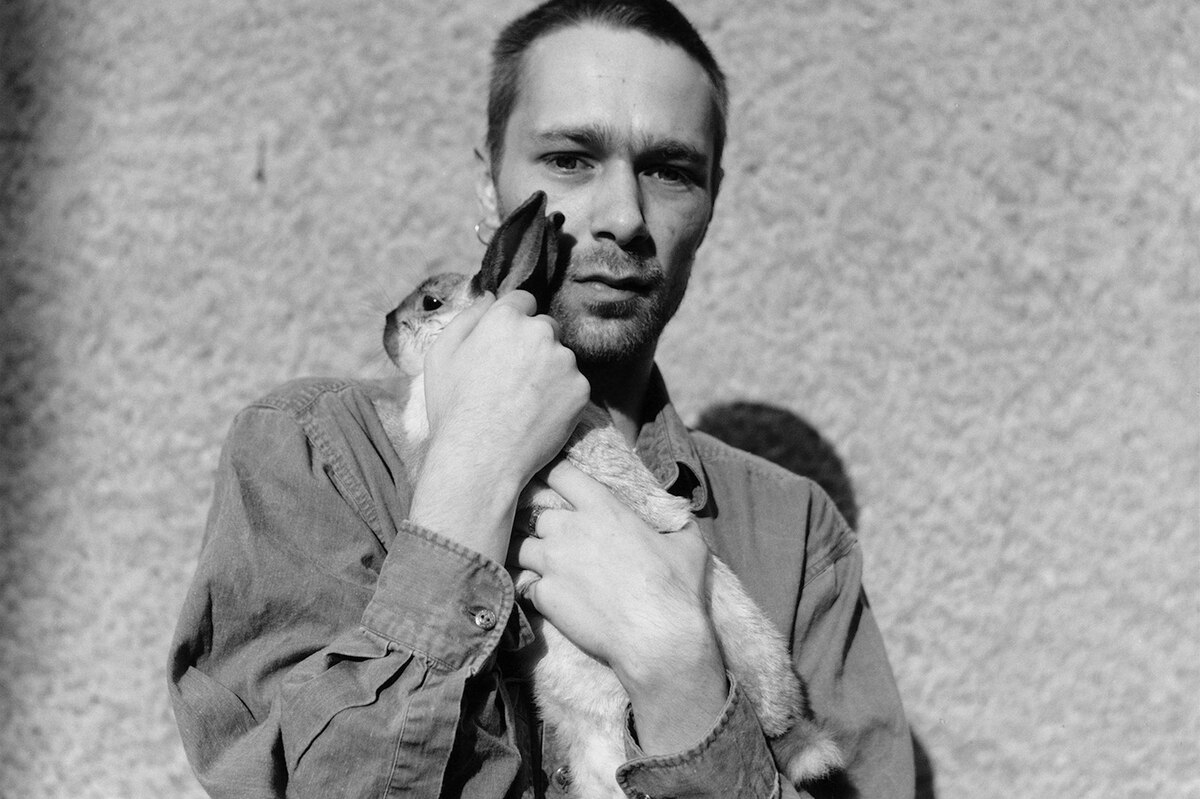
Just a short distance down the main street, in the Haus am Kleistpark, you will come across pictures from 20th century psychiatric hospitals. They are special pictures, as you can immediately see. Black and white photo portraits that are characterized by a beautiful livelinesswhich seems to contradict the characterization of the people depicted as “absent people” – the title of the series. The portraits of those absent from society, but also from their own consciousness, were created in the long-term psychiatric ward of a Berlin clinic where the photographer Christa Mayer worked as a psychologist and psychotherapist.
The liveliness contradicts the characterization of those depicted as absent
Mayer had further trained her practice as an amateur photographer through courses in Michael Schmidt’s famous “Workshop for Photography” at the Kreuzberg adult education center. The photo workshop set up in 1976 developed new forms of documentation. At the same time, the antipsychiatry movement questioned everyday clinical practice and tested new forms of therapy. This also affected the use of photography. It was no longer necessarily used for diagnostic purposes, but attempts were made to integrate the camera into psychotherapeutic work.
Looking for proximity
The spirit of the times encouraged Christa Mayer to make her photographic passion fruitful for her patients and, conversely, to make her passion for her patients visible in the further development of photographic portraits, such as in long-term portrait series and media extensions in the form of audio and video tapes. Christa Mayer looks for closeness and the face, as in the series “The Cheeky Sonja” (1996), subtitled by Sonja herself, with 14 color close-ups.
Similar approaches Christa Mayer also other subjects from her large exhibition in the Haus am Kleistpark. These include the landscape, the children playing in Istanbul and the psychoanalytic or shamanistic healers in New York and Mexico. The video loop “Ex Oriente Lux” (1992) particularly beautifully shows Christa Mayer’s unerring instinct for discovering liveliness. For example, the urban liveliness in the image of a wall in the afternoon light, along which passers-by walk and in front of which cars rush past, while the abstract shadow play of the leaves of the trees appears on it.
Together for a free press
As a cooperative, we belong to our readers. And our journalism is not only 100% non-corporate, but also accessible free of charge. We make all articles freely available, without a paywall. Especially in these times, classifications and information must be accessible to everyone. Our readers don’t have to pay anything, but they know that critical, independent journalism doesn’t emerge from nothing. We are very grateful for that. So that we can continue to do our journalism tomorrow, we need more support. Our next goal: 50,000 – and with your participation we can do it. Set an example for the taz and for the future of our journalism. With just 5 euros you are there!
Support now