

By Jonathan Fritz
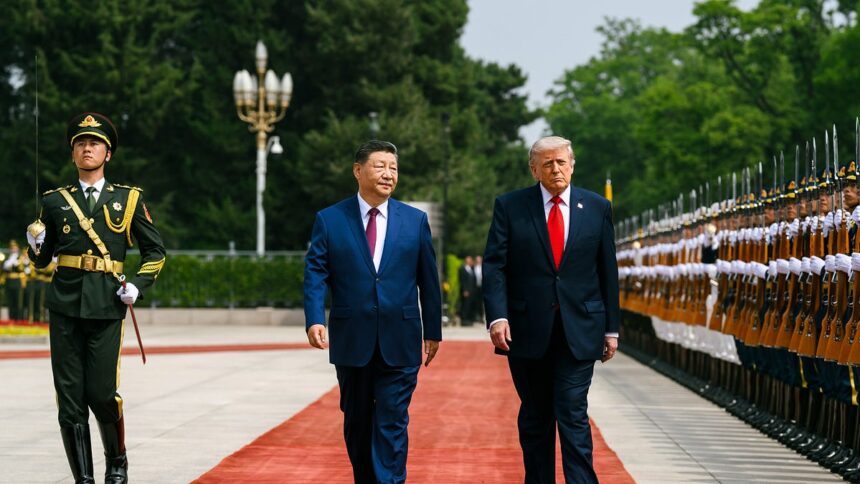
When President Trump last met with his Chinese counterpart, Xi Jinping, in Beijing, I was the second highest ranking official in the State Department’s Bureau of East Asian & Pacific Affairs. Yet, with barely a month left before the crucial summit — bringing together the world’s two most powerful leaders — I and my colleagues were left in the dark about our president’s intentions. Political leadership was petrified of getting out in front of the boss, paralyzing prep work for the high-stakes meeting.
Though I have since left government, I can only hope current administration officials are better informed about Trump’s priorities ahead of Xi’s upcoming visit to Washington. Unfortunately, the president’s track record suggests this is a false hope. I served in the State Department for more than three decades, and I can say definitively: This is not normal, nor is it safe for the American people.
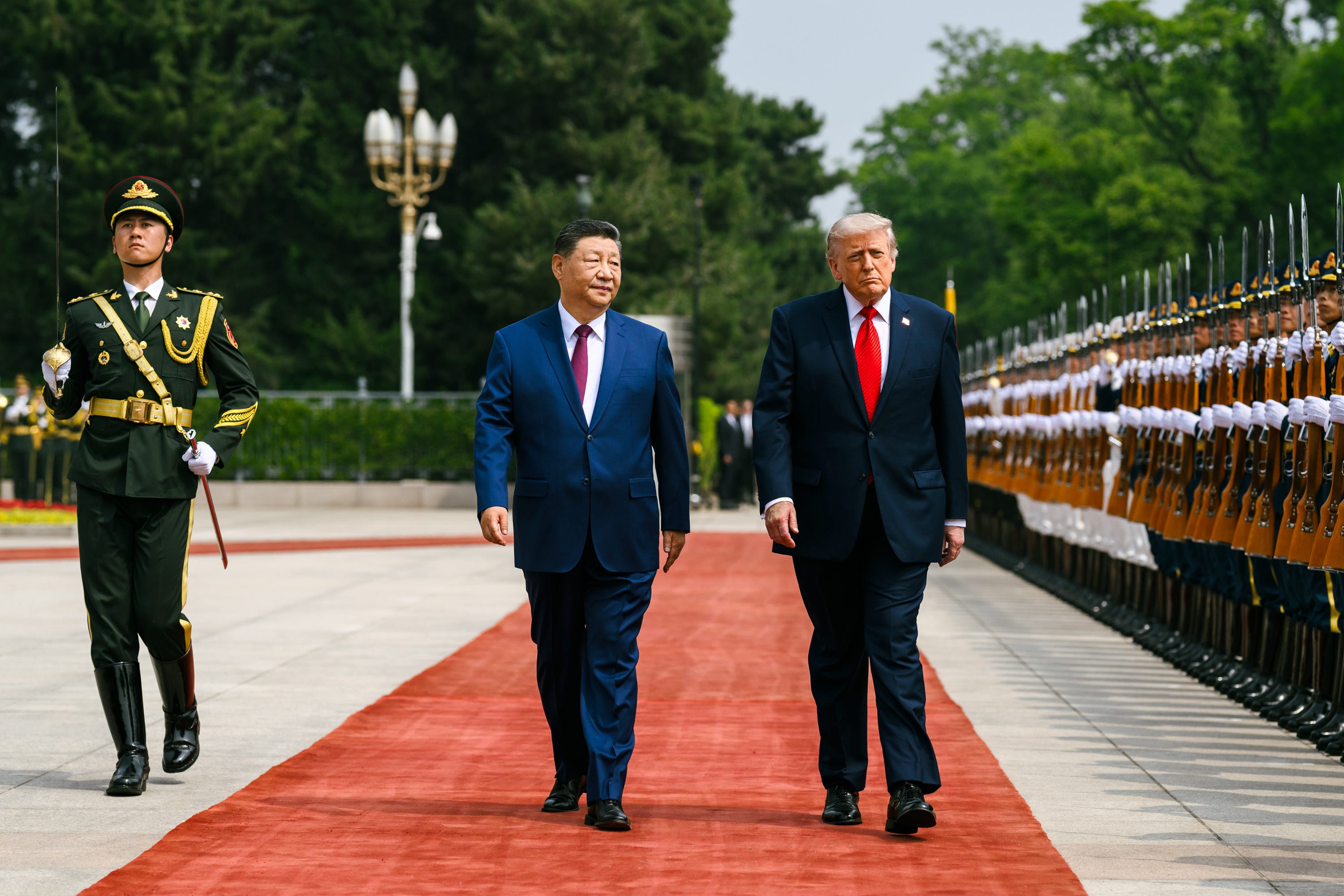
Even in the best of circumstances, preparing for engagements with China is challenging diplomatic work. A long list of key economic and national security issues requires urgent pressure on Beijing. Priorities must be carefully ranked by the interagency, and diplomatic tools must be fortified. Partners and allies can be deployed as force multipliers, but they have their own domestic politics and bureaucracies to manage. Then come the grueling negotiations with the Chinese, who must navigate their own rigid internal bureaucracies. Progress on these fronts is never guaranteed, especially with a counterpart as ideologically hostile as the Chinese Communist Party.
And yet, ahead of the previous summit, our diplomats were left guessing. We had no direction on whether a pending arms sale to Taiwan would be approved or canceled, or if the PRC’s support for Russian President Vladimir Putin’s invasion of Ukraine would even be broached. We had no idea if the president would expend diplomatic capital to secure the release of unjustly detained American citizens, or if he would demand serious bilateral discussions on AI safety, the PRC’s expanding nuclear arsenal, or its aggressive cyber-hacking of U.S. businesses and infrastructure.
In previous administrations, there would have been a series of interagency meetings to map out desired outcomes and protocol arrangements — but at least up until I stepped down in mid-February, I was unaware of any such process. In external-facing briefings, neither I nor my counterparts from other agencies had anything solid to share about what to expect from the summit.
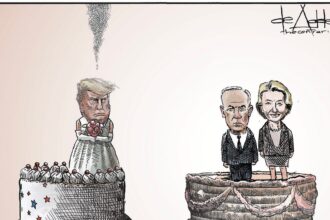
Trump exacerbated this paralysis by undermining the approach to China outlined in his own National Security Strategy, which calls for working with treaty allies to counteract China’s “predatory economic practices” and strengthening “collective defense” along the Western Pacific’s First Island Chain. On trade, Trump routinely alienates these partners, imposing tariffs on Australia and the UK under flimsy pretexts and attempting to bully Canada on a petulant whim. On security, he dithers on Taiwan arms sales and South Korean military exercises while pursuing personal “bromances” with Xi Jinping and Kim Jong Un.
Meanwhile, our PRC counterparts arrived crystal clear on Xi’s priorities for the encounter. Xi’s agenda remains the same now as it was then: chip away at U.S. support for Taiwan and protect a PRC-friendly status quo. Xi used both his public and private remarks to good effect, capitalizing on Trump’s overweening self-confidence in his own negotiation skills.
The results speak for themselves: the U.S. adopted Beijing’s preferred “constructive strategic stability” framing. Soon after, Trump publicly expressed ambivalence about defending Taiwan. Even Secretary of State Marco Rubio appeared caught flat-footed when Trump undermined his post-summit assertion that there had been no change in U.S. policy on Taiwan, instead telling reporters he would no longer honor the “Six Assurances” to Taiwan upheld by every administration since the 1980s.
Xi’s visit is tracking toward a similarly disappointing outcome, but I hope I’m proved wrong. I hope my former colleagues — backed by the White House — have been quietly laying the groundwork to secure the freedom of unjustly detained American citizens like U Min Zin and Chen Youlin and courageous Chinese dissidents like Jimmy Lai or Joshua Wong. I hope Trump and Xi will confront together the existential threats of losing human control over ever-more powerful AI models and a new nuclear weapons race. I hope the president demands Xi halt material support for Putin’s war machine or else face consequences from a unified trans-Atlantic front, and that he has built a coalition of like-minded market economies to counter the PRC’s predatory industrial policies.
The security and prosperity of the American people — and perhaps global stability — depend on whether we can make progress on these issues. If any of this comes to pass because of Xi’s visit, no one will applaud louder than me. But based on everything I learned across 30 years in the Foreign Service, I highly doubt it.
Jonathan Fritz is a senior fellow for China policy at the Center for American Progress. Previously, he served for 32 years in the U.S. State Department as a diplomat, most recently as the principal deputy assistant secretary of state for East Asian and China Affairs.