

Translate this article to English
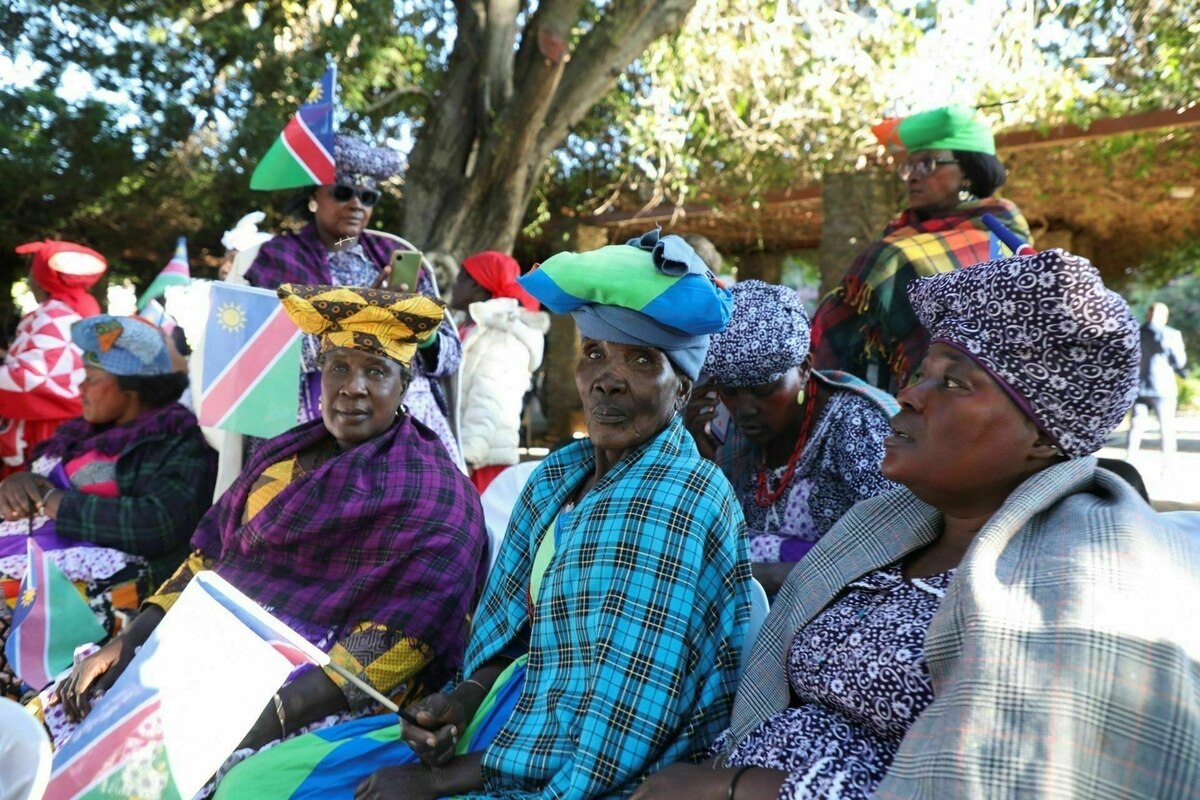
It was a warm morning in the Khomas Highlands of Namibia. Old activists from the Herero and Nama ethnic groups stood solemnly in front of rows of candles. It was the first national one Genocide Remembrance Day in Namibiaon May 28th last year, set up to mark the anniversary of the closure of the German concentration camps in the former German South West Africa in 1908 after genocide four years earlier.
These days also mark the beginning of the Herero and Nama uprising against the Germans. And every commemoration in Namibia not only recalls the events of that time, but also reminds us that the descendants of the victims are still waiting for Germany to fulfill its repeated promises.
The Herero uprising against the German settlers in the former colony began on January 11th and 12th, 1904, and was brutally suppressed by the German army under General Lothar von Trotha over the next four years. His infamous “extermination order” (“Every Herero within the German border will be shot with or without a rifle, with or without cattle”) drove tens of thousands of people into the hostile Kalahari desert, where they starved and died of thirst.
There were also systematic executions and forced labor – according to historians, the first genocide of the 20th century. An estimated 65,000 Herero and 10,000 Nama – up to 80 and 50 percent of the total population of the two ethnic groups, respectively – died.
“Our expectations of justice have not yet been met,” says Herero activist Israel Kaunatjike, founder of the “No Amnesty on Genocide” campaign. “Our ancestors were slaughtered, land was stolen, and now we wait.”
Germany only offers development aid
After decades of pressure, Germany finally recognized the colonial massacres as genocide in 2021, although not in the legal sense. In one “joint declaration” with the government of Namibia the German federal government admitted that German troops had committed genocidal violence at the time and committed itself to paying 1.1 billion euros over a period of 30 years for the development of the regions where the descendants of the Herero and Nama victims live today.
German officials presented this as a gesture of reconciliation, not a legally defined reparations payment. The then SPD Foreign Minister Heiko Maas, a key figure in the negotiations, asked for forgiveness and declared: “We will now officially describe these events as what they were from today’s perspective: a genocide.” But the Foreign Office specified: “Legal claims for compensation cannot be derived from this.”
Critics say reparations and development aid are two different things, and not just in terms of language. In contrast to the victims of the Holocaust against European Jews, in the case of the Herero and Nama, the term “reparations” or “restitution” is avoided by the German side in order not to create a precedent for demands from other former German colonies.
In addition, to date no payments or even detailed implementation plans have been made on the basis of the “Joint Declaration”. It was only in December 2025 that a report found that no money had yet flowed to the victims. According to analysts, this is due to bureaucratic and political hurdles on both sides and Germany’s insistence that the money should not be seen as compensation. In Namibia, the outcome of the negotiations with Germany was met with widespread criticism, and descendants of the victims filed a lawsuit.
“Development projects are welcome for many Namibians, but they do not meet the demands for justice for the genocide itself,” says John Nakuta, a human rights lawyer at the University of Namibia.
Descendants of survivors feel excluded
The Herero and Nama communities were not at the negotiating table. Namibia’s government said it was negotiating on behalf of all its citizens, but the direct descendants of survivors often felt marginalized.
Amnesty International criticizes the fact that the German government does not want to speak directly to the affected communities and does not want to commit to a legally binding compensation obligation. “There can be no real justice if those affected are excluded from the conversations.” Germany’s handling of the genocide remains a “disgrace” over a century later, said Amnesty regional director Tigere Chagutah.
Die Demand for reparations includes land rights and the restitution of all human remains of genocide victims brought to Europe. Development projects from outside, on the other hand, are seen as a threatening continuation of colonial power relations that do not address the injustices that have existed since the colonial era.
Namibia’s new president wants to renegotiate
Namibia’s government under the newly elected president Ntwwwwwurly keeps the pressure on Berlin to do more than symbolic politics. At the first official Genocide Remembrance Day in 2025 she affirmed the government’s commitment to continue negotiations until a satisfactory outcome is reached that recognizes the genocide and pays reparations. “We must maintain that as a nation we will continue to fight until the end result,” she said.
Nandi-Ndaitwah expressed optimism that a new agreement can be reached by 2026. Namibia doesn’t just expect development aid from Germany, but full recognition, apology and compensation, she says.
Germany maintains that there can be no reparations for colonial crimes because the relevant international legal provisions did not yet exist at the time and there was therefore no violation of the law for which compensation should be paid. The approach of asserting moral rather than legal responsibility and reconciliation rather than reparation is intended to avoid opening the door to demands from other countries
But in Namibia the demands for reparations are becoming louder and the unanimity in society is increasing and is becoming increasingly difficult to ignore. “Recognition is important, but compensation and justice must follow,” says Kaunatjike.
Can there be justice without reparation? That is the question that both governments must now face. For thousands of Namibians whose families bear the scars of the destruction of life, land and culture, the answer is clear.