

Jana Klinkenberg drives her small electric car through the narrow streets of Teterow. Malchiner Tor, Rostocker Tor, the town church from the Middle Ages, the neo-baroque town hall with the Hechtbrunnen, the geographical center of Mecklenburg-Western Pomerania. Things move quickly through the town of 8,200 inhabitants, a good 50 kilometers south of Rostock. “It’s pretty here, isn’t it?” says Klinkenberg.
After a few minutes, the automobile city tour is complete. The 31-year-old is now on her way to Teschow, a remote district of Teterow, Klinkenberg’s home. Teschow – that’s four streets, a large private clinic in the former manor house, a golf course that was deserted on this winter afternoon, a lot of space, very few people. And here too: everything is idyllic, everything is pretty.
Nevertheless, Klinkenberg has now purchased surveillance cameras for her property. Better safe than sorry. Because she is one of “maybe ten” Green Party members in Teterow. Above all, she wants to enter the state parliament for the party in the state elections in Mecklenburg-Western Pomerania at the end of September. Her accurate self-description: “I like to be loud and present.” This presence could be dangerous for you as a Green Party.
Below-average election results, weak party structures, huge districts: being active for the Greens in Mecklenburg-Western Pomerania – as in East Germany in general – is not a pleasant walk. It’s never been that way. In recent years, however an almost universal hatred of the party and its representatives added. Klinkenberg has been with the Greens since 2012. She experienced it.
“Never go out alone, always with two people”
Despite the icy temperatures, the clerk and freelance riding instructor sits on her rustic veranda, smokes and talks about what it was like in the 2025 federal election, in the 2024 local and European elections, and in the previous state elections. About the hostility at the campaign stands: “Child fuckers, pedophiles, you are all drug addicts.” About the journeys through the villages, the attempts at intimidation on the country road, the uneasy feeling when putting up posters. “Never go out alone, always in pairs, that’s our strategy here.”
The AfD already won 35 percent in the economically weak Mecklenburg-Western Pomerania in the federal election. The party is now valued at almost 40 percent in surveys, and the trend is rising. The Rostock district, to which Teterow belongs and which advertises itself with the unambitious slogan “So far, so good”, is one of the strongholds of the extreme right.
Right-wing normalization has long since begun. The AfD has been the mayor of Teterow since 2024. Last year, the AfD celebrated a summer festival in the neighboring town, together with CDU and FDP members of the Schwerin state parliament. Recently, young people in Teterow gave the Hitler salute in broad daylight on the street.
Drowning in rural areas
In many places, actually almost everywhere, says Klinkenberg, the Green Party posters were destroyed during the last election campaign as soon as they were hung up. In Teschow they remained undestroyed. That was probably because of Klinkenberg. She’s good with people. She gets on well with the CDU man in the village. She’s good with the farmers. “Then the Kuemmerling is put on the table at an event in the morning at 11.” The Greens won’t get very far here if they’re squeamish.
There is no other way, if the party doesn’t want to “drown” here, as Klinkenberg says. “I can’t allow myself to walk around the village in an elitist manner and preach to farmers from above how important it is to rewet former moorland and cultivate it with paludiculture.” So working with plants and animals which cope very well with permanently wet locations.
“Everyone thinks it’s great at a Green Party meeting, but not here at the regulars’ table or with the rural women.” In order to have a say, it is important to build trust, acquire specialist knowledge and demonstrate commitment to the village, says Klinkenberg.
She was the Green Party leader in the Rostock district, a member of the district council and a community representative. She knows the small and small aspects of local parliaments and the inner workings of the party. Sometimes, says Klinkenberg, she struggles with the Greens, not with the content, but with the structures: “If I have the feeling that people are not fulfilling their responsibilities and are primarily thinking about the maximum they can get out of it for themselves, then I have a problem with that.”
Party in crisis

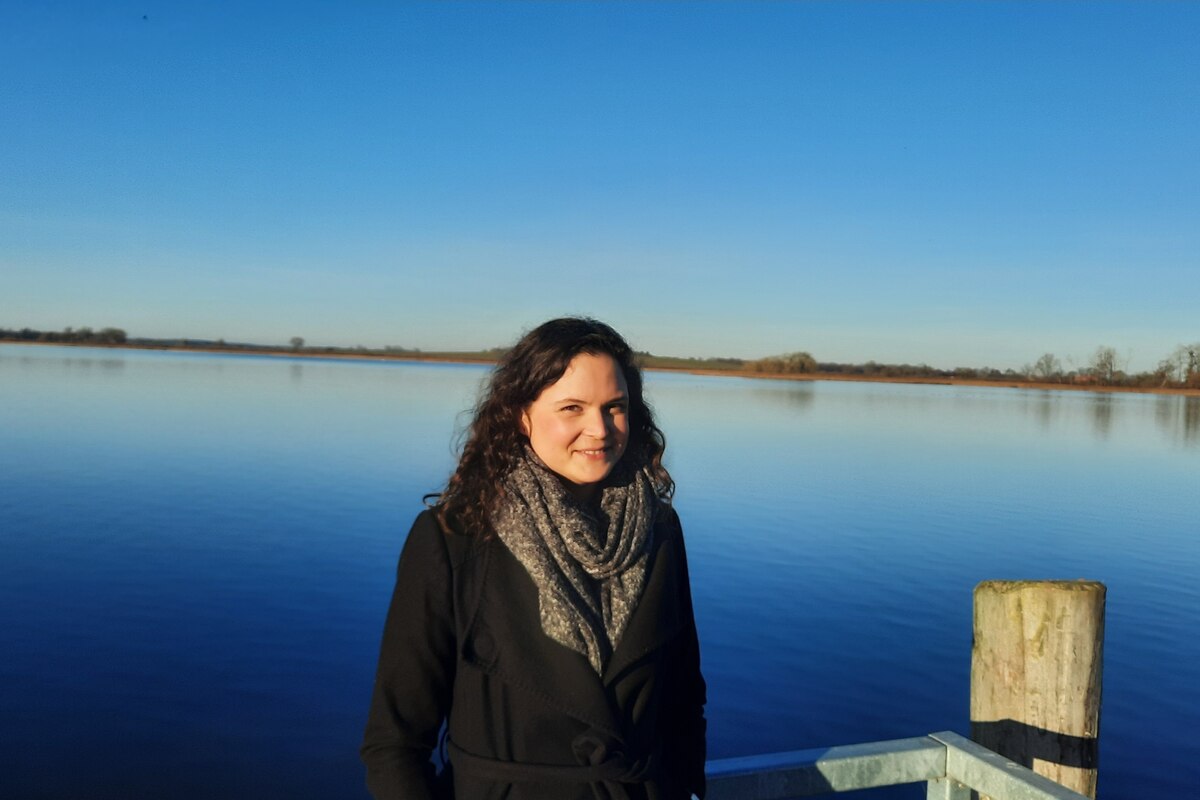
The fact that she will now run for second place on the party’s list at the Green Party conference on January 24th in Schwerin and, in the best case scenario, become a member of the state parliament in eight months also has something to do with this. She says: “There are too few of us in the area not to stick together. We cannot afford to ignore opinions. We now need a grassroots democratic new beginning.” This is what she stands for with her candidacy.
New beginning? What’s going on there?
The Greens in Mecklenburg-Western Pomerania have been in a deep crisis for months. On the one hand, this was preceded by conflicts in the only five-member state parliamentary group, at the center of which were the group leader Constanze Oehlrich and her deputy Hannes Damm. On the other hand, there was also a party conference at the end of September last year, at which the state list was already elected.
Most of the delegates at the time had no idea what the dispute in the group was about, including Klinkenberg. “I thought that was silly. We delegates knew nothing and couldn’t ask any critical questions about it. Nevertheless, the election of the state list went ahead as if nothing had happened.” Ultimately, faction leader Oehlrich came first on the list with a weak result. Damm, on the other hand, fell through, first in the fight for second place, then at fourth place, then at sixth place. A public humiliation.
Even national media were now interested in the regional association, which with 1,700 members is smaller than the Green district association in Berlin-Pankow or Bonn. This is all the more so since the Greens are only at 5 percent in polls and have to fight hard to get back into the Schwerin parliament. Tenor: A party on the brink of collapse before the election campaign has even started.
Rest in the box
The great peace that was supposed to come after the party conference did not come about. On the contrary, shortly afterwards details from the group became public. With Oehlrich it was: abuse of power; at Damm: aggressive behavior. Damm was kicked out of the parliamentary group, Oehlrich withdrew her candidacy – and the state executive board pulled the plug. The original state list should therefore now be re-elected.
Many in the Greens would like to see calm return to the regional association with the repeat party conference next weekend.
So does Pascal Hilker. The student teacher is the district leader of the Green Party in Western Pomerania-Greifswald in the far east of the state. Hilker says: “We are pleased that at the end of January we will finally have put this story behind us and will then finally be able to talk about the topics and content that are important here locally and for this country.”
In general, Hilker is confidence personified at a meeting in Greifswald. Even in conversations with non-party members, many would tell him that the Greens should get back into the state parliament. “We shouldn’t bury our heads in the sand now. There’s a lot at stake.”
Greifswald – island of green bliss
The 21-year-old is studying at the University of Greifswald, like almost one in five people in the city of 56,000 inhabitants on the Baltic Sea. This is probably why Greifswald is something like the island of green bliss by Mecklenburg-Western Pomerania standards. The Hanseatic city has had… a green mayor. The party won over 12 percent in the federal election. “It sounds like a cliché. But as Greens, we of course notice that a lot of students live here.”
Fresh kitchens in the daycare centers, the spruced up old city harbor, the new development area right next to it, the recently opened Romantic Gallery of the Pomeranian State Museum and of course the Paludi culture: Mayor Stefan Fassbinder has done a lot for the city in the last ten years, says Hilker, who was born and grew up in Greifswald.
Nevertheless, the Green Fassbinder and the SPD and Left parties that support him are also under pressure here. Since the local elections in 2024, a strengthened AfD has had a narrow majority in the citizenry, together with the CDU, a right-wing CDU spinoff and other conservative factions. According to Hilker, there is also a risk that many progressive projects previously pushed by the Green-Red-Red coalition will be withdrawn.
Massive hostility
Things are already looking really bleak outside of Greifswald. Over 70 percent voted for the AfD in some communities in the Vorpommern-Greifswald district in the federal election.
Hilker reports similar hostilities in the election campaign as Jana Klinkenberg. “Members of ours were followed and filmed on poster tours, large-scale posters were daubed with swastikas or were completely destroyed. We had never experienced this on such a massive scale in previous years as we did now during the federal election.”
A different mood has prevailed in Greifswald so far, says Hilker in the Green Party office in the historic old town – but then points to the large window facing the alley that was spat on again the night before. After all, the window has never been broken in this office. “We’re really happy about that.”