

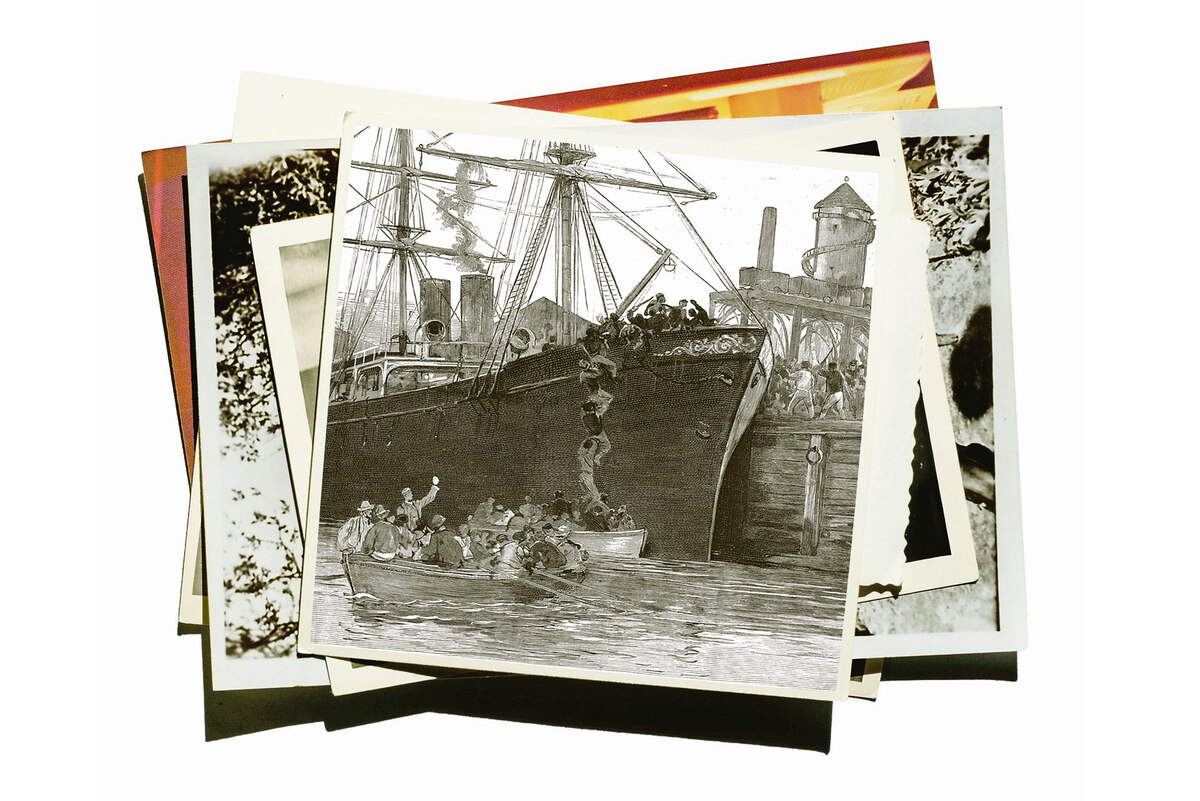
N ezeeland in the summer of 1890. In the port of Auckland, workers line up along the quays, shoulder to shoulder. Your goal: No box, no sack, no barrel should leave the harbor basin. They no longer want to accept the financial crisis and the resulting low wages. But above all, they fight for the right to form a union. What begins here will later go down as the first major industrial dispute in the history of New Zealand and Australia.
The strike is more than a local event. As early as March 1890, workers in Australia stopped work and the uprising spread to New Zealand, Tasmania and the ports throughout the Pacific region. Solidarity emerges between seafarers, dock workers and sheep shearers. In Sydney, representatives from ports across Australia are organizing to form the Wharf Laborers’ Federation, the first nationwide Dockers’ Union. Shortly afterwards, ship’s officers also join forces. A tricky situation for the owners of the ships. With the help of the government and police, they are trying to stop the union from recruiting members.
Unions and ship owners negotiate with each other, but ultimately without results. When naval officers leave their posts and the miners’ union refuses to deliver coal to ships out of solidarity, the situation escalates. The ship owners are hiring men who were unemployed due to the economic crisis to act as strikebreakers. In the end, the union members cannot assert their interests. Unions are being broken up and many are returning to the docks unemployed. But the uprising leaves its mark.
Supported by the previous labor disputes, a liberal reform government won for the first time in 1891 New Zealand the choice. One of its central figures: William Pember Reeves, labor minister and social reformer. In 1894 he introduced the Industrial Conciliation and Arbitration Act. The law obliges employers and employees to arbitrate before state courts – and for the first time allows them to do so in a binding manner Minimum wages to determine.
For Reeves, people from Asia were “dirty”
Reeves will go down in history as the birther of the first state minimum wage. But his idea of social justice does not apply equally to all people. He describes Asian migrants as “dirty and stingy” and a “threat to public health.” Contemporaries report a law with which he wants to ban poor and Asian people from entering New Zealand. The law will never be passed. Reeves’ minimum wage becomes an instrument of social pacification – but only for a narrowly defined part of society.
Nevertheless: The New Zealand model inspires. Australia followed suit in 1907 with the Harvester Judgment, which established a “living wage”. In 1909, Great Britain introduced minimum wages for particularly exploited industries. The USA followed suit in 1938 as part of the New Deal. Germany, on the other hand, is taking its time: a nationwide statutory minimum wage will not come until 2015.