


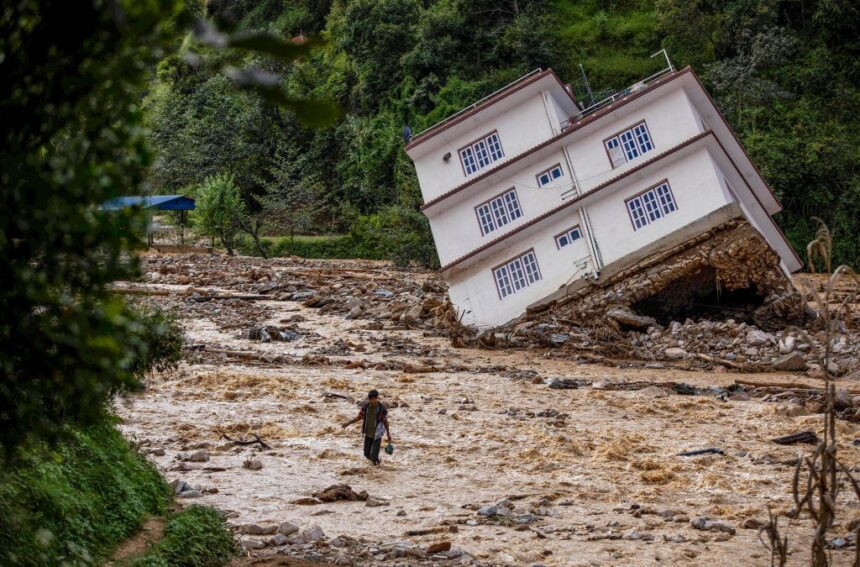
On August 26, a wall of rock and ice broke away from Langtang Lirung in the Himalayas, resulting in a massive flood and mudflow that killed thousands of people along the border of Nepal and Tibet. Less than a month later, on September 17, an influential organization called World Weather Attribution (WWA), housed at Imperial College London, published a report on the catastrophe along with a press release touting its alarming findings.
Major media outlets ran with it, claiming that WWA’s scientists had concluded that the collapse was the result of human-caused global warming. WWA also asserted that early warning systems were useless against an event of that scale, and called for a rapid exit from fossil fuels to reduce the risks of future such events.
With this supposedly authoritative report in hand, Nepal’s government now plans to take a $20 million claim for compensation to the United Nations for loss and damage due to climate change.
WWA scientists have now repeated this sequence more than 120 times since its founding in 2014: They issue a press release and technical report after a significant weather event, and link the event to climate change. The scientists then purport to explain how much climate change has tilted the odds for such events—three times more likely, 10 times more likely, impossible without climate change, etc. The media around the world then publicize the claims, invariably without challenge.
Read more