


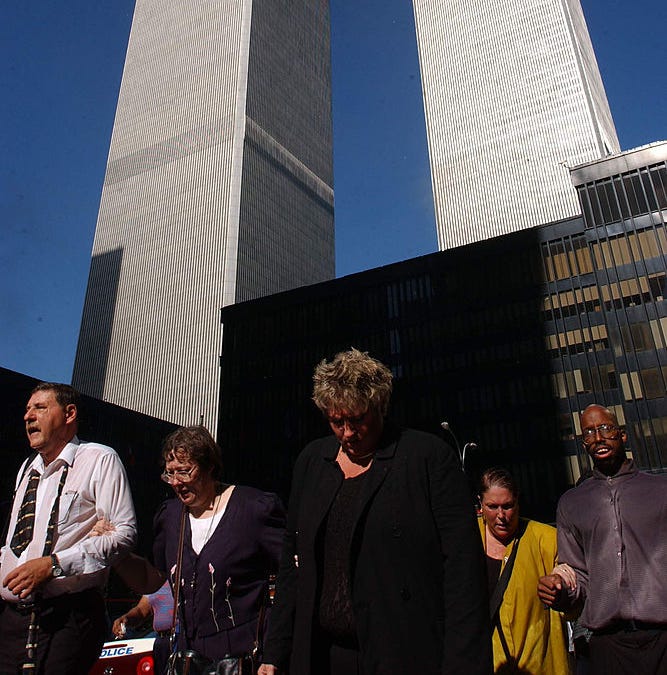

The attacks of September 11, 2001, were not the first acts of jihadist terror on American soil, nor were they the last. They were, however, the most lethal and transformative. In a matter of moments, thousands of people were incinerated against a bright blue sky. Passengers on a commercial flight became heroes, phoning hasty goodbyes to their loved ones before making an awesome sacrifice. And while monuments to the nation’s security and prosperity were reduced to rubble on television screens, Americans wondered, “Where will the next attack occur?”
Answering that question has been a singular preoccupation of federal law enforcement and intelligence agencies since the attacks. It has required legal and institutional reforms, moral clarity, political courage and, above all, a clear-eyed vision of the nature of the threat. The September 11 attacks were not merely criminal acts; they were acts of war, whose terms, targets, and rules of engagement were dictated not by the Geneva Conventions but by jihadists dedicated to the destruction of Western civilization.
In the wake of 9/11, the federal government implemented sweeping reforms in an effort to prevent an attack of that scale from ever happening again on U.S. soil. Now, a quarter-century later, we can look back with some satisfaction that September 11 was not a prelude to a blitz, and that many other attacks have been thwarted. But acknowledging our nation’s success in preventing another major terror attack does not mean that the job is finished. Our enemies are still out there, still preparing for the next strike. And yet Congress is now taking away some of the essential tools we have used to foil attacks by al-Qaeda, ISIS, and similar groups over the last 25 years.
Until September 11, the United States had dealt with terrorist attacks mainly as criminal law enforcement matters. From the 1988 bombing of Pan Am Flight 103 over Lockerbie, Scotland, to the 1993 bombing of the World Trade Center, the FBI has worked with local law enforcement partners to build successful counterterrorism cases out of little more than charred fragments. Starting with shreds of a clothing label and a thumbnail-sized piece of plastic explosive recovered from the Scottish countryside, the FBI was able to trace the Pan Am bombing to two Libyan intelligence officers. And from the burned-out remnant of a vehicle parked beneath the World Trade Center when it was attacked in 1993, the FBI was able to identify the individuals who were responsible for the blast and uncover a further plot to bomb other major New York City landmarks.
Read more