
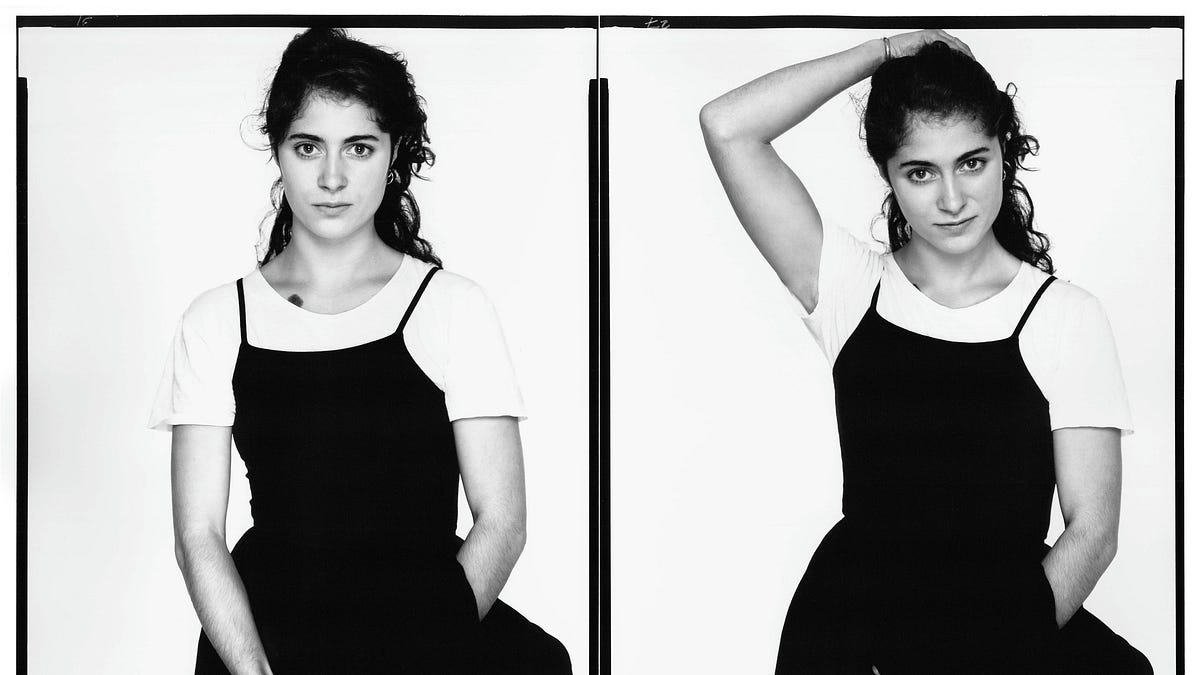
In the autumn of 1984, a 23-year-old woman living in her childhood bedroom received word that she would be photographed by Richard Avedon. At the time, she was recovering from pneumonia following a flood in her unheated loft and working a catering job that paid $5 an hour. Despite her circumstances and a private struggle with an eating disorder, she maintained a conviction that she was meant for stardom.
The news of the photography session arrived during a coughing fit when her stepfather, David Levine, entered her room to announce that Avedon intended to shoot her portrait. Her immediate response to the prospect of meeting the world-renowned fashion and portrait photographer was to ask if she had enough time to wash her hair.
Connections in the New York Art Scene
David Levine, a prominent caricaturist for The New York Review of Books, had been her stepfather since she was 15 years old. A Brooklyn native from Flatbush and a self-described ‘red diaper baby,’ Levine was a central figure in a social circle that included some of the most significant artists and illustrators of the post-Depression era. These individuals, many hailing from Queens and the Bronx, had risen to the top of the American art world by the mid-1980s.
The household was a frequent gathering place for cultural figures. Jules Feiffer, the celebrated cartoonist and writer, was a regular visitor to the apartment. These connections provided early exposure to the professional art world. By the age of 16, she was already working as a model for Daniel Schwartz’s painting classes once a week. Schwartz, who referred to her as his ‘little Lauren Hutton,’ would provide a $20 payment and see her safely into a taxi after each session.
The Influence of David Levine
Levine was known for his sharp intellectual presence and his work for the Times, where he frequently debated political news of the morning before translating those subjects into his signature satirical drawings. His reputation as a conversationalist and his deep ties within the New York creative community served as the bridge between his stepdaughter and Richard Avedon.
Avedon was already a titan of the industry by 1984, known for his stark, minimalist portraits that captured the essence of his subjects against plain white backgrounds. The invitation to be photographed by him represented a significant intersection of the young woman's personal life with the high-profile world of professional photography and fine art that her stepfather inhabited.
Life on the Margins of Fame
Before the session with Avedon, her daily life was a stark contrast to the glamour of the art world she observed through her stepfather. Living in a flooded, unheated loft and dealing with health issues, her aspirations for a film career remained a secret she held while navigating the mundane realities of low-wage service work. The sudden transition from a sickbed to an Avedon set highlighted the unique proximity to fame afforded by her family's place in the New York cultural elite.