

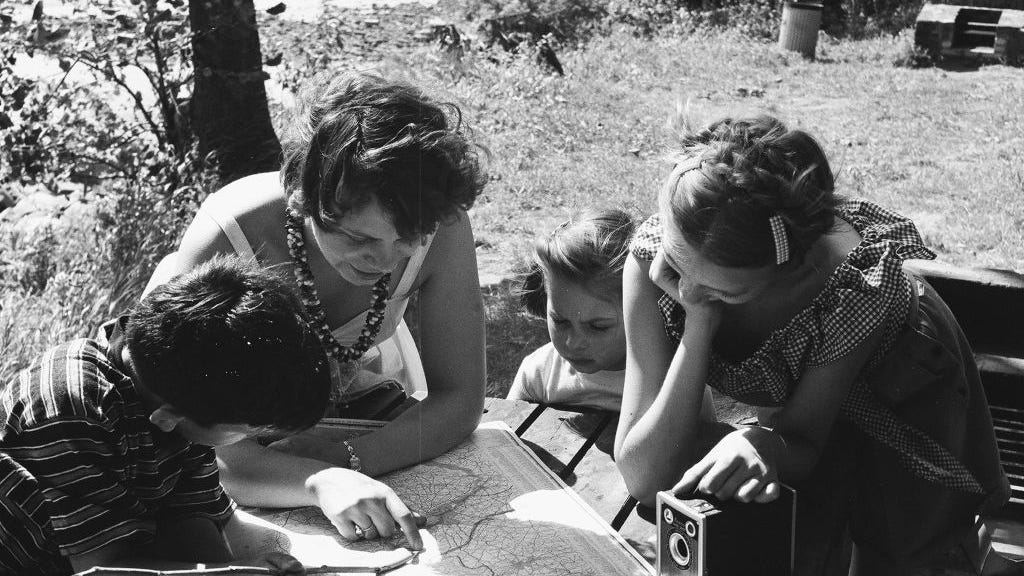
Author John Steinbeck famously wrote about map people during his 10,000-mile American road trip in 1960. In his 1962 travelogue, Travels with Charley, Steinbeck observed that individuals devoted to maps often let their plans and colored paper confine them, paying more attention to diagrams than to the actual landscape rolling past.
Reflecting on that observation, a recent commentary examines the decision to purchase a physical atlas for children. Rather than relying solely on digital navigation or modern screens, the purchase introduces young readers to the tangible study of geography through traditional paper maps.
Steinbeck documented his travels across the United States in 1960, traversing 10,000 miles to observe the country firsthand. His resulting book, Travels with Charley, captured his skepticism toward travelers who became overly absorbed in cartography at the expense of experiencing the actual environment.