


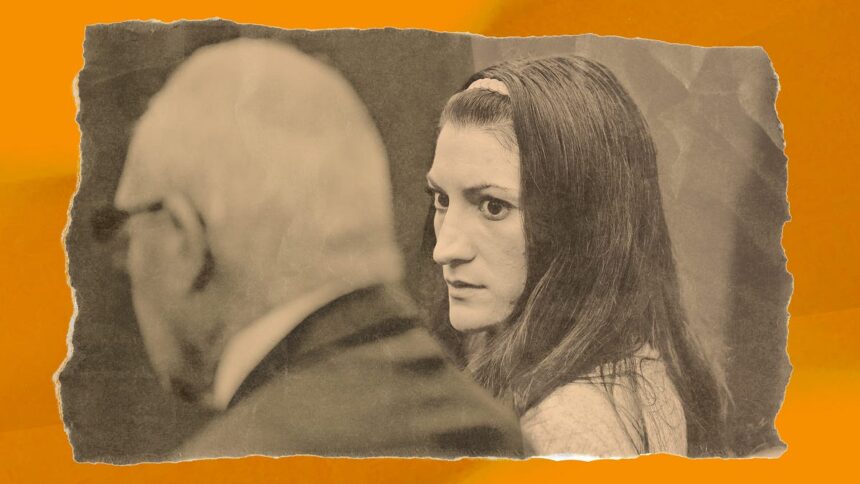
The judge in the Lindsay Clancy trial declared a mistrial Friday after the jury could not agree whether the Massachusetts mother who strangled her three children in January 2023 was guilty of murder—or not guilty by reason of insanity. Few cases in recent memory have provoked such fierce debate about criminal responsibility or such a strange spectacle outside the courtroom and on social media, where sympathy for Clancy has curdled, for some, into something closer to celebration of a mother who admits she killed her children. We’ve covered the case from a number of angles. Caitlin Flanagan has examined why so many women have rallied to Clancy’s defense. Jed Rubenfeld has explained why the law left the jury with no good options. And Kat Rosenfield has asked why so many seem so desperate to avoid the conclusion that Clancy is criminally responsible.
If one side of the debate online has demonstrated a disturbing solidarity with Clancy, another has decided it’s a straightforward case, and that Clancy is self-evidently guilty. We asked Dr. Sally Satel, a psychiatrist and lecturer at the Yale School of Medicine, to weigh the psychiatric evidence and tell us what she thought. She said she disagreed, and thought Clancy was driven by psychosis to kill her children. Whatever you think of the tragic case that has captivated the country, her essay is essential reading. —The Editors

The trial of Lindsay Marie Clancy is over, and unresolved. After 21 days of testimony and seven days of deliberation, a Massachusetts jury could not agree on whether the 36-year-old former nurse was criminally responsible for strangling her children—Cora, 5; Dawson, 3; and Callan, 8 months—or not guilty by reason of insanity. The judge declared a mistrial.
I had been hoping for an acquittal and commitment to a mental facility because, in my clinical opinion as a psychiatrist, psychosis drove Clancy to kill.
The prosecution now has the option of bringing an entirely new trial, negotiating a plea deal, or dismissing the charges altogether.
Clancy continues to be charged with three counts of first-degree murder. Her lawyer and the prosecutors will consider next steps while she remains in a mental-health facility.
Whatever comes next, the case is a reminder about the hazards of addressing mental illness challenges in the courtroom, the need for legal and psychiatric reforms, and the urgency of educating doctors as well as patients about psychosis in general and postpartum psychosis in particular. If Clancy is retried, here is why I hope the next jury will find her not criminally responsible.
Read more