



Earlier this morning, we brought you a collection of stories on the world October 7 made. You can find those stories here.
This afternoon, we’re bringing you something a little different: a window into the response to Hamas’s 2023 attack on Israel, from someone in the room where it happened. Brett McGurk served as National Security Council coordinator for the Middle East and North Africa under President Joe Biden, making him the point person for the grueling negotiations to free the 251 hostages abducted by Hamas that day.
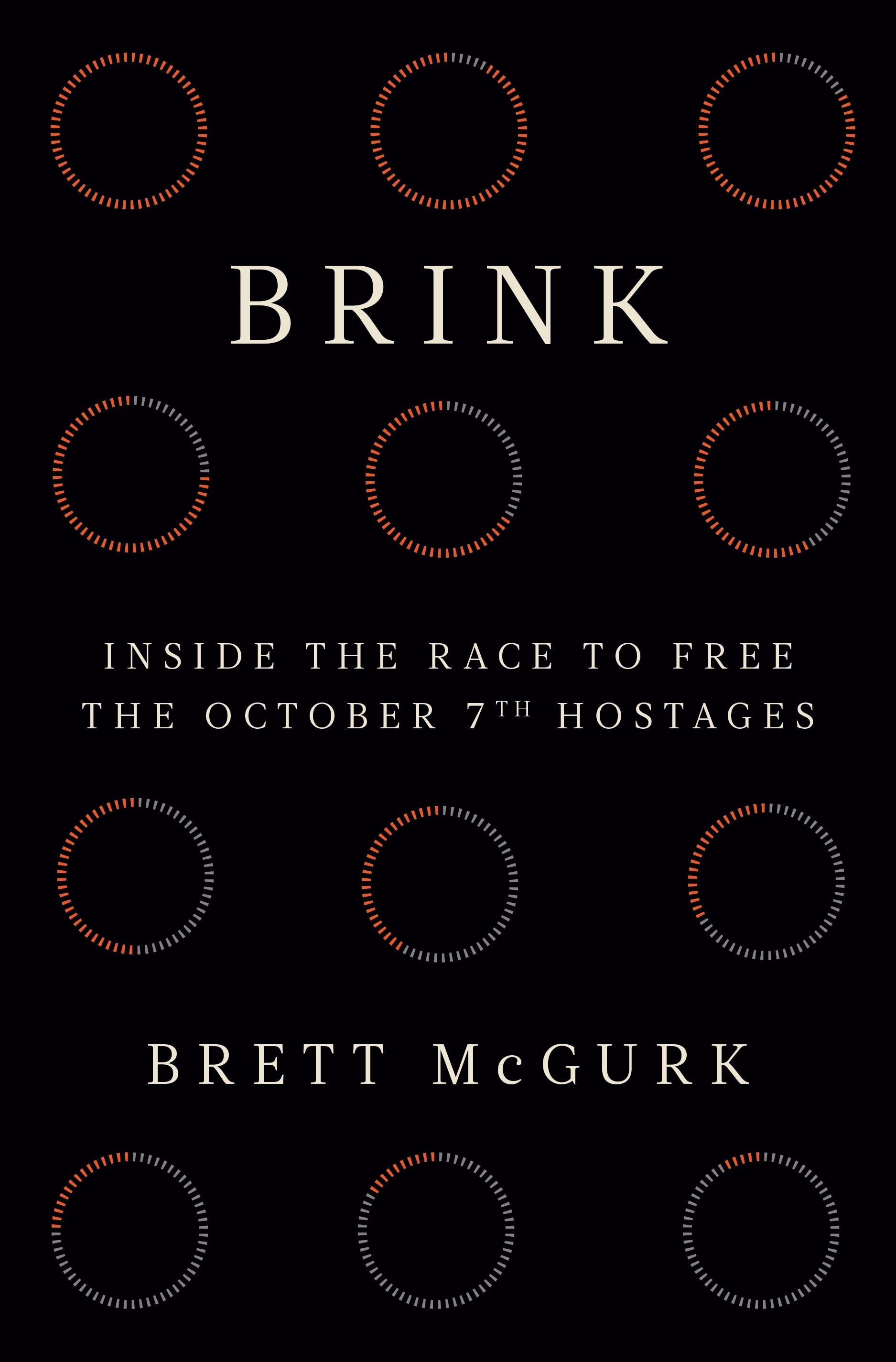
McGurk has pulled back the curtain on that effort in his new book. Brink: Inside the Race to Free the October 7th Hostages, published Tuesday, traces his time in the Biden administration, all the way to its very final hours, when Hamas agreed to release 33 hostages, and the first stage of a ceasefire took effect. Today’s piece, adapted from Brink, drops you inside those last weeks, as McGurk worked alongside the incoming Trump administration to push the deal over the finish line. —Jillian Lederman

Wednesday, November 20, 2024
Washington, D.C., U.S. Capitol
Two weeks after Donald Trump beat Kamala Harris, Jake Sullivan and I went to a secure room in the U.S. Capitol to brief our successors. Sullivan’s was Mike Waltz, a congressman from Florida. Mine was Steve Witkoff, a real estate tycoon and Trump’s best friend.
Shortly after the election, I had called Jared Kushner, Trump’s son-in-law and former Middle East hand. My message was that we had a chance to secure a Gaza deal so long as we could be seen as working together without any daylight between the incoming and outgoing teams. For the first time in months, circumstances trended in our favor.
Following the collapse of the hostage talks, Israel had won a string of military victories. It started on September 17, with an operation that exploded thousands of beepers carried by Hezbollah militants in Lebanon. I first heard about what became known as Operation Grim Beeper from a contact in Mossad, who told me, “We just blew the dicks off Hezbollah.”
In many cases, that was not metaphorical.
Read more