

There is no question: the sum involved is considerable. The Berlin “climate pact” is worth a total of 15 billion euros and is due to be passed in the Senate on Tuesday. Mathematically, that’s over 30 percent of Berlin’s state budget that the city’s state-owned companies should invest in their climate neutrality by 2030. “The climate pact is really a great achievement,” said the climate policy spokeswoman for the SPD parliamentary group in the House of Representatives, Linda Vierecke, to the taz on Monday.
The climate pact is the CDU and SPD’s answer to a problem with a long history: in 2023, the Federal Constitutional Court overturned the climate and transformation fund at the federal level. The court declared it inadmissible that the federal government had attempted to move unused Corona emergency aid into a climate fund. As a result, a planned multi-billion dollar Berlin special fund for climate protection and transformation also failed – and since then Berlin has been without funds for climate protection.
The climate pact is now intended to be an answer to this situation: Berlin’s state-owned companies are to raise 13.6 billion euros themselves. So that they can raise the necessary loans for these investments, the country is making 2.3 billion euros available from its budget. The focus will probably be on the decarbonization of Berlin’s district heating and the expansion of Berlin’s electricity network. Otherwise, the Senate also has a great deal of influence on players who are important for climate protection, for example with the BSR’s waste disposal, the state-owned housing associations and the swimming pool companies.
“We looked at which companies could make climate savings in which areas,” Vierecke told taz. She points to the “big role” that state companies play for the city, both in terms of their economic importance and their “role model function”.
Sector targets are blocked
Nevertheless, there was a lot of criticism against the climate pact even before it was presented. The nature conservation organization BUND, for example, explained that the CDU and SPD only wanted to use the pact to distract attention from their “failure to protect the climate”. “Climate protection is decided on the chimney and the exhaust, not in the cash book,” said Matthias Krümmel, climate protection policy advisor. He fears that it will not be made transparent how the investments actually benefit climate protection. The assumption: The CDU and SPD could package investments that are already pending and, if in doubt, even harmful to the climate, as climate measures.
In order to understand this criticism, you have to consider the black and red’s previous carbon footprint. So Since taking office, the CDU has blocked the adoption of “BEK 2030”, the so-called Berlin energy and climate protection program, in the House of Representatives. This was passed by the previous red-red-green government, but was no longer passed by the House of Representatives. It sets concrete goals for the energy, buildings, transport and economy sectors that are necessary for the goal of reducing emissions by 70 percent by 2030. If the BEK 2030 were passed, a legally binding emergency program would be necessary if the targets are not met in a sector.
As the Berlin Climate Protection Council recently presented to the Environment Committee, it is to be expected that this is actually the case in almost all sectors. According to an analysis by this politically advising committee made up of 18 people from science, business, associations and civil society, the emission values in 2023 in the areas of buildings, energy and transport were significantly above the target values that would actually be necessary to meet the climate protection goals.
“We see that Berlin will most likely miss its climate protection goals,” said Cornelia Auer from the taz council. An immediate program is actually necessary, especially for the transport sector – but this is being blocked by the Senate in the House of Representatives. The Climate Protection Council recognizes the amount of money that is now to be invested, but criticizes the fact that this is flowing into individual large projects while the smaller climate projects remain underfinanced.
Severe environmental cuts
In fact, in the most recent orgy of cuts, hardly any department has fared as badly as the environmental sector under the patronage of Transport Senator Ute Bonde (CDU). In particular, the measures under the BEK program and the comprehensive Berlin program for sustainable development Bene2 have suffered significantly.
The criticism of this extends into the own ranks of the governing parties’ factions. “We experienced a CDU climate protection senator Ute Bonde, which has extremely shortened its own area“, said the SPD politician Linda Vierecke to the taz. Although it was possible to avert the worst cuts, it became clear during the cuts debate that Bonde “has no interest in complying with the BEK.”
It is this mixed situation in which record sums of money are now being mobilized for investments by state-owned companies. Stefan Taschner, the climate policy spokesman for the Greens, also told the taz that this is an “important signal,” especially on this scale. However, he criticizes the fact that “all civil society and private actors who are not in state hands are left empty-handed” in the package. These actors were particularly affected by the cuts.
The Senate is selling investments that are necessary anyway and those that do not actually represent climate protection as a big deal
Stefan Taschner, Green Party
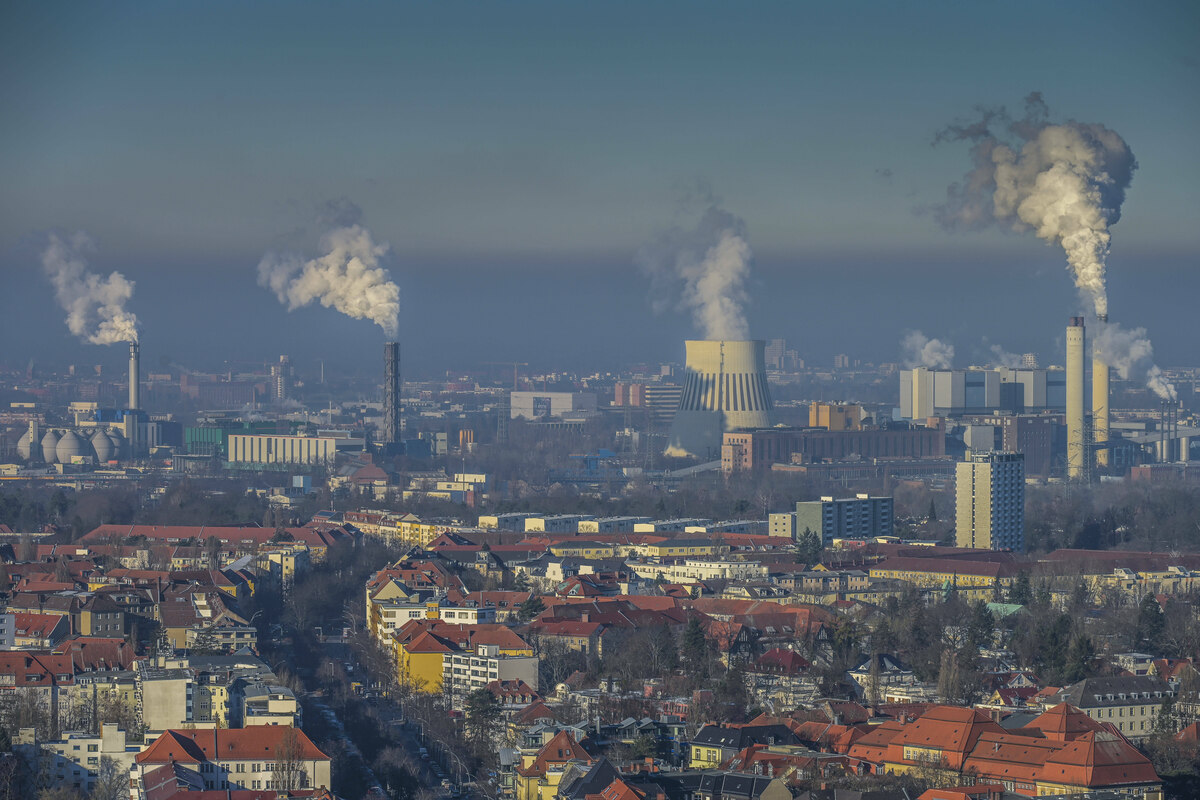
Particularly explosive: Taschner fears that some of the investment money will not flow into climate-friendly projects. It can be assumed that the state-owned Berlin Energy and Heat (BEW) in particular will receive billions in money, said Taschner. “I assume that this means that too Construction of the Reuter-West wood-fired power plant is financed.” This is currently being built by BEW as a sustainable “transitional solution” for the coal phase-out, although the CO2-The balance of wood burning is even worse than that of hard coal. Overall, Taschner’s assessment is sobering: “The Senate is selling investments that are necessary anyway and those that do not actually represent climate protection as a big deal.”