

W “While the tech industry, banks, law firms, universities, corporations and far too many Democrats in Congress have surrendered to the new regime,” writes Siri Hustvedt, “ordinary people are resisting.” The American writer commented on Instagram after the brutal murder of Alex Pretti in Minneapolis. It ends with the words: “The decision is clear: collaboration or resistance.”
37-year-old intensive care nurse Alex Pretti was shot dead by Border Patrol agents on Saturdayafter he tried to help a woman who had been attacked by the hooded men. It’s the second murder – it’s hard to call it anything else, although it will probably never be legally declared one – on the streets of Minneapolis in just a few weeks. Just in early January, 37-year-old Renee Nicole Good was shot and killed in her car by an ICE agent.
After the death of Renee Good, large protests against ICE and border protection broke out in the state of Minnesota. The protests have spread to other cities in the US following the death of Alex Pretti; in New York City, protesters held signs that read “Justice for Alex.” There won’t be. Because in the USA, powerful people determine what is true. And these powerful people have declared those killed to be “terrorists.” The White House said the ICE agents only fired in “self-defense.” The violence perpetrated by ICE is not a byproduct of authoritarian rule. She is the target. Resistance should be deadly and broken.
Despite the threats, people in Minnesota are organizing. In a report for The Atlantic the author describes how organized this resistance has become. This allows citizens to complete training courses that are held in secret locations. In these trainings, they play through scenarios – for example, when ICE officers storm a neighboring house or an airport – and learn, among other things, how to protect themselves if an ICE agent strikes. The ages of participants in these courses range from 14 to 70 years old, he said Atlantic-Reporter. So far, 65,000 people have been trained by a single non-profit organization, most of whom have joined since December.
Why is it the people with the least power who oppose those with the most power?
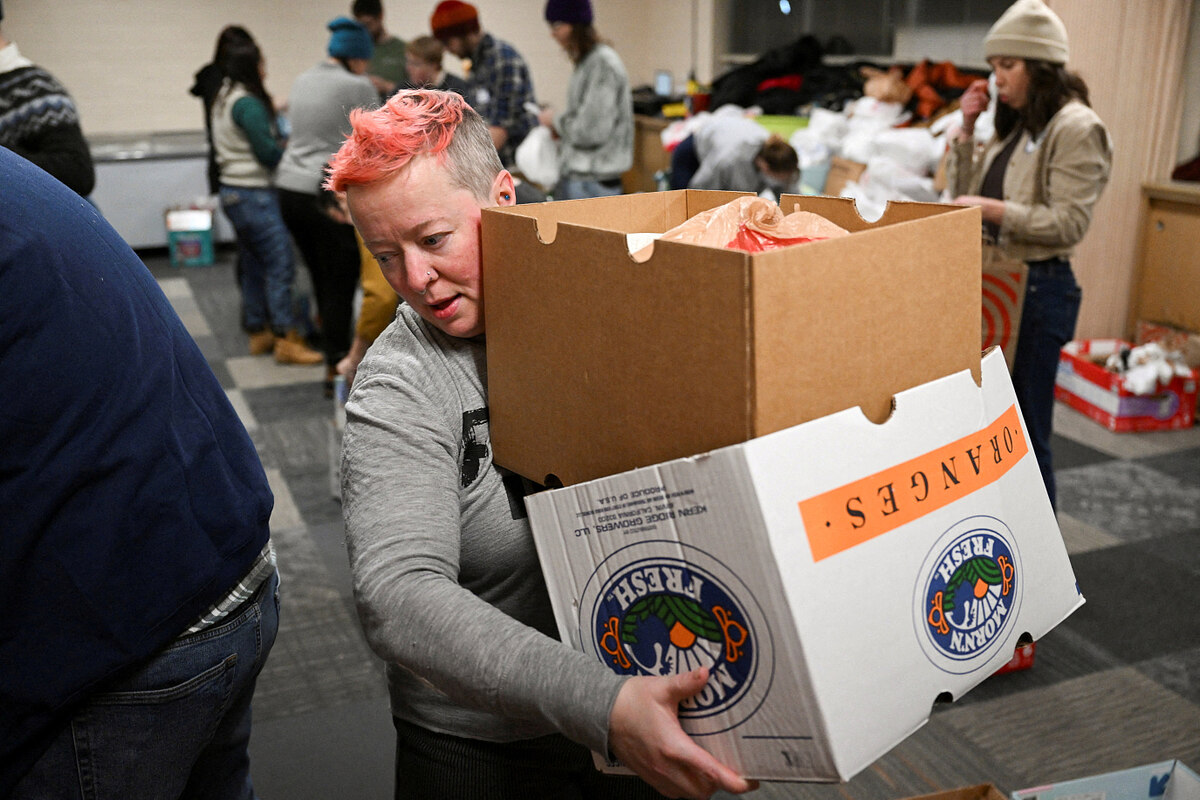
People practice how to safely film and document ICE operations. You practice recognizing conspicuous vehicles. Individually and in groups, citizens walk through the streets and inform each other in signal groups when they see cars that could belong to ICE. License plates are passed on. They carry whistles to alert the neighborhood when ICE agents are spotted. Shops and restaurants deny them access. Other businesses are closing in protest against ICE, even though they face financial losses as a result. City residents are collecting food to provide for immigrants who can no longer leave their homes for fear of ICE. Renee Good and Alex Pretti were part of this courageous civil society. They used the security that their U.S. citizenship gave them to protect vulnerable people. They paid for it with their lives.
One cannot help but think of the protesting people in Iran. Not because the situation in Minnesota and Tehran is comparable. That’s not her. Not even remotely. According to the latest figures, at least 30,000 people in Iran have been massacred by regime forces, and the cruel repression continues while those in power have shut down the internet. The authoritarian dynamic is similar, so to speak. And especially the fact that it is ordinary citizens who are resisting the authoritarian state. Because no one else will come to their aid.

Those in the USA who actually have the means to put a stop to the overreaching state – companies, universities, the media and, last but not least, many politicians – are ingratiating themselves, cowering and keeping quiet. Those threatened and attacked by the Trump administration should not expect support from the international community either. Democracies like Germany have almost completely surrendered to the Trump regime. Human and civil rights play a big role in Sunday speeches. In reality they are irrelevant, dispensable.
Likes and clicks are collected
This applies to the people of Iran anyway. German politicians enjoy recording solidarity videos with the protesters in Iran and getting lots of likes and clicks. But when it comes to actually supporting them through concrete actions, then all you hear is the chirping of crickets. Revolutionary Guard on the EU terror list? Nope. Deportation stop for Iranians? Absolutely not. Expelling the Iranian ambassador? Oh, please.
Why is it always the people with the least power who oppose those with the most power? Why do ordinary people have to have the courage that wouldn’t cost much more powerful people? Why do those who have the least have to lose the most?
Because power makes you lazy. Corruptible. Fearful. Because it kills empathy. Because it is ordinary citizens who have the most to lose in an authoritarian state. They know the value of connection, of love, of community. They know what they stand for. Not for power or for money, but for each other. For their children. Without such people, the course of human history would have taken a different path. Not to progress, but to decline. If those in positions of power today continue to look after their sinecures instead of helping those who are struggling, the decline that has already begun will continue. It’s not too late yet. But there isn’t much time left. The rule is: collaboration or resistance.