

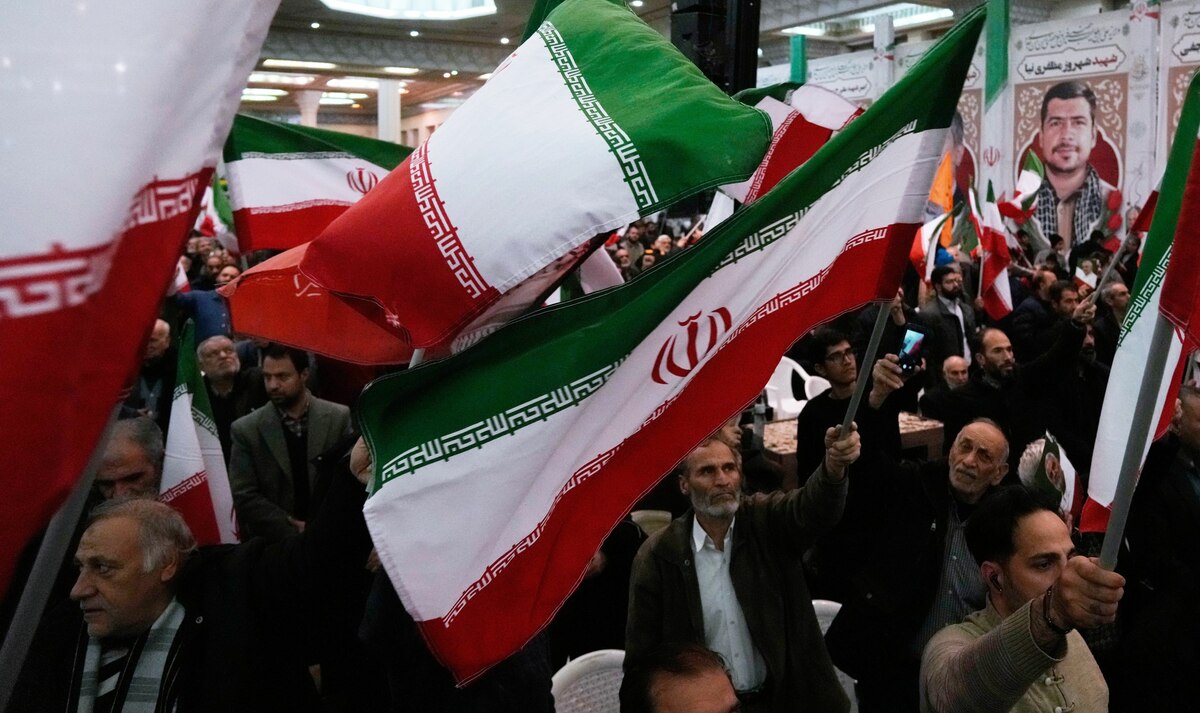
dpa | The one demanded by Germany and numerous other EU states Classification of the Iranian Revolutionary Guard According to EU Foreign Affairs Representative Kaja Kallas, it can be implemented as a terrorist organization after France changes its political course. The former Estonian head of government said at the start of a meeting of EU foreign ministers in Brussels that she expects an agreement to put the Iranian Revolutionary Guards on the EU terror list. This would put them on a par with organizations like Al-Qaeda, Hamas and Islamic State (IS) placed.
“It is clear what we see: The death toll from the protests in Iran and the means that the regime has used are really, really serious,” said Kallas. That’s why the clear message is being sent: “If you oppress people, it has a price.”
With regard to critics of the planned measure, Kallas emphasized that there could continue to be an exchange with the Iranian foreign minister. Diplomatic channels remained open, she said.
The designation of the Revolutionary Guards as a terrorist group is considered a significant symbol, even if it is because of existing sanctions is unlikely to have any practical significance. The latter already prohibits funds or economic resources from being made available to the organization and members. They also stipulate that funds and other assets of the Revolutionary Guards in the EU must be frozen.
Elite troops are already sanctioned today
These punitive measures were enacted primarily to prevent Iran from building a nuclear bomb. The Revolutionary Guards are Iran’s elite armed forces and report directly to the Islamic Republic’s supreme leader, Ayatollah Ali Khamenei. They play a key role in the brutal suppression of protests because they are also responsible for preventing coup attempts.
The listing of the Revolutionary Guards as a terrorist organization has been discussed in the EU for years – intensively, among other things, after the major Iranian attack on Israel in April 2024. To date, however, the necessary consensus has not been achieved. Most recently, France in particular blocked and justified its rejection, among other things, by the fact that the Revolutionary Guards were already subject to EU sanctions.
Concern for French citizens
France’s reluctance was also seen in connection with two Frenchmen still stuck in Tehran. The teacher couple Cecile Kohler and Jacques Paris was arrested in Iran in 2022 and sentenced to 17 and 20 years in prison for espionage in October. The two have now been released from prison, but are waiting at the French embassy in Tehran for the green light to leave the country. This may happen as part of a prisoner exchange with an Iranian woman who is on trial in Paris for glorifying terrorism.
Before France, the countries Italy and Spain, which have also been skeptical for a long time, had already signaled their approval of the listing of the Revolutionary Guards in the past few days.