

dpa | It is a classic of any visit to Rome: the Trevi Fountain in the historic center of the Italian capital. But the previously free access to what is probably the most famous fountain in the world will cost something in the future. From Monday, February 2nd, tourists will have to pay two euros to get a close look at one of the Eternal City’s most important tourist magnets. Rome wants to better channel the flow of visitors.
Mayor Roberto Gualtieri originally announced February 1st as the start date for the new regulation with great fanfare last December. After reports of a delay in the introduction of the entrance fee until March, the city of Rome has now clarified that it will start on Monday – only a day late.
The idea behind the entrance fee is that Mass of tourists To become masters of those who make the daily pilgrimage to the well. Because Rome – like Venice and Florence – is constantly recording new visitor records, but this also comes with problems. There and in many other places in Italy the picture is now completely overcrowded and clogged streets.
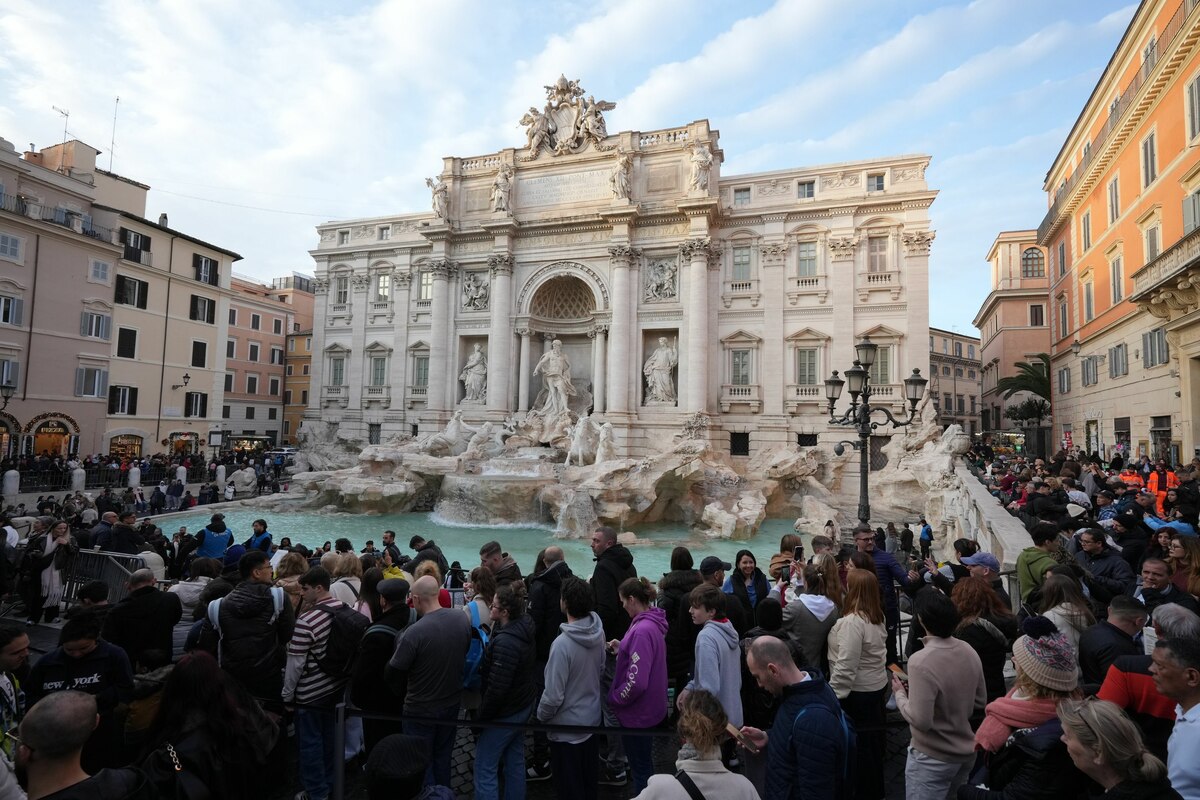
The “Fontana di Trevi” is one of the main attractions of the Italian capital. Thousands visit the fountain every day for photos or the traditional coin toss into the water. Often the crowd at the overcrowded water basin just seemed like a fight for the best selfie.
Also five other attractions with entrance fees
This should be curbed with the entrance fee. Mayor Gualtieri said when announcing the two-euro ticket last December: “The aim is to improve the quality of experience and use of our cultural heritage and to counteract overcrowding.” In the future, tourists will also have to pay to visit the Massenzio Villa and four museums that were previously free to visit – such as the Museo Napoleonico.
The number of visitors to the Trevi Fountain has been reduced for over a year now: a maximum of 400 people are allowed to stay in the facility at the same time. Nevertheless, around 30,000 people visited the fountain every day, and on some days even up to 70,000, according to the city.
How does the new entry fee work?
The paid ticket is now new. This can be purchased online in advance. One of your own website This should go online this Thursday. In addition, tickets can only be purchased on site with a credit card and at tourist information points.
According to current plans, there will be two separate queues in front of the fountain: one for visitors who buy the ticket on site and one for those with a pre-purchased ticket. Supervisors then control entry. Fences will be built around the pool area
The details are about access to the narrow passage directly at the water basin. With the ticket you can move freely around this area. The new access system will be in effect from 9am to 10pm most days, and 11.30am to 10pm on Mondays and Fridays only. The large piazza in front of the fountain with ice cream parlors and tourist shops remains freely accessible to everyone.
The city of Rome is convinced that the new regulations will not only improve security on site – the hustle and bustle was a popular place to work for pickpockets, and the chaos sometimes caused conflicts among tourists and passers-by – but also the quality of the visitor experience. However, not everyone likes the measure. Critics complain about the monetization of a historical and cultural site.
Italy suffers from mass tourism
Other Italian cities have taken similar measures in response to the phenomenon of mass tourism. Venice introduced an entry fee for short visitors around 2024. This year too, the lagoon city charges entry fees for 60 days between the beginning of April and the end of July. Ten euros are then due, only those who book early – at least three days in advance – can get away with five euros. Overnight guests are excluded.
In Venice, too, the idea is to better control mass tourism in the city with its many canals and palaces. Critics argue that the entrance fee hardly deters anyone from coming to Venice. And similar to Rome, there are complaints in Venice that such entrance fees are turning the city into a kind of huge theme park for tourists.

Incidentally, it is not just tourists who suffer from “overtourism”, but also the long-established residents. You feel the consequences of the ever-growing flow of tourists in your everyday life: crowded streets and squares, traffic congestion as well as higher rental prices and the cost of living.
For Romans, the two-euro ticket for the Trevi Fountain does not constitute an additional burden. Residents of the Italian capital are exempt from this. City Councilor for Culture Massimiliano Smeriglio emphasized that Rome is a city “that not only belongs to tourists, but above all to the Romans.”