

taz: Ms. Pistor-Hatam, has the issue of human rights and human dignity in the Islamic Republic of Iran fundamentally changed for you in the last few weeks?
Anja Baker-Hatam: No, because this explains the arguments that the spiritual leaders of this system use to defend their position and how they justify that they are allowed to kill people who rebel against them. According to senior Shiite jurists who support the system, one can gain or lose one’s dignity. If you are a pious person and lead a righteous life in the state, you have dignity. But if you fight against this state, you lose your dignity. This clearly contradicts the view of human dignity that the Universal Declaration of Human Rights represents.
taz: How do you explain the extreme violence that has now been used against demonstrators?
Baker-Hatam: It has reached a new quality because the regime has its back to the wall. But since the Islamic Republic was formed, there have been mass executions of political opponents. And in all demonstrations over the last few years and decades there have been injuries and deaths. But many people could not have imagined the extent of the violence that now prevails. This is reminiscent of the incredible brutality and disappearance of many people during the 1989 Tiananmen massacre in Beijing.
taz: But weren’t the conditions there completely different because the majority of the population in China was not on the side of the demonstrators?
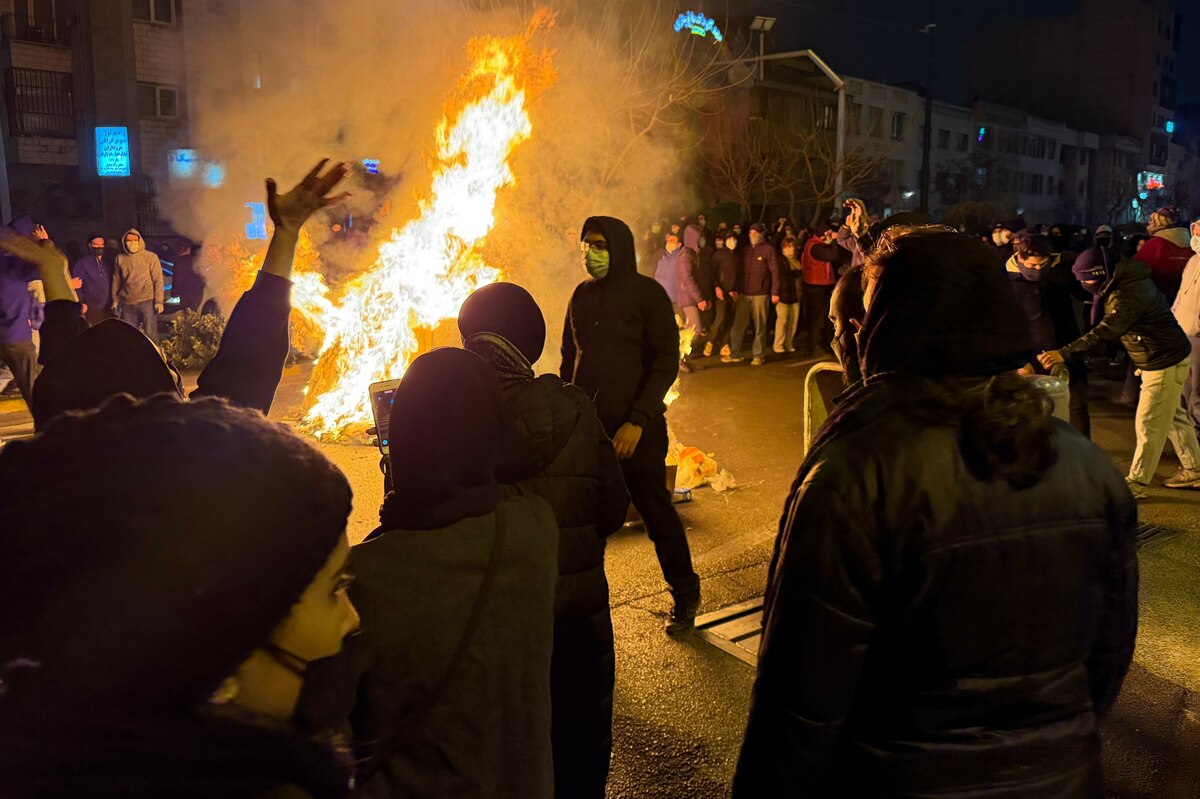
Baker-Hatam: Yes that is correct. The advantage in Iran now was that many people from all walks of life took to the streets. So not just students, women or the traders in the bazaars.

taz: Doesn’t that give you hope?
Baker-Hatam: Yes, but the downside is that there is no organized opposition in the country or outside Iran. Now many eyes are on Reza Pahlavi. His people are trying very hard to force his return, but in my opinion that is not a real solution. The problem is also that personalities like Nobel Prize winner Narges Mohammadi are in prison and are now being discredited by Reza Pahlavi’s supporters. There seems to be no one who can rally the majority of the population behind them and offer them a vision for the future.
“Human rights and human dignity in the Islamic Republic of Iran”, January 27th, 7.30 p.m., plenary hall in the Norderstedt town hall, Rathausallee 50
taz: So there is a deep division in the Iranian resistance?
Baker-Hatam: They were there from the beginning. To my knowledge, there has been no alliance of opposition groups in the entire period since the founding of the Islamic Republic. But if that is missing, they cannot effectively combat the system.
People can resign because they don’t want to die. But there are also many young people who say, I’ll just die, I don’t have a life in this country anyway
taz: The media is already talking about the suppression of the movement.
Baker-Hatam: Everything is up in the air at the moment, but the key point is that the unbridled, merciless brutality of the system shows that it will not back down an inch. What option do people have now? They can resign because they don’t want to die. But there are also many young people who say, I’ll just die, I don’t have a life in this country anyway. Of course, there would also be the option for people to simply stay at home, not go to work and go on strike. And perhaps the system could be overthrown by force of arms. But that would require massive arming of the population, and that would dramatically escalate the civil war.
taz: So for you there is already a civil war in Iran?
Baker-Hatam: Yes. The regime is waging war against its own people. And there are video recordings of people driving their cars into groups of Revolutionary Guards. When mosques and police stations are attacked, this is also violence on the part of the demonstrators and no longer a peaceful protest. In this respect, in my opinion, one can speak of conditions at least similar to civil war.