



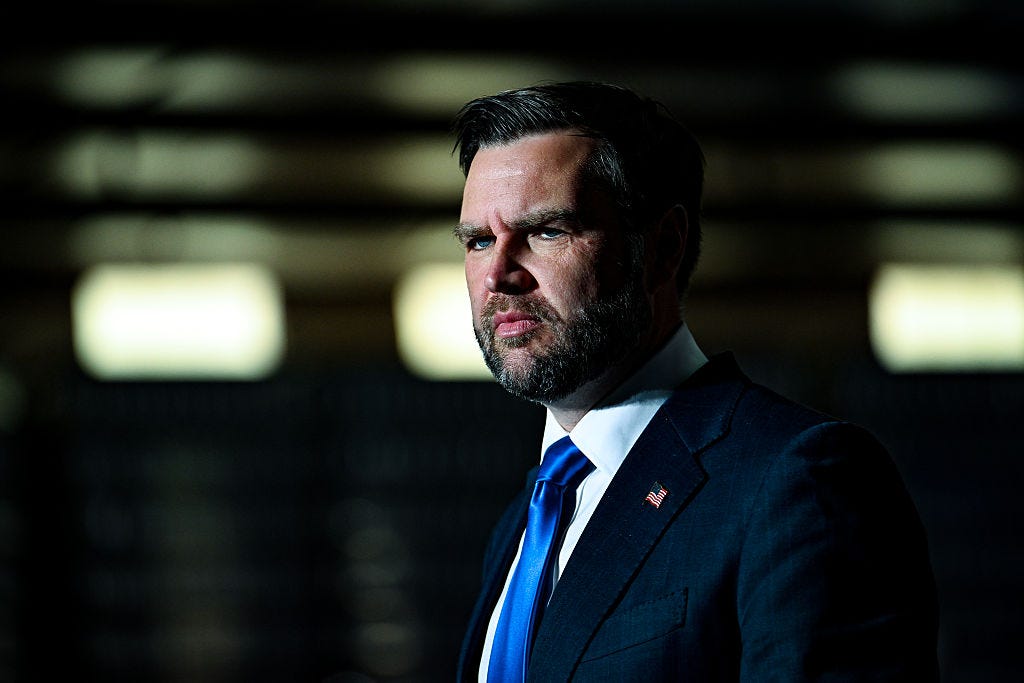
J.D. Vance has turned Donald Trump’s Middle East strategy into a liability inside his own political coalition. In a post on X explaining the Republican midterm defeat last week, the vice president identified the Iran war as the principal reason Republicans lost the votes of former Trump supporters. He then listed four conditions for winning them back: end the war with Iran, address inflation, put America first, and “change our relationship to Israel.” Donald Trump Jr. promptly endorsed the analysis: “Every word of this is 💯💯💯.”
Will the president take his deputy’s advice? The stakes are high. The outcome of the Iran war will shape the balance of power in the Middle East, the future direction of Republican foreign policy, and the geopolitical legacy Trump leaves behind.
For years he has ridden two horses at once: the foreign-policy restrainers, who want to reduce America’s overseas military commitments, and more traditional Republicans, who regard military power and robust alliances as essential to maintaining America’s international position. Trump has borrowed from both. Like the restrainers, he wants to avoid open-ended wars and military occupations. Like the traditional Republicans, he wants to prevent hostile powers from dominating strategically important regions.
His preferred solution is to preserve American influence through economic coercion, selective military force, and capable regional allies. A short, decisive war against Iran might have allowed him to reconcile these competing impulses. However, Iran’s ability to sustain missile and drone attacks despite overwhelming American air superiority has prolonged the conflict and imposed costs that American power cannot quickly eliminate. The measures required to pursue Trump’s objectives over time are precisely those his restrainer allies oppose.
Read more