

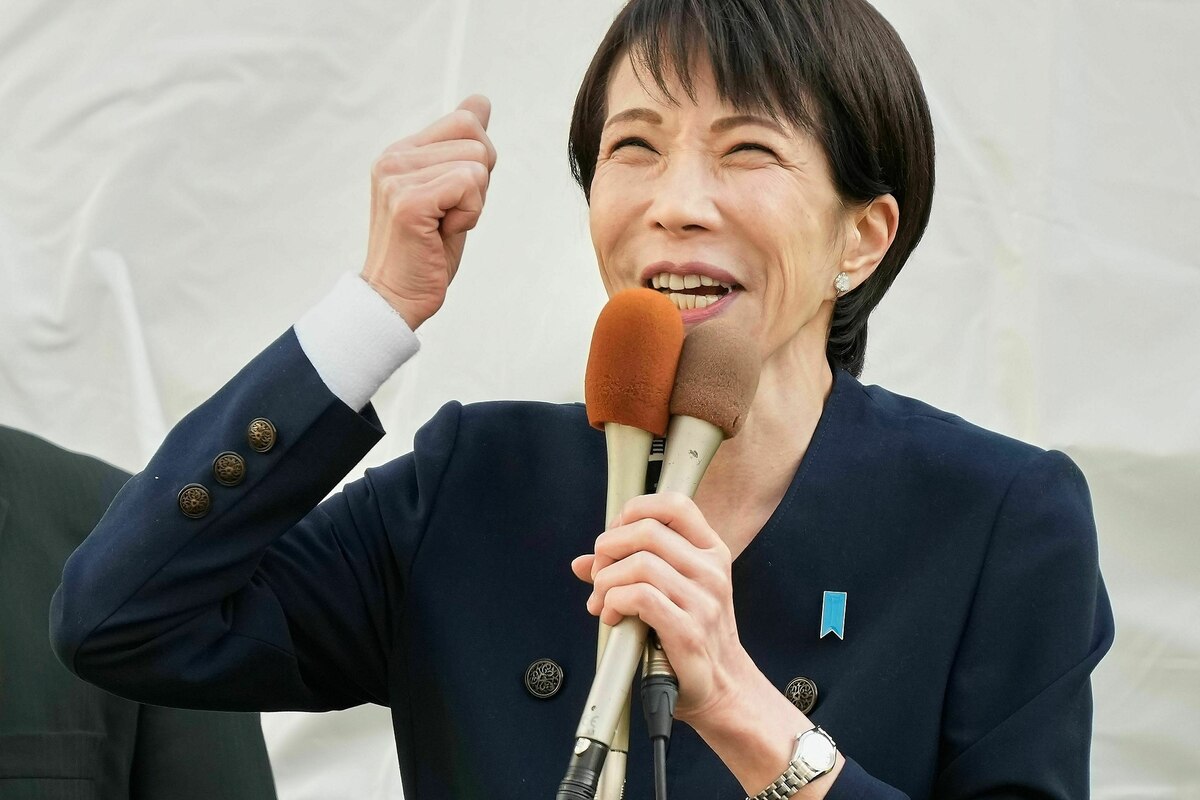
In the general election in Japan, the ruling Liberal Democratic Party (LDP) won Prime Minister Sanae Takaichi achieved a resounding victory after being defeated in the previous vote in October 2024 under Shigeru Ishiba, the second worst result in their history had driven in. The resurrection is due to Takaichi, who only took over the party leadership in October and, with her great popularity, was able to almost single-handedly pull the LDP out of the slump and make previous party scandals forgotten.
According to forecasts, the party that has dominated Japan for 70 years won an absolute majority. Takaichi’s LDP may have even won more seats than it her nationalist mentor Shinzo Abe at his best. The coalition of the LDP and the Japan Renewal Party has over two thirds of the seats. This allows the coalition to overrule the upper house, the second chamber of parliament controlled by the opposition. Since taking office, Takaichi has only had a razor-thin majority and has had to negotiate every law with the opposition.
In contrast, the opposition alliance Centrist Reform Alliance, into which the Constitutional Democratic Party (CDP) and the Komei Party joined forces at short notice, is expected to have its previous number of mandates halved. The transparent election campaign maneuver with the hasty founding apparently angered many swing voters. Many core voters from the CDP and Komei also did not accept the reform alliance, as the Komei had governed together with the LDP until October.
In her first comment on the election results, Takaichi took stock with satisfaction: “When the government drastically changes its main policies, I always have a bad feeling when we do something without seeking the trust of the people,” she told the TV station NHK.
Election consolidates shift to the right, left and liberals continue to lose
The change of course refers to her “proactive” fiscal policy. With additional government spending, Takaichi wants to reduce Japan’s economic dependence on foreign countries and promote investments in 17 economic sectors. This is also about helping to form national “champions”.
In addition to passing a record budget for 2026, Takaichi also wants to push ahead with the two-year suspension of VAT on food, which she promised during the election campaign. However, the counter-financing for the tax loss amounting to the equivalent of 54 billion euros has not yet been determined. Finance Minister Satsuki Katayama assured that the budget gap would not be filled with new debt.
The election result consolidates the shift to the right in October, when the LDP’s coalition with the pacifist Komei Party ended and Takaichi joined forces with the conservative Renewal Party. In the new lower house with 465 seats, left-wing and liberal parties apparently have fewer than 100 seats. One consequence: the constitutional reform, which has been declared dead, could return to the political agenda.
Since it came into force in 1947, not a single word of the constitution has been changed. Even then-Prime Minister Abe was unable to carry out the revision during his eight years in power. Takaichi has advocated changing the pacifism clause to allow Japan to maintain regular military forces.
The current self-defense forces may only be used militarily under major restrictions. However, the coalition parties still disagree about other constitutional changes. They also lack the necessary two-thirds majority in the upper house.