

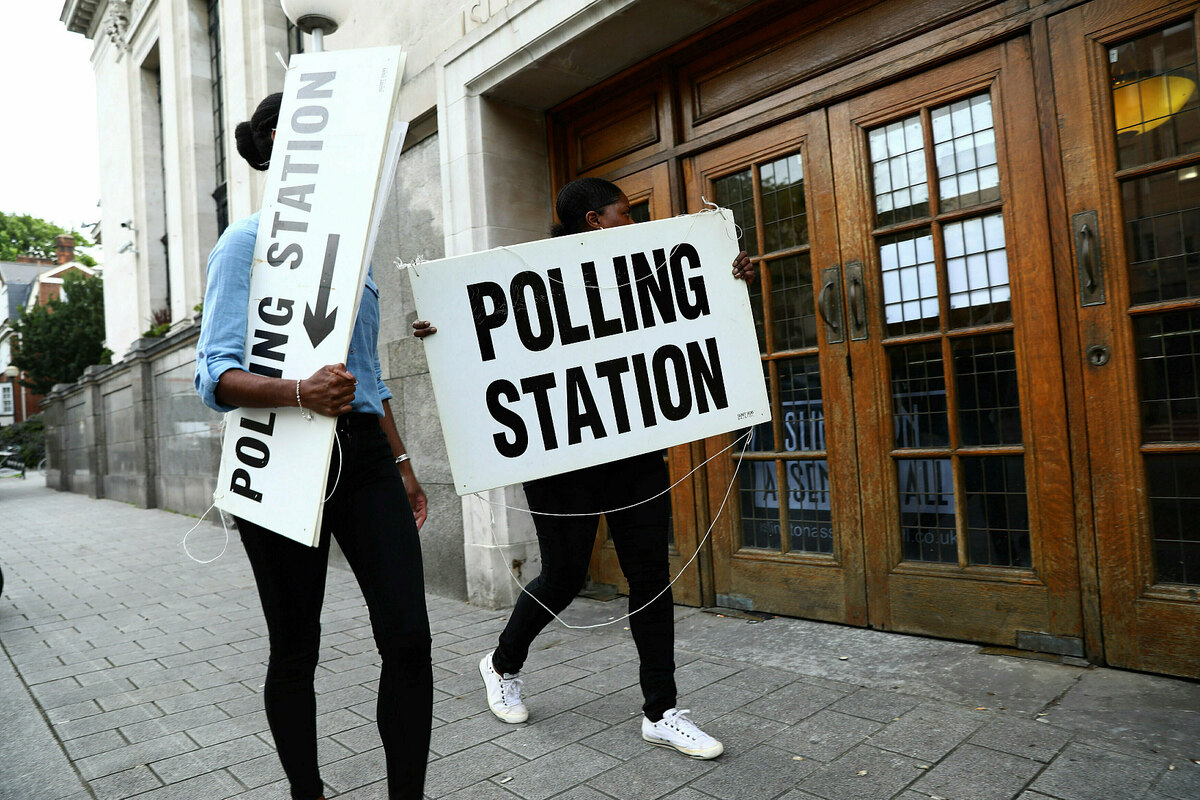
If on May 7th Regional and local elections across much of Britain will no longer be election day in all regions scheduled for this day. Many ballots in England could be postponed to a later date. The new regional parliament elections in Wales and Scotland are not affected.
The Labor government has allowed many English regional authorities where elections are due to submit requests for delays. The reason is an upcoming administrative reform. In many regions there have previously been both smaller “district authorities” and larger “county authorities”, i.e. smaller local and urban communities and larger regional authorities.
According to Labor’s plans, the small local municipal administrations are to be abolished and integrated into the regional authorities in order to supposedly save unnecessary expenditure and strengthen the regional level. In total, by 2028 there will no longer be 21 regional and 164 district authorities in their current form. Regional and city mayors are also being introduced in various places, for example in Brighton.
Because these administrative changes cannot be implemented in time for election day due to capacity constraints, new authorities would be elected in May and would be abolished soon thereafter. To save costs and effort, regions can now decide to postpone elections until the changes are implemented; After that, elections should be made on the basis of the new regulations. More than a third of 63 affected local authorities have now requested this delay; The existing elected officials should then simply stay in office longer.
This is not a purely technical matter as the government presents it, especially since it already a year ago There were identically justified election suspensions. The move could temporarily deprive at least three million and possibly even over four million people of their voting rights next May. These include counties such as Suffolk and Sussex in the south, as well as larger cities such as Exeter and Preston. Brighton’s mayoral election could be delayed by a year. More local authorities could join by the end of this week.
The election dispute is now ending up in court
A huge political dispute has now broken out in this regard, which led to a police operation in Redditch, south of Birmingham, due to a vigorous exchange of opinions and will now also end up before the highest British administrative court, the Royal High Court of Justice in London.
Voting will take place on the originally scheduled date in 34 English regions, but not in 28. Of the 34, only four are under Labor control, of the 28 there are 22. The Conservatives dominate in three more of the 28 and the Liberal Democrats dominate in one, the rest have unclear majorities. In the opinion polls, Reform UK, Nigel Farage’s right-wing populist party, is leading by a large margin in almost all of England and especially in the rural regions. She already won strongly in 2025when voting took place in other regions and municipalities, and now sees itself cheated out of further electoral successes in 2026.
Farage has gone to court claiming Labor is damaging British democracy and hiding from voters. “It is a democratic outrage that we will take legal action!” he promised. His lawsuit was admitted this week and the trial in London begins on February 19th. The Conservatives also say Labor is denying the democratic right to vote.
Prime Minister Keir Starmer’s Labor government rejects this. A government spokesman emphasized that this was a rare, exceptional case. Taxpayers would suffer if elections were held despite the upcoming reform and taxpayers’ money was spent on unnecessary elections instead of on public services. He pointed to the coronavirus pandemic as a precedent, which forced election delays for the first time in British history.
But even Britain’s Electoral Commission views the election postponements critically. Its boss, Vijay Rangarajan, says there is a conflict of interest if elected local authorities can decide for themselves when to run for re-election. Postponing elections could lead to the legitimacy of the authorities’ decisions being called into question. Meanwhile, House of Commons Speaker Lindsay Hoyle has also spoken out against canceling elections in a leaked email to a Reform UK politician.