Drop Site is reader-funded. No paywalls. No billionaire owners. Just journalism that answers only to you. If you value this work, please consider making a tax-deductible donation today.
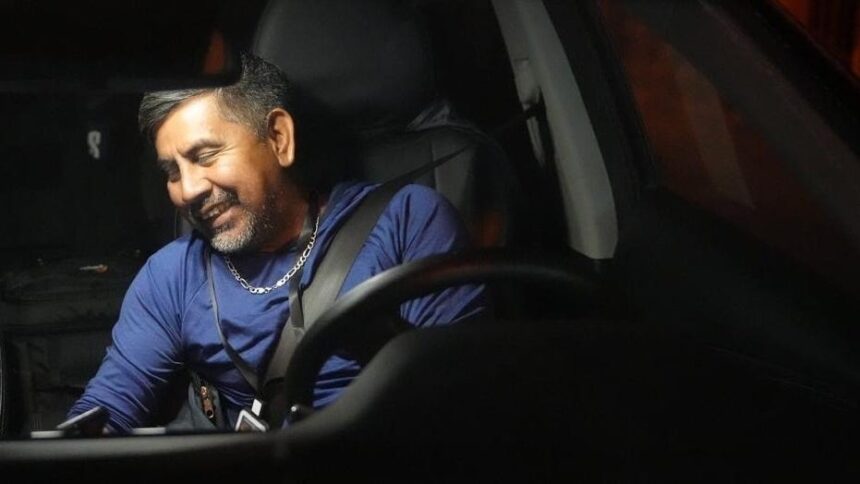
At half past midnight on August 23, six masked assailants stepped out of two pickup trucks onto the makeshift streets of Tres Postes, Ecuador, dressed in a mix of military uniforms and police vests, their guns locked and loaded. They had come to kill René Manuel Cobos Merchán, a beloved local journalist and freelance producer.
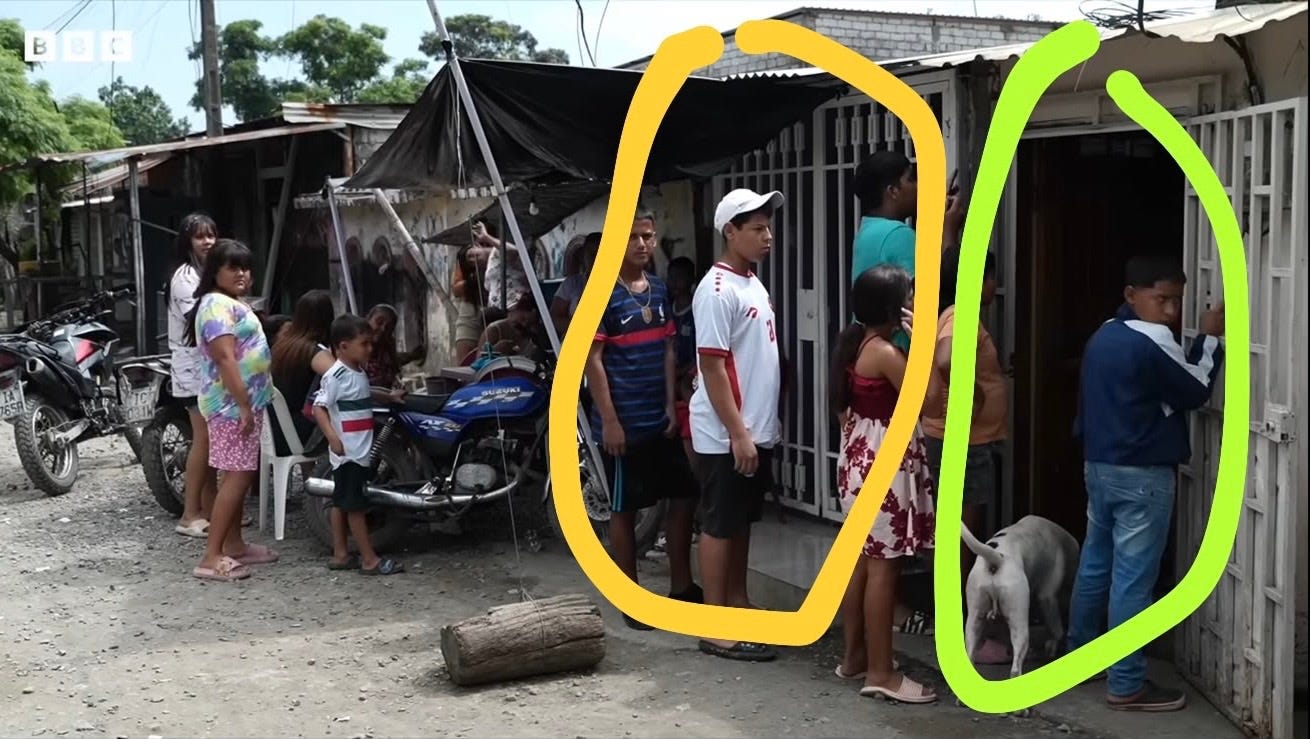
The uniformed sicarios approached Cobos’s home, a small single-story residence adjoined to his girlfriend’s nephew’s home. The two houses sit with almost identical white doors beneath a single corrugated tin roof. In what family members believe was a mistake, the gunmen burst through the nephew’s door, barking “Where’s the señor from the yellow taxi?” They shot the young man, instantly killing him. The assailants then forced their way into Cobos’s home, closing in on him at gunpoint.
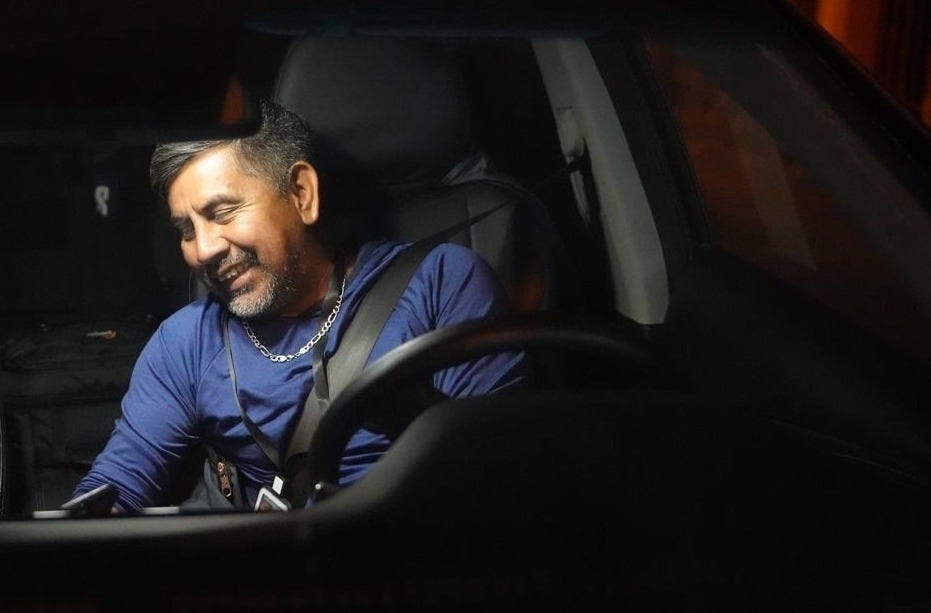
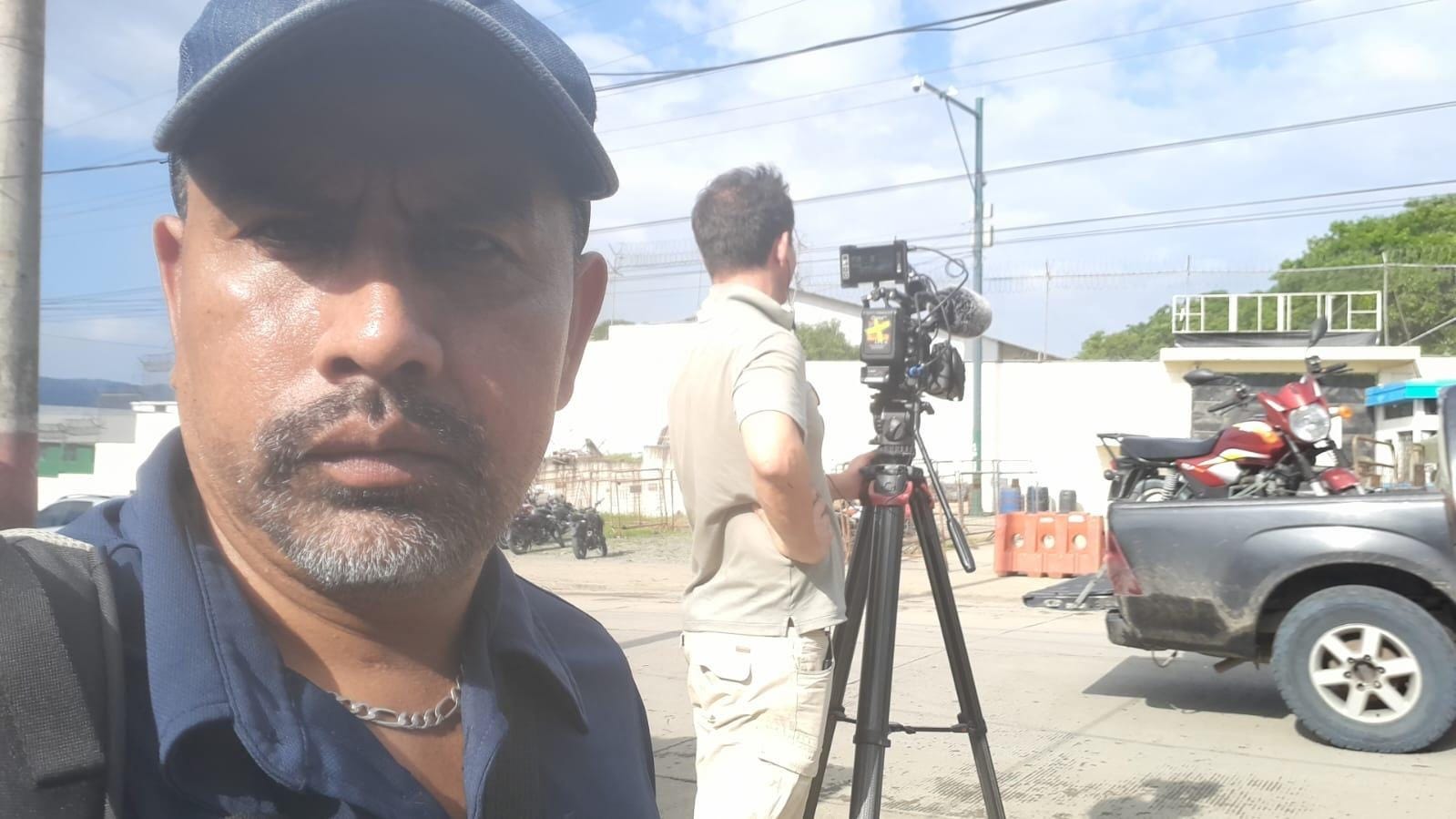
Cobos, known for driving a yellow taxi cab as his personal car, had built a résumé guiding some of the most recognized names in journalism—Al Jazeera, PBS, Channel 4—through the armed conflict engulfing his, and so many Ecuadorians’, working-class neighborhoods. He brokered exclusive interviews with underground figures, scouting locations, arranging transportation, getting reporters in and out of the field, and supplying the kind of sociopolitical context one only really gains from growing up somewhere.
This critical role is often referred to as a “fixer,” a term commonly used to describe local media workers—often in the global south—who help journalists from other countries—often in the global north—report and produce stories for media outlets in their countries. Many reject the title, arguing it undersells the expertise and labor involved.
Cobos had most recently worked on a widely viewed BBC documentary exposing Ecuador’s brutal drug war and corrupt cops, according to five sources interviewed by Drop Site, drawing a slew of death threats against him. In fact, both Cobos’s and his nephew’s homes appear in the BBC film, “Police Fight Gangs, Guns And Corruption In Ecuador’s War On Drugs,” Cobos’s eldest daughter told Drop Site. A longtime colleague of Cobos’s, who spoke to Drop Site on the condition of anonymity for fear of his life, said the BBC used Cobos’s bedroom to film interviews with gang members—the very room he was later killed in.
In the days leading up to his assassination, Cobos frantically confided in a family friend and three colleagues that he was receiving death threats. He believed the threats were retaliation for his role in the BBC documentary, for which he had coordinated key sources, securing the British broadcaster exclusive access to both police operations and the black market.
“The police are not happy” with the documentary, Cobos anxiously told Guilermo Galdos, a friend and Channel 4 journalist, in one of their last conversations. Galdos recalled Cobos saying that police wanted comments about narco infiltration of law enforcement, made in an on-the-record interview by Captain Jean Carlos Bustamante, removed.
When Drop Site asked the BBC and its reporter for comment on Cobos’s death and its possible link to the documentary, which was filmed in his home, the BBC said that Cobos did not work for the network. Asked whether he had been involved in any way with the production, the BBC said Cobos was not hired by them. It is not unusual for fixers to be hired informally on a cash only and contract basis and not directly by a network. Drop Site confirmed that photos of his room and the home’s exterior match the documentary. Drop Site provided the BBC with screenshots of the documentary where family members say the homes appear, along with follow-up questions, and the BBC did not reply.
When the National Police’s homicide and forensic units arrived on scene, they recovered 30 spent shell casings of 20 9mm and ten 5.56mm bullets. A police officer, who spoke to Drop Site on the condition of anonymity, confirmed these are the standard models used by Ecuadorian police.
The National Police later confirmed to Fundamedios that he had received death threats. Drop Site requested an official police report and statements from the National Police Directorate, including about the death threats Cobos had received, and contacted five law-enforcement officers for comment. The Directorate referred questions to the Attorney General’s office, which did not respond.
Cobos, a father of six and “tío” to the neighborhood kids, grew up along the Ecuadorian coast—where six of the world’s most dangerous cities now sit—and took immense pride in producing stories from the region. His eldest daughter told Drop Site that he would send her photos each time he was on set. He had a habit of hosting family watch parties, squeezing all his loved ones around the TV in their tiny living room, to watch the latest documentary he’d worked on. Half-chuckling, half holding-back tears, a separate family member fondly recalled how he would pause the documentary at each scene or interview he’d help set up, just to make sure all eyes were on the screen.
In one scene of the BBC documentary, a man affiliated with a drug-trafficking group sits atop Rene’s bed and boasts that he has four police officers on his payroll. In another scene during a counternarcotics operation, Bustamante, the police captain, tells the cameras, “We have many, many bad people inside the [police] unit, inside the state, inside politics. We have many guys that are corrupted. They are in the pay of the gangs.”
Under the right-wing regime of President Daniel Noboa—the Miami-born, Harvard-educated heir to a billion-dollar banana conglomerate with its own history of drug-trafficking allegations—Ecuador has become the most violent country in the Western Hemisphere. A staggering 70% percent of the world’s cocaine moves through Ecuador’s ports en route to Europe and the United States, the world’s largest consumer. Critics nicknamed the embattled president “Narco Noboa” after local authorities discovered 26 million euros’ worth of cocaine stashed in cargo boxes aboard the boats of his family’s banana export business—a business of which Noboa is the majority shareholder, the Pandora Papers revealed. Nevertheless, Noboa claims he is on a crusade to crush the cartels, invoking 23 martial law decrees, authorizing U.S. ground strikes, and racking up human rights violations.
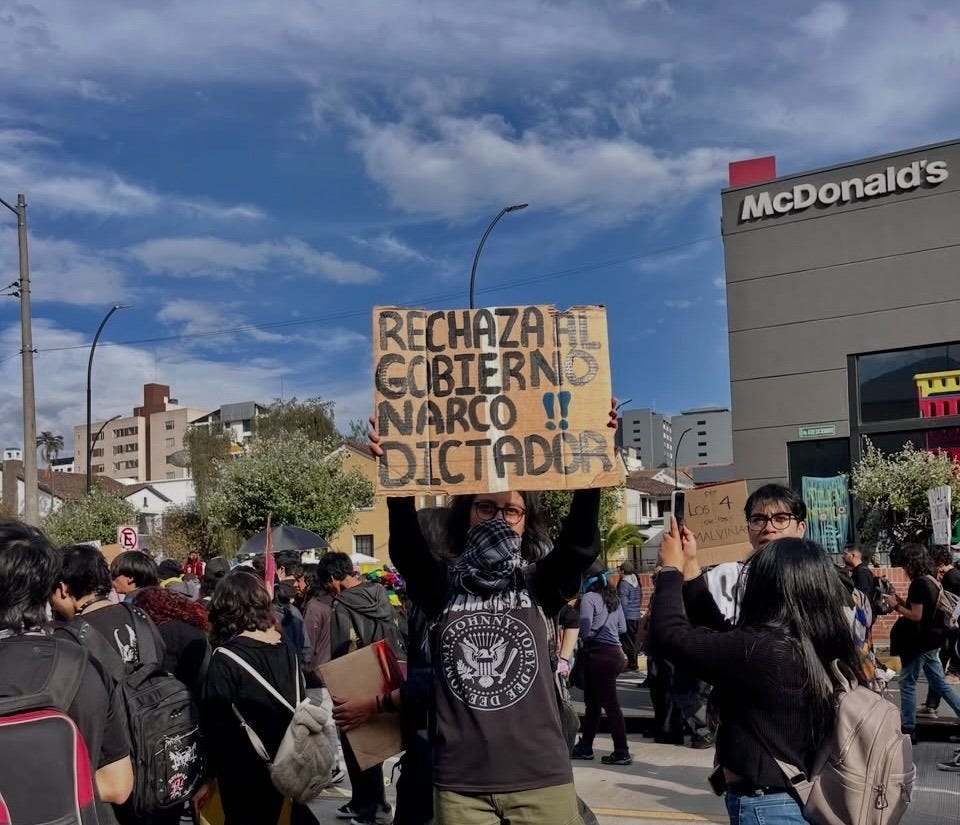
Caught between state crackdowns on free speech and cartel kill orders, the press and whistleblowers have absorbed some of the worst consequences of the armed conflict. Between 2025 and 2026 alone, Ecuador dropped 31 rankings on the World Press Freedom index. Speaking to an Ecuadorian TV network, Ecuavisa, the Director for the Americas Division at Human Rights Watch, Juanita Goebertus said, “The Noboa government appears to be more effective at attacking civil society organizations and opposition parties than it is at attacking organized crime.”
Many media workers in Ecuador fear that they will meet the same harrowing fate that Cobos did. More than 800 attacks on the press have been recorded across the country since 2022. The state was the single largest culprit of intimidation against journalists this year; responsible for 46 of the 100 assaults and threats recorded between January and June by Fundamedios. By comparison, organized crime groups accounted for five of the attacks on the press this year, according to the outfit.
On Sunday, November 8, investigative journalist Tomás Beltrán was shot and killed in his garage. His murder follows months of death threats, which began after he filed a complaint accusing Ledy Muñoz, his local mayor and a member of Noboa’s party, of illicit enrichment. In response to the threats, Beltrán had been placed under a protection program by the Attorney General’s office.
In June, Monika Silva Koniuszek, a whistleblower who had delivered evidence of Noboa’s illicit business activities to the U.S. embassy in Quito, was found dead in her home. The post-mortem examination discovered blows to her head. Friends and family say that her murder was intended to silence her investigation of Noboa. One of her associates, the journalist Gabriela Pachana, was subsequently sentenced to 30 days in jail for suggesting as much in a post on X.
That same month, over 20 human rights organizations issued a joint statement warning that the numerous threats and assaults on the press “reflect an alarming trend.” “The fight against corruption and the demand for accountability have become high-risk activities in Ecuador,” they wrote, adding that, under the new martial law regime, “lack of transparency and opacity are becoming consolidated as State policy.”
Through recent martial-law decrees, the government has granted itself the authority to wiretap communications without probable cause or warrants, further undermining journalists’ ability to communicate safely and securely with whistleblowers and other sensitive sources.
Newsrooms have also come under threat. In September of 2025, a local television station was suspended after Ecuadorian intelligence agencies deemed it a threat to national security for broadcasting footage of protests and labor strikes by Indigenous activists, which Noboa branded “terrorism.”
In April, Bloomberg News highlighted the erosion of civil liberties and press freedom under the Noboa administration after several board members of two Ecuadorian news outlets faced criminal charges amid their refusal to sell 40% of their shares to the government. One of the outlets, Diario Expreso, was forced to shut down its 53-year print edition after 70% of advertisers withdrew under pressure from the state.
Another prominent Ecuadorian publication, GK, indefinitely suspended all operations on October 29 and warned that, “The context in Ecuador is not favorable for independent journalism. We have sadly witnessed the closure of other media outlets due to political pressure, and the persecution of reporters simply for doing their job and holding those in power accountable.”
The Director-General of UNESCO condemned Cobos’s death, demanding an investigation and accountability. “Impunity for such crimes is unacceptable and must not be tolerated,” the Director-General said.
Cobos himself was deeply critical of the economy and risks around being a fixer, Galdos told Drop Site. “This is the fifth contact of mine that has been killed,” Galdos said. “The fifth person I’ve worked with who opened a window for me to get to know the underworld and who today is no longer with us because that’s how dangerous the issue is.” Galdos said that Cobos’s face carried a faded scar because hitmen “had already tried to kill him years ago.”
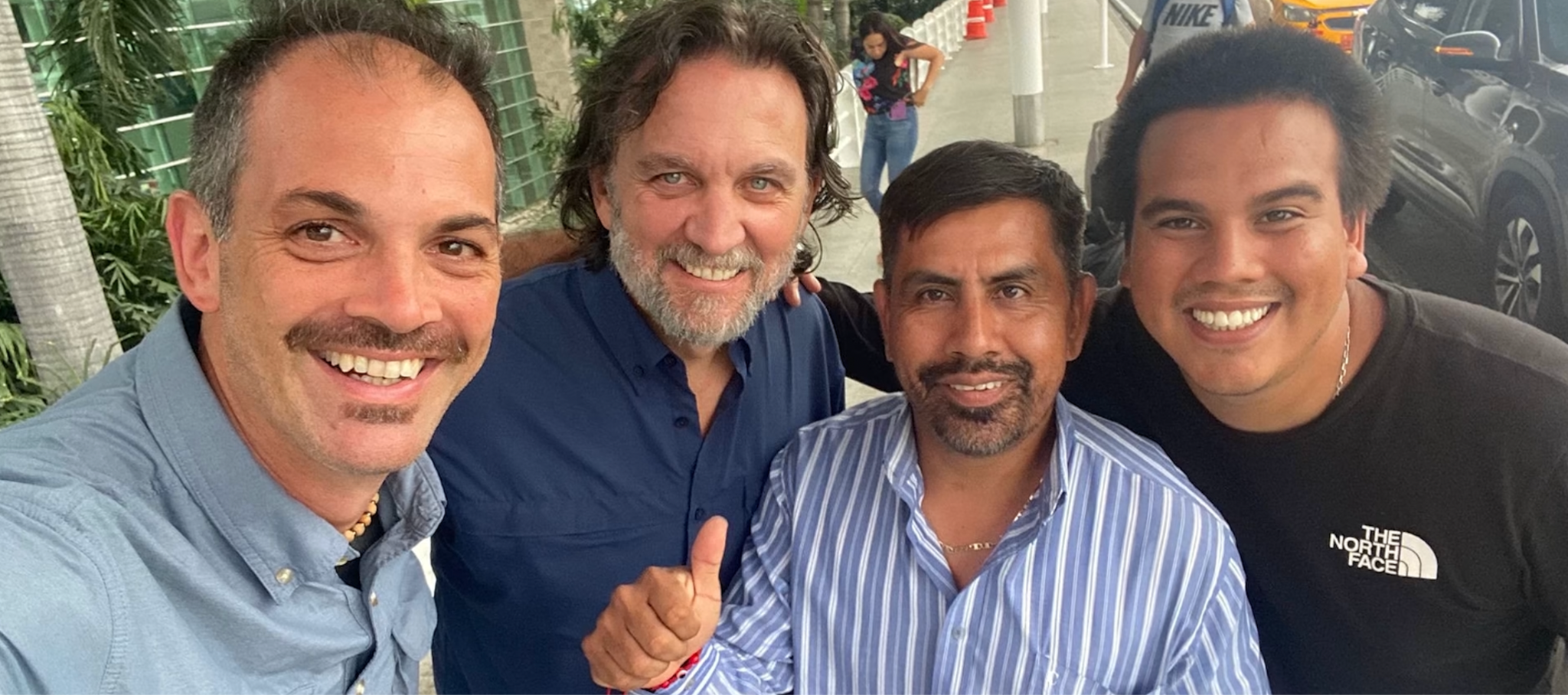
Hailing from Durán, ranked the world’s most dangerous city in the world in 2023, where daily life is interspersed with crime scenes and shoot outs, Cobos had documented both the bloodshed and corruption of the drug war.
And he was attentive to the effects of violence in his community. Friends, fellow journalists, and family recalled how he helped mothers of gun-violence victims relocate to safety, including one woman who lost her four sons and husband to shootings last year, who says Cobos helped pay her month-to-month rent. He would tell and retell the same stories—which always carried a lesson—to the neighborhood kids no matter how many times they had heard them.
Josh Rushing and Jeremy Young, both Emmy-winning journalists with Al Jazeera, recounted how Cobos may have saved their lives while they were filming in Ecuador in 2023. After a smuggler they had arranged to interview called and threatened them, Cobos urged them to take the threats seriously and leave Salinas. With roads about to close for the elections, he drove to their hotel at 10 p.m., got them out, and brought them safely to Guayaquil. “He put himself in danger to do it,” Rushing said.
Reeling from the loss, his family is terrified that pressing the authorities on his death could make them targets too. “I know it shouldn’t just be left like this, but it’s also so scary. To avoid problems, it’s better not to ask or investigate anything ourselves,” his eldest daughter told Drop Site.
For families like Cobos’s, answers may never come. Fewer than 10% of homicide cases in the region are solved. But even if the case is buried, his legacy will not be. “When everyone around there found out that René had died, the whole neighborhood, everyone there, was devastated, because he had helped a lot of people,” a loved one said.