

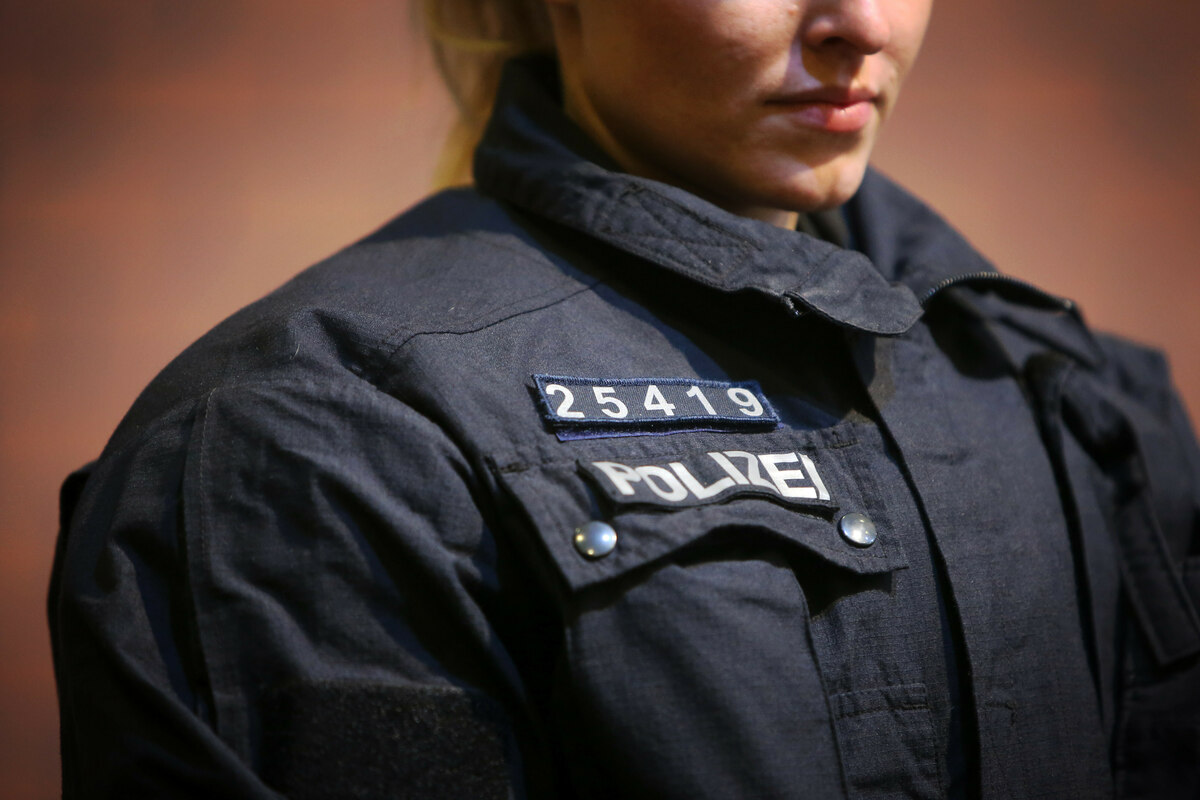
Despite a clear agreement in the coalition agreement between the SPD and the Greens, the Ministry of the Interior in Lower Saxony is now blocking it the introduction of an individual identification requirement for police forces during large-scale operations. The labeling was actually considered a done deal. The project will initially be limited to two years. However, in a recent statement at the turn of the year, the management of the authorities rejected the model experiment, thereby endangering a central reform project of the coalition.
The coalition submitted a corresponding application in September. The key point is that police officers during large-scale operations such as football games or demonstrations wear a number that not only identifies the unit, but also allows conclusions to be drawn about the individual officers. The aim is to “further strengthen trust in the police through transparency and traceability” and to give citizens the opportunity to identify officers if necessary.
However, there is now headwind from the Interior Ministry. In a written assessment, state police chief Axel Brockmann distanced himself from the demand. He opens this with quibbles: The term “anonymized labeling requirement” is wrong, it is a “pseudonymized labeling requirement”.
The core message of the statement, however, is that there is no need for implementation. The current system, which only identifies the unit, has proven successful because individual officers can be “filtered out” if necessary. Brockmann also warns of considerable bureaucratic and financial effort as well as the risk that extremist groups could create profiles on individual officials in order to specifically intimidate them.
The inhibition threshold for attacks is falling on both sides
Interior Minister Daniela Behrens (SPD) also expressed skepticism about the request in 2024. “At the moment I don’t think this question is the most pressing,” she told the German Press Agency. “For me it is more important that we do not build up mistrust of the police in the current situation, in which we have so many security requirements.”
Kevin Komolka, state chairman of the police union (GdP), also sees no reason for an individual identification requirement: “This proven system works perfectly in practice. We are not aware of any case in which individual identification would not have been possible.” The measure is irrelevant to security and leaves the police forces with the impression of distrust.
However, a look across the state borders shows that Lower Saxony would not be breaking new ground. Labeling has long been part of everyday life in nine other federal states, including Berlin, Hesse and Rhineland-Palatinate.
There, the unions’ fears – such as an increase in targeted complaints against police officers – have largely not been confirmed. On the contrary: Studies from these countries indicate that the inhibition threshold for attacks on both sides decreases when the actors can no longer disappear into the anonymity of the masses.
State police chief Axel Brockmann warns that extremist groups could create profiles on individual officers in order to specifically intimidate them.
The debate is further intensified by further planned reforms. The red-green initiative to have police officers examined for tattoos if they suspect violations of the constitution has met with criticism. The CDU Lower Saxony described this as a “serious unconstitutional interference with personal rights” that was “invasive and degrading”.
The discussion is influenced by past events that have affected trust in the police. Deadly missions like the case of 21-year-old Lorenz A. in Oldenburg or the case Mouhamed Drame in Dortmund caused massive criticism of the police operation.
Greens remain optimistic
Especially in confusing large-scale operations – for example the evictions in Lützerath – the lack of individual identification of officers in protective equipment became the central point of contention. Cases involving allegations of racism or police violence intensify the debate about necessary reforms such as compulsory identification or the use of body cameras.
Despite the skepticism from the ministry, the coalition partners are optimistic. Michael Lühmann, domestic policy spokesman for the Green party in the state parliament, emphasized to the taz: “The SPD and the Greens have agreed on the test.” The fact that the debate will now continue will help “to resolve existing misunderstandings”. The application is currently being discussed by the relevant committee in parliament.