

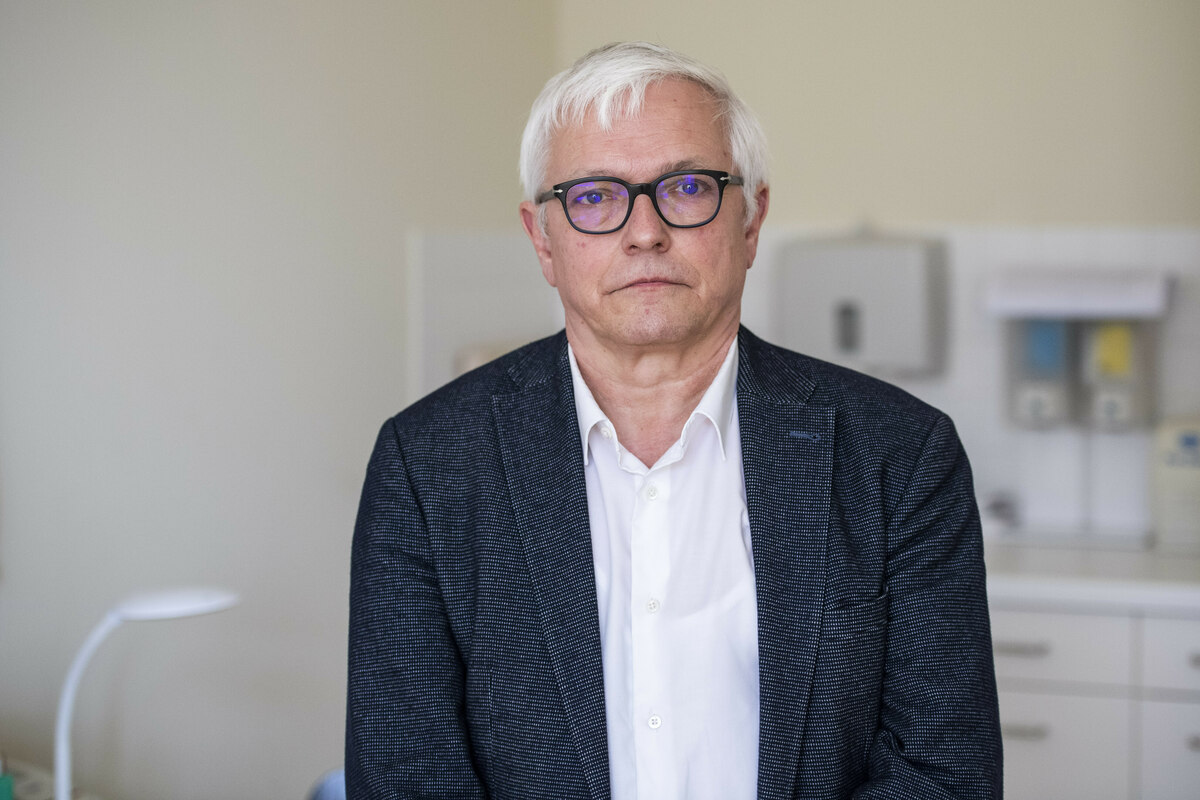
It is a bleak picture that the head of the Association of Statutory Health Insurance Physicians (KV) Berlin, Burkhard Ruppert, paints of outpatient medical care in the capital. “Some regions of our city are already critically underserved, especially in the east of Berlin.” Despite funding programs and new practical models, the situation threatens to get worse. Ruppert demands one System change and more responsibility from politicians and patients.
It is not the first time that the head of KV Berlin has sounded the alarm. The real wave, said Ruppert in his wake-up call published on Thursday, “is still rolling towards us”. – “We are experiencing a double demographic development: our society is getting older – and so is our medical profession.” By 2025, over a third of Berlin’s doctors would be over 60 years old.
By 2040 it will be almost half. “We don’t know whether there are enough young doctorsin order to be able to close the gap that has arisen.” In addition, more and more young doctors want to work part-time – for understandable reasons. But that means: more people in the system, but less doctor time.
At the same time, Berlin is growing. This is strongest where the supply is already weakest. This applies, for example, to Marzahn-Hellersdorf, Treptow-Köpenick and Lichtenberg. “In the same districts, the disease rate is above the Berlin average.”
Emergency is spreading
The KV has long been taking countermeasures: “We promote new branches and practice takeovers with start-up financing, support employment and practice assistantships and accompany doctors on their way to outpatient care. Despite the increasing number of doctors, the level of care is hardly improving. “The strong population growth in Berlin is eating up our successes.”
The emergency in the eastern districts also threatens to reach other parts of the city. “We need a system change,” demanded the head of KV Berlin. He describes the idea of “having access to all medical services at any time, anywhere and without control” as outdated. Mandatory and intelligent patient control is necessary. “Oriented to the principles: digital before outpatient before inpatient.”
When asked by taz on Friday, the Senate Department for Science, Health and Care explained that it was aware of the “factual connections” described by Ruppert regarding outpatient care. The concerns would be taken seriously. At the suggestion of the Senate Administration, a working group of the joint state committee was founded in 2023 to ensure outpatient care, which continues to exist to this day.
Under federal law, ensuring outpatient statutory health care is the responsibility of the statutory health insurance associations. The Senate Department for Health welcomes this Commitment of the Berlin Association of Statutory Health Insurance Physicians in the areas of branch support and advice and the establishment of own facilities in districts with lower levels of care.
The preference of younger doctors to work in salaried positions is supported, particularly through the establishment of their own institutions. In addition, the state of Berlin supports the states’ efforts to enable associations of statutory health insurance physicians to set up medical care centers in the future.
In March 2025, at a hearing in the Health Committee of the House of Representatives on the status of hospital reform, the head of KV Berlin pointed out the problem with outpatient care. In the eastern part of the city there are now 130 vacant general practitioner positions with considerable problems with filling them, “even though we are supporting the whole thing with 60,000 euros,” said Ruppert at the time.