

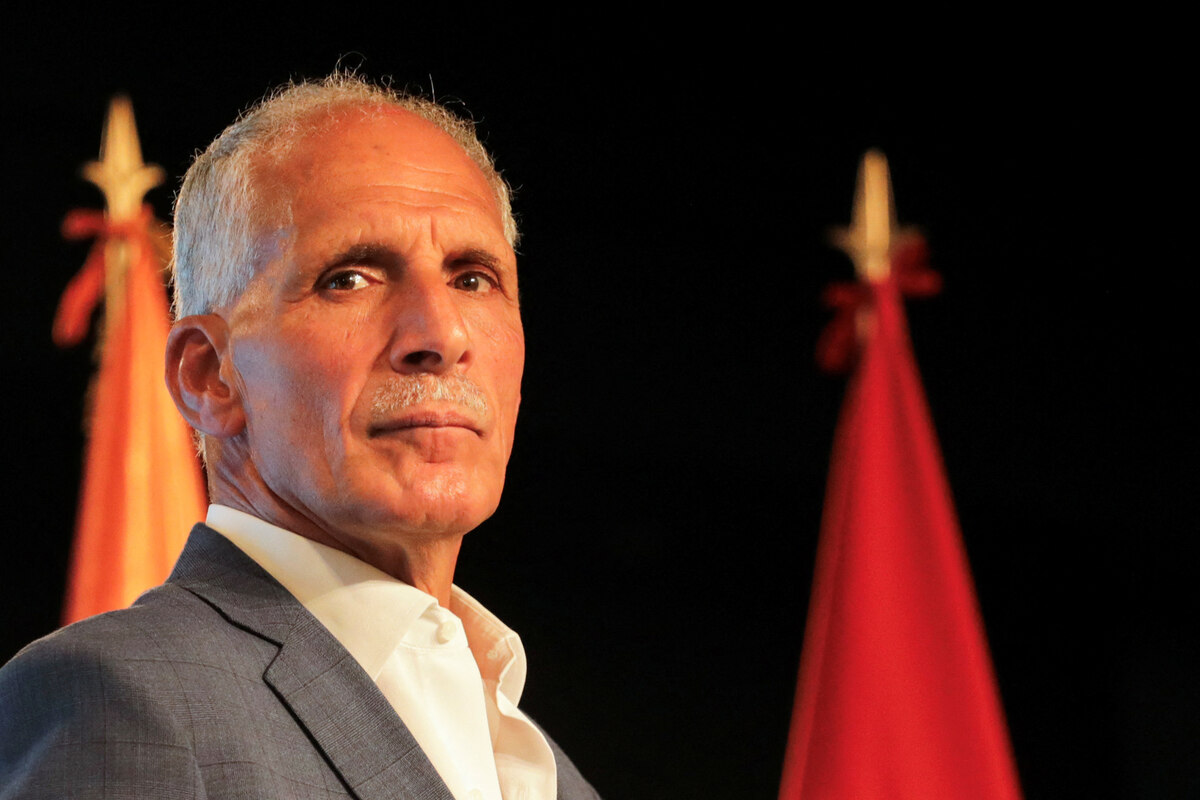
Now it’s here, Nasry Asfura’s big day: In the second attempt, the 67-year-old building contractor of Palestinian origin will move into the Presidential Palace of Honduras in Tegucigalpa on Tuesday. No coincidence, as Asfura had direct support from the White House. Donald Trump openly appealed to voters in Honduras to vote for the conservative Asfura and announced at the same time Former President Juan Orlando Hernández (2014-2022) to be released from US custody and pardoned. Since then, there has been a fear in Honduras that party colleagues Asfura and Hernández could take on different roles and control the fortunes of the Central American country in the future.
The course has been set for this because Tomás Zambrano, a parliamentary speaker who earned his first political spurs under Juan Orlando Hernández, has been elected. He has reinstalled the traditional alliance between the national and liberal parties, which dominates parliament with 90 of 128 seats and is intended to support Nasry Asfura from now on. This causes disillusionment, especially in social organizations, because Asfura is not only seen as neoliberal and conservative, but also as corrupt.
The country’s extremely weak judiciary has already investigated Asfura for money laundering, embezzlement and abuse of power. His name also appears in den Panama Papers who uncovered tax fraud through shell companies. But the judiciary was never able to prove anything to the developer with a lot of political experience and so the former mayor of Tegucigalpa (2013-2021) is sworn in as head of state today.
Demonstrations have already been announced because there is great fear of a conservative rollback. There are already initial indications of this, such as the launch of a law that should enable hourly jobs in order to generate more jobs. But the central question is whether working standards and rights will be suppressed. This is just as unclear as the question of whether the new government really wants to replace the incumbent Attorney General with a “more pleasant” one, as rumors in Tegucigalpa suggest.
Fighting corruption is no longer a priority
It would fit in with the new national-liberal alliance, which relies on neoliberal economic policy and on whose agenda the most important project of the previous government under Xiomara Castro no longer plays a role: the fight against corruption in cooperation with the United Nations. The “UN Commission against Corruption and Impunity” (CICIH), which failed due to a lack of majorities in Congress, no longer plays a role on Asfura’s political agenda.
The new president stands for closeness to the USA, which he visited several times during the election campaign. It is clear that he will not stand in the way of the deportation of compatriots from the USA. There should be more work in Honduras and improved educational structures, which initially sounds positive. But it is also clear that controversial and highly conflictual economic sectors such as mining are being promoted under him, says environmental and human rights lawyer Rita Romero: “We assume that the measly successes of Xiomara Castro’s government will quickly be forgotten – including the ban on mining in protected areas.”
It is clear that Asfura will not stand in the way of the deportation of compatriots from the USA
With Nasry Asfura, the conservative rollback that is currently taking place in Latin America with Trump’s support now also has its face in Tegucigalpa.