

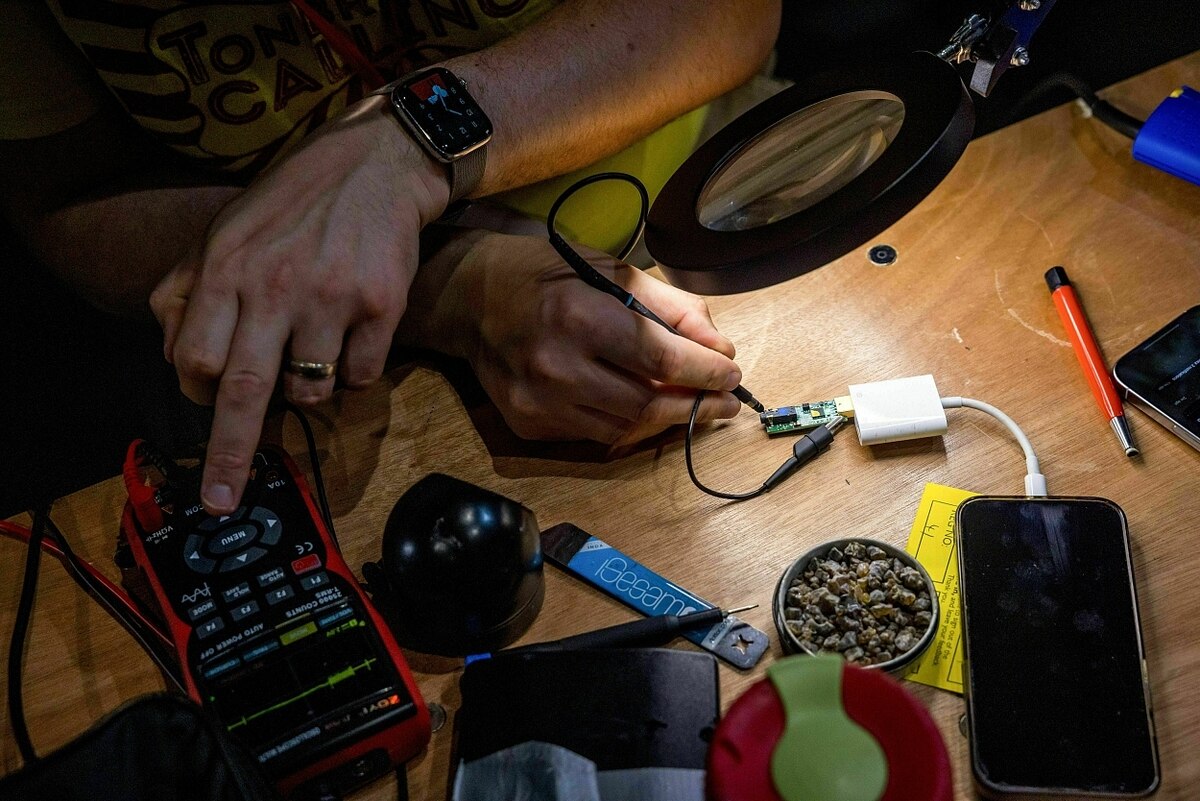
Starting this summer, smartphones, washing machines and a number of other devices will have a right to repair – even beyond the warranty period. A planned legal regulation will provide manufacturers with specific requirements. It should have a positive impact on the environment and consumers’ wallets.
The Federal Ministry of Justice, which is also responsible for consumer protection, assumes that the EU directive passed in 2024 will come into force in Germany on July 31, 2026. As the ministry reports, a draft for the implementation of the directive into national law has now been sent to states and associations.
The draft bill for the new law sent an important signal, says Anja Siegesmund, Executive President of the BDE waste association. “Now it’s important to implement the new requirements consistently and in a consumer-friendly manner – with fair prices, reliable availability of spare parts and practical procedures.”
While the federal government is introducing the bonus, Thuringia is abolishing it. For five years, private households were supported in having defective electrical appliances repaired instead of buying new ones. The Thuringians were able to have up to 50 percent and up to 100 euros – later up to 130 euros – of the repair costs reimbursed.
50,000 repairs supported in Thuringia
The state has made 800,000 euros available annually for this purpose. The repairs were coordinated primarily by the Thuringian Consumer Center, and repair cafés were later also involved. The bonus was scientifically supported by the Berlin Fraunhofer Institute for Reliability and Microintegration (IZM).
In total, around 50,000 repairs are said to have been supported in the Thuringian model project. A third of the devices repaired are smartphones, followed by refrigerators, washing machines and dishwashers.
“A joint study with Fraunhofer IZM shows that between 2021 and 2024 alone, around 2,971 tons of CO₂ equivalents and around 390 tons of electronic waste were saved through 33,288 repairs,” said Magdolna Molnár, who scientifically monitored the bonus. The savings correspond to the annual emissions of 275 people in Germany, said Molnár. Almost 80 percent of the bonus users were between 36 and 75 years old. Regionally, people from cities and rural areas took advantage of the bonus equally.
In order to promote long-term and binding repairs, further regulations are neededsuch as a repair-friendly eco-design, the cheap and quick availability of spare parts or the offering of software updates over long periods of time, says Thomas Fischer, head of the circular economy department at Deutsche Umwelthilfe (DUH). In principle, Fischer believes that a repair bonus should not be financed from taxpayers’ money, but rather by the manufacturers themselves. This would encourage companies to produce more robust and long-lasting products.
Every year, millions of electrical devices that could be repaired end up in the trash
Millions of electrical devices end up in the trash every year, even though many of them could be repaired. According to the Federal Environment Agency, 15 percent of the old devices collected in Germany could be used again – but only 1.7 percent are actually processed.
Repairs are often not worth it for consumers
There are many reasons: Manufacturers often design devices in such a way that they are difficult to open and repair. Spare parts are expensive, difficult to obtain or are not even offered. Independent workshops also often struggle with missing repair instructions or software locks.
A repair bonus can help, but it doesn’t have to: “The situation remains difficult for people who cannot afford a repair even with a bonus,” says the Thuringian Consumer Center. Possible alternatives include volunteer repair cafés. However, the head office advises against taking out extra insurance for individual electrical devices: “Equipment protection letters and additional insurance are often expensive, have restrictions and, in our experience, are rarely worthwhile.”