

D he musician Frank Zander and other celebrities serve Christmas geese every year, the Arche children’s charity in Berlin distributes gifts to “needy” children, and the Berliner Tafel gives away vouchers and Lego sets. Even the Hofbräuhaus on Berlin’s Alexanderplatz invites needy families to eat on Christmas Eve.
Sabine Schwedt
is a single mother and lives with her children on community benefit. She complains that she is not poor, but is being made poor. Here she writes under a pseudonym because she does not want to publish her real name to protect her family.
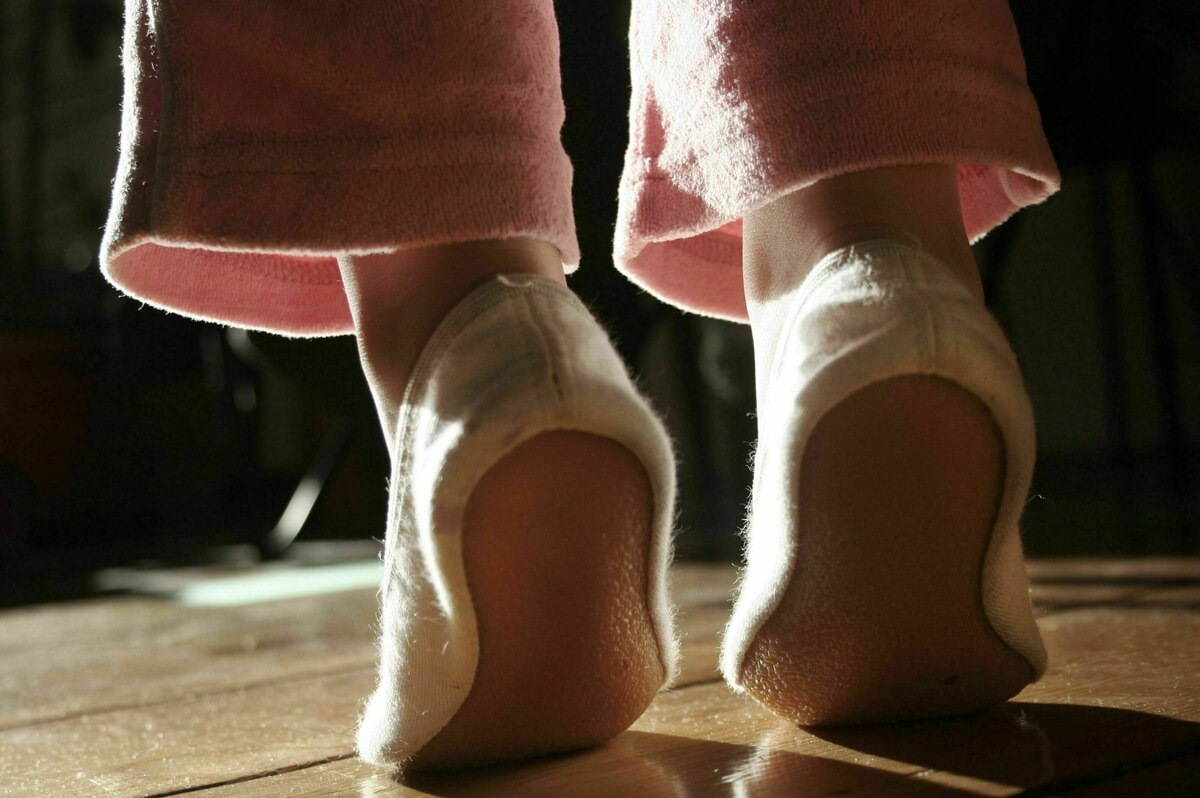
I’m such a “needy person” and yet I keep asking myself: Am I the only one who is bothered by all this? Yes, they are great offers and most recipients are happy about them. As a single mother with two children, I also rely on citizen’s benefit. If a cucumber only costs 1.39 euros, I’m happy about it, as I am about everything that makes our everyday lives easier financially. If the school child’s third lost glove or the daycare child’s outgrown slippers cause me concern, gifts reduce my worries.
In the school class in which donations are collected for the food bank, some are considered poor
At the same time, I would like to express this gratitude with something like pride and on an equal level. Standing in line at the food bank, not being allowed to touch anything, being handed the Lego set with the request that my children paint a picture for the donors as a thank you, makes me very uncomfortable. Likewise when the priest keeps talking about “needy children”. My children needy? Yes, they are considered poor. But this gap, the distancing us-them thinking – us who are doing well and them who are doing badly – is a gradientwhich also provides a projection surface for the good feeling of volunteers.
When poor children collect donations at school
At this level, poverty is externalized. It basically doesn’t take place or only takes place in certain places: in the ark, in the queue at the table, under the bridge. The fact that some of the school class in which donations are collected for children from the Berliner Tafel are considered poor is hardly noticed.

“Poor people” are homogenized, especially at Christmas or during the lantern season, when people like to explain how kind Saint Martin was when he shared his cloak. Who is this beggar in the snow at the beginning of the year? Who wanders through the subway asking for donations. Why is he poor and Saint Martin rich? The beggar remains nameless. The same pattern also exists in media texts, podcasts and videos: celebrities are portrayed individually, people who receive public benefit as the “poor masses”.
Nobody would deny that we are more than just a community of needs, but the story of why single parents with children live in poverty is inadequate. It may be known that most of us cannot work full-time because then childcare is not guaranteed. So we don’t earn enough to be able to afford a reasonably sized apartment and all the things that make everyday life easier. But what is often forgotten is that we are generally responsible for everything 24/7. Illness, travel, responsibilities – you have to manage everything alone.
Politicians also like to show up at the distribution points of food banks and soup kitchens and praise the charitable work in their aprons. The problem is homemade: single parents benefit the least from the many different benefits for families. Eva Maria Hohnerlein, legal scholar at the Max Planck Institute for Social Law and Social Policy in Munich, speaks of cannibalizing interactions. The different benefits such as maintenance, maintenance advance, child allowance, citizen’s benefit, housing benefit eat each other up.
The risk of poverty for single-parent families has been increasing for years. Since this January I have been receiving 8 euros less citizen’s benefit – because child benefit has increased by 4 euros. As a “needy” person, the additional child benefit is immediately deducted from my children’s standard rate, while the cucumber continues to cost 1.39. Inflation is ignored in the new basic security. Instead of going to the supermarket, you go to the food bank, which creates two separate worlds. Poverty is not an identifying characteristic per se, but it can become one if one does not realize that it has structural causes. The attitude “I am not poor, I am being made poor” allows for a different perspective and is empowering.
Children will bring more to the state than they cost
There are travel offers in Berlin for families with citizen’s money, there are food banks and clothing stores. This all has its place, I don’t want to be ungrateful. But I notice that I duck my head when I get chocolate for my children from the bar. Is it shame? Yes too. Is it a feeling of exclusion? Yes. I actually don’t feel like I belong. Is it a Feeling of injustice? That too. If I didn’t have children, consumption and a good living wouldn’t be a problem. My children will later, when they work themselves, bring in more money for the state than they cost today. Calculations have shown this.
Yes, it would be nice if I could buy a Lego set from the store for my two little professionals and taxpayers. I also don’t want to go on a group trip where “citizenship families” are among themselves and have an educational workshop imposed on them, according to the motto: They need it. I want inclusion and participation, like many other single parents. We are not a homogeneous poor mass – from the lawyer with three children and burnout to the nurse who cares for her own child who can only live with a feeding tube. We are many different mothers and fathers with completely different educational biographies and educational resources.
I get eye level by asking about gym slippers in size 27 on neighborhood portals and in parent chat groups – some because of sustainability, I primarily for economic reasons.