

D his story takes us back to an early phase of my experiences as a foreign reporter. Indonesia 1998, the fall of the dictator Haji Mohamed Suharto: For the first time I experienced the force of a democratic awakening in a large country in the southern world. Such moments imprint themselves with colors, sounds and smells that outlast much else that comes later.
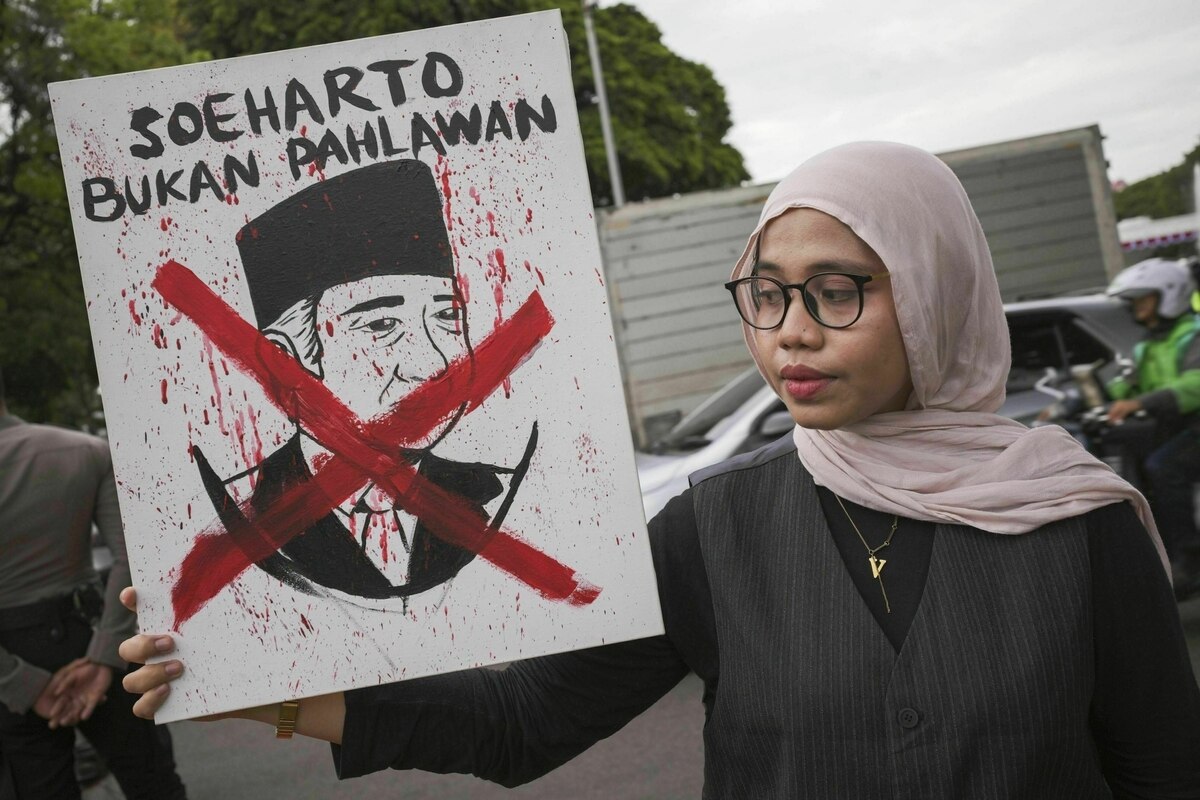
That’s why it hit me in the heart when the current President of Indonesia, Subianto Prabowo, the late dictator recently made a national hero – a man who was, after all, partly responsible for one of the greatest crimes of the 20th century outside of Europe. General Suharto’s rise to power was accompanied by massacres in which more than half a million people were murdered in 1965/1966: primarily suspected members of the Communist Party, which was then one of the largest in the world. A political cleansing, if you want to use the word for it, in the context of unleashed state terror.
It was a genocide, say Indonesian human rights activists, even if what happened does not fit the wording of the Anti-Genocide Convention: It defines victims as a national, ethnic or religious group, not as a political one. Without a doubt, however, the mass murders of 1965/66 are among the major crimes of the 20th century that the Cold War relegated to the shadows of attention – or made them possible in the first place. It was the time of the Vietnam War and the US domino theory: the whole of Southeast Asia could tip over and fall to communism.
So General Suharto, reliably economically liberal, seized power with the support of the USA. What did the free world care about half a million dead? Chancellor Helmut Kohl called the general with blood on his hands his “friend” and visited him four times. Doing good business with dictators was quite common in the old Federal Republic. Suharto remained in office for 32 years and, on top of that, enriched himself with billions of dollars in state assets. There has never been a real coming to terms with the dark chapter associated with his name in Indonesia.

The genocides of our friends
No People’s Justice. Does something ring a bell? Yes, that was the name of the infamous monumental picture at Documenta 15; after the discovery It was taken down by an anti-Semitic exaggerated figure – rightly so. But how convenient that there was no need to think about what People’s Justice denounced: the West’s (and partly Israel’s) support of Suharto’s reign of terror. Kohl’s friendship with the blood general – irrelevant. People in Germany generally don’t like to deal with genocides committed by friends.

Federal Chancellor Helmut Kohl (l.) and Indonesian President Haji Mohamed Suharto in Jakarta, Indonesia, on October 28, 1996
Photo:
imago
My enthusiasm at the end of the 1990s about Indonesia’s democratic awakening was as justified as it was hasty. The euphoria about the new freedom that I experienced, especially among poor people, was real, and it denied the Western prejudice that Muslims don’t care about democracy. But the oligarchy coddled by Suharto remained in power behind the scenes; old elites are still pulling the strings today. The incumbent President Subianto, who posthumously awarded the dictator an honorary title, was one of his confidants as a young military man and now maintains an increasingly authoritarian style of government.
The other side: Recently there were mass social protests again, the largest since Suharto’s fall. And many in Indonesian civil society reacted with horror to the dictator’s rehabilitation. Both show that the overused concept of the Global South obscures serious contrasts and stark differences in interests and values.
From a global perspective, honoring a mass murderer is more of a symptom of the times: the offensive recognition of injustice as right, of evil deeds as exemplary – medals for massacres. In Chile it was an explicit Pinochet supporter has just been elected president; He wants to pardon military officers who have been convicted of crimes against humanity, and his own family is involved in misdeeds. More is hardly possible. I think of Víctor Jara, his songs of the Nueva canción politicized a generation; he fell under 44 bullets from the Pinochetista. All in vain, gone, forgotten, ideals plowed under?
Free yourself from linear thinking about progress
As an observer, after Indonesia, I witnessed further upheavals in Egypt, Tunisia and Sudan. Gains that are thought to be permanent because they were fought for with so much sacrifice can be lost in a way that was previously unimaginable. Reacting to this with cynicism would destroy the best in us.
Reza Pahlewi called on Iranian oil workers to strike. Did he forget that they were already on strike against his father?
Anyone who wants to survive politically and morally in these times must free themselves from a linear thinking about progress, which now only allows us to see defeats and lost beginnings, and get involved in disruptive or circular courses of history. While the organs and principles of a solidarity-based global society are being undermined and smashed today, the protest movements for a better life are hardly countable. In Iran, people are dying for this.
Despite all the solidarity with those fighting there, circular patterns are also noticeable here. Of all people, the Shah’s wealthy son is now supposed to be the face of the protests – as if his father had not been overthrown because of exorbitant enrichment and suppression of freedom, but for completely inexplicable reasons.
The Shah was installed by the West, because in the case of Iran, too, the West saw its interests well protected by a dictator. His son Reza Pahlewi now flatters Trump, who is destroying democracy and international law, as the “leader of the free world”. I hope Iranians fight for better freedom. Reza Pahlewi has now called on Iranian oil workers to go on strike. They were already on strike against his father.