

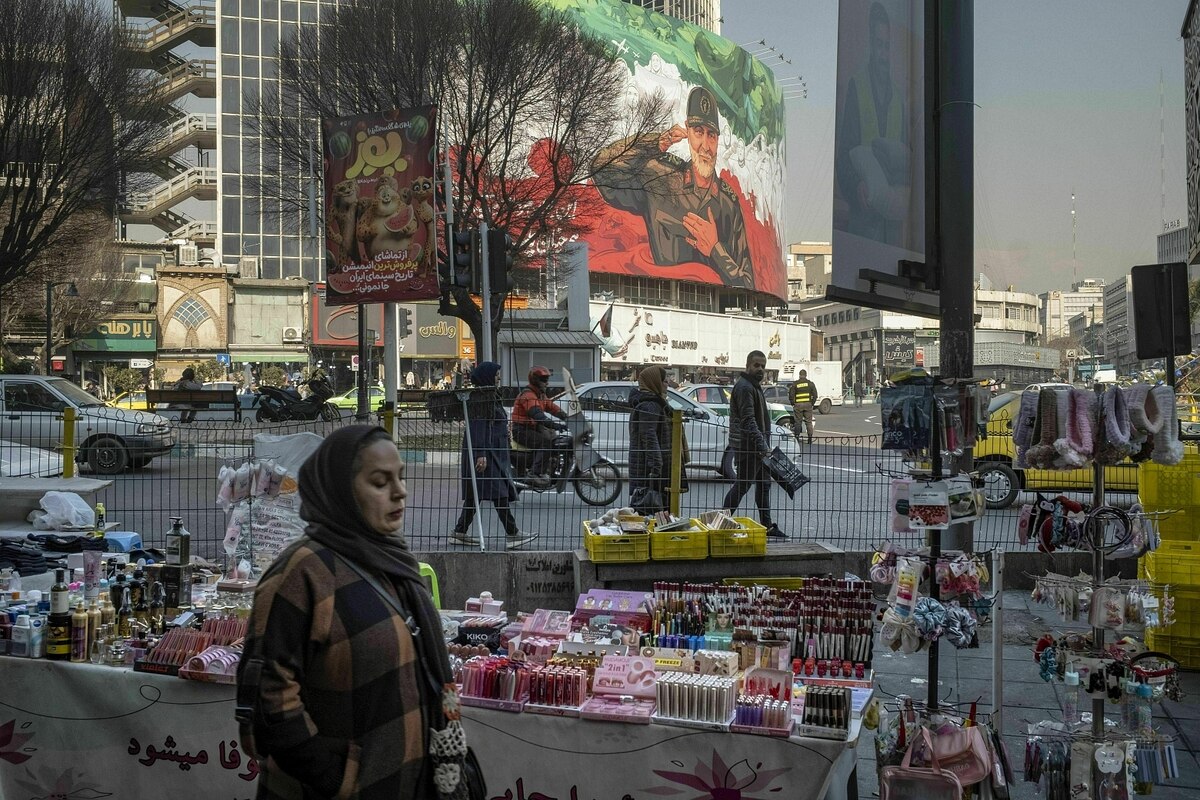
US President Donald Trump called on Americans to leave Iran immediately in view of the explosive situation on Tuesday. At the same time He warned the Iranian leadership in power not to use brutal force against its own people again. If those in power bloodily suppress protests again, there will be consequences: “Help is on the way,” he wrote on the Truth Social platform in the direction of the demonstrators. In addition, in response to a warning from Amnesty International that the Iranian regime could carry out its first execution on Wednesday, he warned that they would “act very decisively.”
However, communication with Iran is currently hardly possible. The internet has been completely shut down for six days. Telecommunications continue to be massively disrupted both within the country and abroad. The few sources who manage to establish contact with the outside world via Starlink connections report that the protests have decreased significantly since Sunday. The regime is said to have used extremely violent measures in numerous cities. Eyewitnesses speak of thousands of people being murdered. They speak of massacres and at the same time express their disappointment at the lack of consequences from abroad.
“They murdered many. We are hostages of this system. Where is the help and support that we were promised?” says a young man from Tehran.
“We need support immediately”
“It doesn’t matter what political opinion you have when human lives are at stake. We need support immediately. We feel surrounded, a massacre is taking place here,” says a middle-aged man from Isfahan.
“We were in Kahrizak. There we saw more than 400 corpses; they no longer fit in the rooms and were lying on the floor of the hall. They are shooting with military ammunition. People were shot right in front of my eyes. We urgently need help,” reports a young man from Islamshahr.

Unmistakable signs: “Death to the dictator” is written on this house wall in Tehran, January 10th
Photo:
ap
Many of the people who have managed to get in touch despite the ongoing internet and communication shutdown describe a similar picture. Their descriptions match, although the contact persons do not know each other, come from different cities and report independently of one another. Everyone is shocked that no support has come from abroad yet. What is striking is that they mostly avoid the term “military intervention”. Instead, they talk about “help,” “assistance,” and “support.”
“Wallah, they are murdering us on a scale you cannot imagine. The streets are empty because they have mingled with demonstrators and shot at crowds,” said another man from Tehran. “We can never overthrow this regime with our bare hands.”
Wallah, they are murdering us on a scale you cannot imagine
A man from Tehran
“There is hardly any protesting now”
The protests, he says, have diminished because of the regime’s brutal reaction: “Nowadays there is hardly any protesting anymore. People are looking for the bodies of their relatives in hospitals. Snipers are on the roofs and are shooting specifically at people.”
Analysts who have been documenting the protests since they began at the end of December also recorded a significant decline. According to an analysis by the American Critical Threats Project (CTP), only seven protests were registered in six provinces on Tuesday.
Even before the news blackout imposed by the Iranian leadership since January 8th, people in Iran had expressed themselves openly both on social media and in conversations. “Many people think: the probability of being shot by the regime is higher than dying in a direct war between the USA and Iran,” a woman from Karaj told taz.
As images of the US arrest of Venezuelan President Nicolás Maduros circulated in Persian-speaking countries in early January, many expressed a desire to see similar images of an arrested Ali Khamenei, the Islamic Republic’s supreme leader, in front of an international court. However, the geopolitically fragile situation in the region with the interests of many different actors is not at all comparable to the situation in Venezuela.
The protests erupted in late December and gained momentum when Kurdish parties called for strikes, initially in response to regime crimes at a hospital in Ilam and other Kurdish cities. Shortly afterwards, Reza Pahlavi, the eldest son of the last Shah, called for nationwide protests from exile on December 8th. Pahlavi is controversial as an opposition figure; the Kurds do not follow him.
It is unclear whether Pahlavi expected that the Kurdish population would reject him so clearly. Also whether he expected the Western states’ lack of strategy. A lot remains unclear at the moment.