

taz: Ms. Lyberth, what language did you grow up with?
Laali Lyberth: Mainly with Danish. This has to do with our colonial history. I was born in 1974, my sisters in 1976 and 1979, my brother in 1982. My sister and I were taught in Danish and only had Greenlandic once a week. In 1979 the first Greenlandic parliament was founded and Greenlandic school classes were set up. My father was thrilled that we were getting our own language back and enrolled my younger sister and brother in the Greenlandic class. So as children we didn’t have a common language in our family. I speak Greenlandic pretty well, but not perfect. At least enough to navigate through the day.
taz: What is the language of your heart?
Lyberth: Greenlandic, 100 percent. When I hear it and speak it, I love it. It is the language in which I feel most at home.

Im Interview: Laali Lyberth
Born in 1974, born and raised in Greenland’s capital Nuuk, then lived in Canada for twelve years and moved to the Vulkaneifel in 2011 with her partner, the photographer Sven Nieder. There she founded the Inuit publishing house for Greenlandic literature in German at the end of 2024.
taz: In which language do the authors of your Inuit publishing house for Greenlandic literature, founded in 2024, write in German?
Lyberth: Some write in both languages and translate themselves into Danish. Others only write in Greenlandic because that is their strongest language, others write in Danish.
taz: How do you find the translators into German?
Lyberth: I don’t have a Greenlandic-German translator. That’s why I have translations from Danish or English. Most Greenlandic books are translated into Danish or English anyway in order to reach a wider audience. It is important to me that the translator translates cultural subtleties appropriately. When it comes to the name Angakkoq, for example, it is important to me that it is translated as shaman. And “iggu” is a complex expression that can mean “attractive”, “cute”, but also empathy with a friend. It can also be found in various meanings in Greenlandic literature. I would like to convey something like that, as a peculiarity of a country that has been colonized for a long time.
taz: How present is Danish colonialism today?
Lyberth: It remains a big topic because Decolonization is a lengthy process. And racist comments about Greenlanders continue to be found in the Danish media. There are still unresolved issues.
taz: Like that the spiral, which Denmark used over 4,000 Greenlandic women in the 1960s and 1970s to curb “too expensive” population growth.
Lyberth: Yes, and the Danish government needed until 2025 to agree excuse. But many Greenlanders were grateful for the apology and recognition of the injustice. There will probably also be compensation payments. As someone who is not affected, I cannot judge whether they are sufficient. In any case, it was time to make the issue public: a Greenlandic publisher has now published a book with reports from affected women. These are very intense, touching texts. I think Greenland was ready for it now.
taz: Would that also be a book for your Inuit publishing house?
Lyberth: Yes. I want to publish as many different things as possible, covering both traditions and current politics. Our first children’s book “Sila” by Lana Hansen, published at the Frankfurt Book Fair 2025, combines Greenlandic myths and legends with the fight against climate change. And at this year’s Leipzig Book Fair we want to publish Maria Bach Kreutzmann’s “Bestiarium Groenlandica”, a handbook about Greenlandic myths, ghosts and animals.
taz: What about contemporary literature?
Lyberth: It will be an integral part of the publishing program. Among other things, I’m planning a book with short stories by Sørine Steenholdt, who writes very grippingly about the atmosphere in modern Greenland.
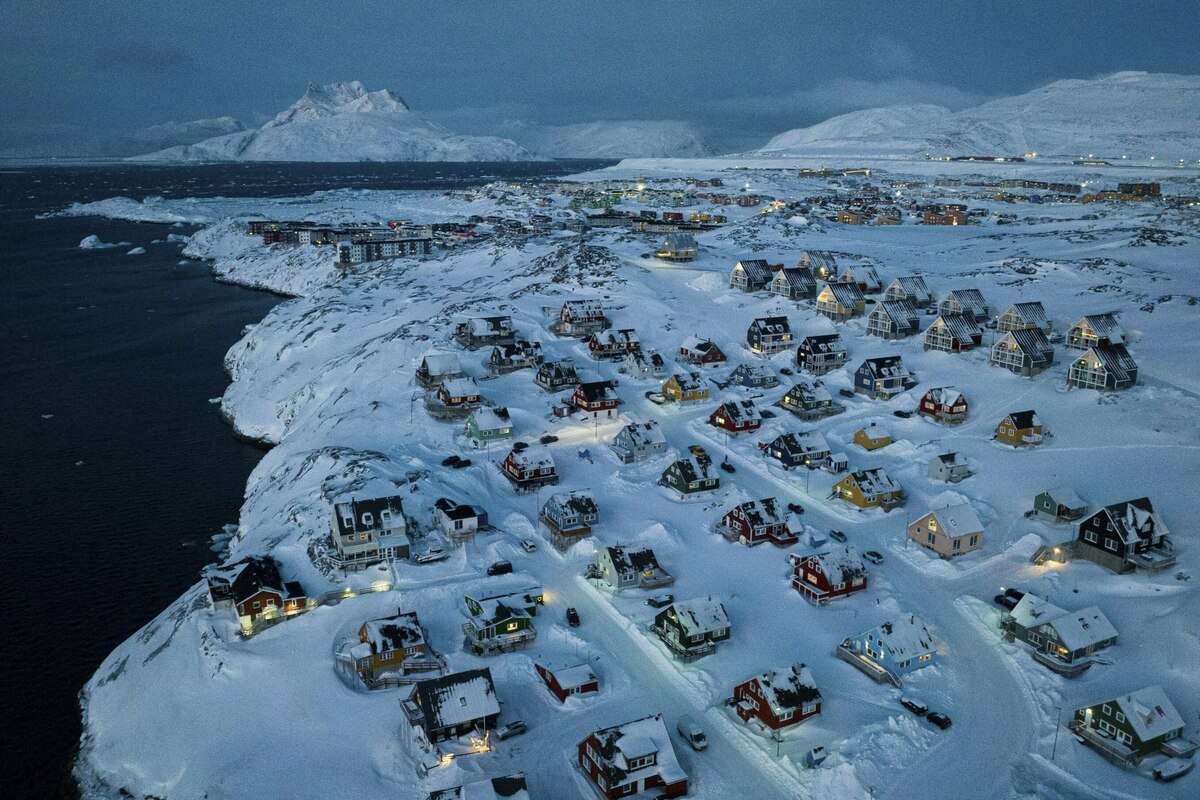
The weather decides. If it snows, we accept it. It’s not a big deal
taz: And what was the atmosphere like in the First Nations women’s shelter in Canada where you worked for a few years?
Lyberth: It was a small women’s shelter in Ottawa and the atmosphere was special – just like in the kindergartens and youth centers and medical centers for First Nations in the city. In the women’s shelter, the women sought healing of their physical and psychological wounds using a mixture of Western and traditional therapies.
taz: Which ones, for example?
Lyberth: There were discussion groups led by grandmothers – a cipher for old wise women – in which they shared their knowledge and practiced a special culture of listening. There was also the traditional drum dance and the powwows – large First Nations gatherings where people celebrated, played music and lived in community.
taz: You yourself also discovered drum dancing there.
Lyberth: Yes. I grew up in Greenland’s capital Nuuk without traditional teachings. When I heard traditional drumming for the first time at a festival in my early 20s, I immediately felt at home. I had tears in my eyes. It’s like my own heartbeat. When I was at the 50th anniversary of the Authors’ Association in Sisimiut in November 2025, I met a drum dancer who took my pulse and said: In ancient times, as a drummer you followed the tempo of your own pulse. Like me, many Greenlanders did not grow up with this tradition and are now rediscovering it.
taz: Does shamanism also play a role again?
Lyberth: Yes, we have some shamans in Greenland. Like drumming, this was forbidden by the Danish church, but continued to be practiced in secret so that the melodies were preserved. And it comes again. My uncle is the shaman Angaangaq, through whom I met my husband, the photographer Sven Nieder, with whom I now live in the Eifel. Sven was commissioned to photograph a fire ritual by shamans from all over the world that my uncle organized. I was there too and that’s how we met. Of course, shamans live modern lives and go to the dentist as normal.
taz: And how is climate change noticeable?
Lyberth: It is progressing, as Nomi Baumgartl, Sven Nieder, Yatri N. Niehaus and I documented in 2012/2013 in the photo and film art project “Stella Polaris* Ulloriarsuaq. The Earth’s Luminous Memory” in photographs of disappearing icebergs and glaciers. The film was screened at the Los Angeles Film Festival in 2017.
taz: How does global warming manifest itself locally?
Lyberth: Very clear. I was there from October to December 2025, and I only wore my huge, knee-high snow boots two or three times in November because there was hardly any snow. A few times I even needed my rain cape, which I usually only wear in Germany – in Greenland in November! When I was young, we used to drive or dog sled on the frozen ocean in the winter. The hunters went out onto the ice to hunt. They’re having a hard time now because you never know for sure what the winter will be like. Three or four years ago it was particularly bad. It there was no ice cream, and the government had to support the hunters financially. The hunting culture is very important for us Greenlanders because we need these local foods.
taz: What is being hunted?
Lyberth: Seals, and in the north and east also polar bears. Also reindeer, musk oxen, whale. The state nature institute decides how much you can hunt so that the ecological balance is maintained.
taz: And then there are the coveted natural resources. How easy are they to access?
Lyberth: I’m not a geologist, but I know that it’s extremely expensive to mine them. Greenland’s icebergs are massive. It’s hard to get from A to B. There are neither highways nor railways. You have to rely on a ship, plane, dog sled or snowmobile. The icebergs lead a life of their own: “Sila” – the title of our book – means both “weather” and “reason”. It is one of the most important words for us. We say: “Sila decides”, meaning: the weather decides. If it snows, we accept it. It’s not a big deal. We are strongly connected to Sila. This is also important on a spiritual level.
taz: For example when it comes to climate change?
Lyerth: Yes, because Sila also means “reason”. If you are sensible, you will take the bike instead of the car or compensate nature in other ways. Sila can be a moral compass and awaken empathy for all the people affected by climate change. We have the power to use our reason: at government and individual levels, in cities and communities, every day.
taz: And what is the mood currently in view of US President Trump’s threats to buy or annex Greenland?
Lyberth: Some worry, others less so. Like everywhere, there are different opinions and feelings. But everyone is happy that our five parties have come together and supported Foreign Minister Vivian Motzfeldt. They say: We don’t want to be Americans, we don’t want to be Danes, we want to be Greenlanders.
taz: The biggest fear is that people talk about the Greenlanders instead of with them.
Lyberth: Yes, and unfortunately Denmark has done that many times in the past. But now I have the impression that they are taking us seriously.
taz: Are you personally worried about your relatives in Greenland?
Lyberth: Not at the moment. People strengthen and comfort each other, also via social media, and even internationally: There is an Inuit in Canada who posts a lot about it and already has a number of followers. I also feel international solidarity there. People – not just the Inuit community – care about each other.