

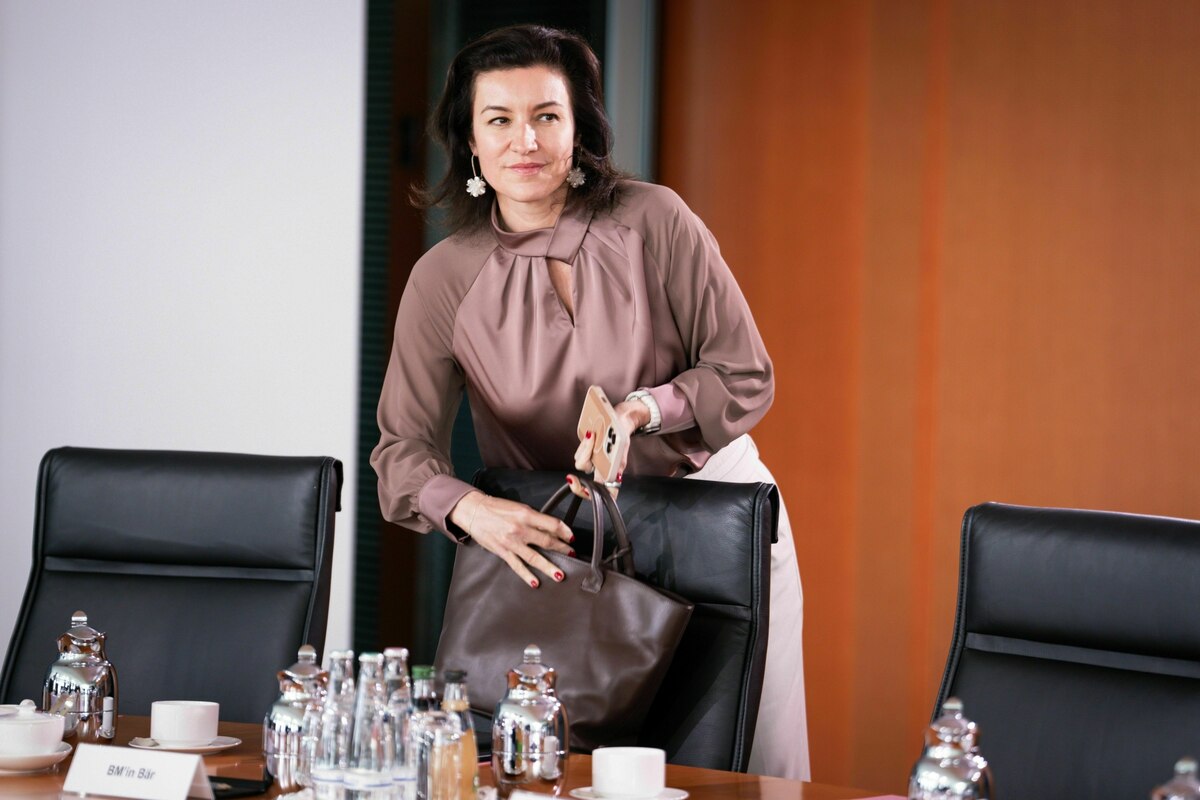
CSU politician and Research Minister Dorothee Bär has admitted several times in interviews since she took office in May that she was given “the most beautiful ministry” that one could imagine within the federal government. Focused on the major challenges that can only be overcome with scientific commitment, the Federal Ministry of Research has always been considered the “Ministry of the Future”.
The German scientific community initially welcomed the new Bavarian leadership with goodwill, including the state secretaries in the second row. The predecessors had largely left the heads of universities and research organizations with a feeling of disappointment.
Bettina Stark-Watzinger, who held office for the FDP for the first time in a long time, acted dogmatically in terms of research policy and saw herself more as the 17th school minister in Germany, but was unable to reach any compromise with her country colleagues. Before that, hotel manager Anja Karliczek from the CDU proved to be the wrong choice.
There was therefore a sense of relief when the 47-year-old CSU politician was nominated to take office. She had been a member of the Bundestag since 2002 and had already worked in the previous federal cabinets as State Secretary in the Ministry of Transport and as State Minister for Digital Affairs in the Chancellery.
In addition, Dorothee Bär entered the new Bundestag as the “first vote queen” because she got 50.5 percent in her Franconian constituency of Bad Kissingen – which, however, was made easier by the fact that the AfD was unable to run a candidacy there.
We don’t expect much from you, but a lot of money to Bavaria, dear Doro. That would be nice.
Markus Söder, Bavarian Prime Minister
Is the Research Ministry moving too close to Bavaria?
However, luck wasn’t always good for her. At the most recent CSU party conference in December, Bär achieved only the worst result of party leader Markus Söder’s five vice-presidents with 74.6 percent.
The Christian Social Party convention also provided a special insight into the “hidden agenda” of the BMFTR in Berlin. When the coalition agreement was formulated in April, it was already noticeable how strong specific Bavarian references had been included in the passages on research and technology policy.
Such as the future ESA lunar control center in Oberpfaffenhofen or the national test track for the “Hyperloop” maglev train. Or the innovation program “High-Tech Agenda Germany”, which was inspired by the Bavarian Agenda of the same name.
Therefore, many science observers were concerned that Bavaria could gain research policy advantages with the new federal ministry. What Bär, of course, denied at every opportunity: she always acts for the entire Federal Republic.
And then Markus Söder said this sentence at the party conference that horrified many on site and in the research community: “We don’t expect much from you, but a lot of money to Bavaria, dear Doro. That would be nice.”
Not only a punch in the stomach of his deputy, but Söder confirmed the initial fears that Bavaria would take advantage. In the meantime, Söder is said to have apologized to Bär for his faux pas, but alarm bells had rung among the federal states’ science ministers.
Germans soon on their way to the moon?
This may also be the reason why the research minister is facing some difficulties in implementing her prestigious High-Tech Agenda project. Bär was able to score points in some areas: The ESA conference of European space ministers in Bremen in November was a great success.
The German contribution of 5.4 billion euros to the budget of the European Space Agency even led to the promise that the first European to fly to the moon would be of German nationality.
There is also a new program in other subject areas, such as promoting the games industry Postcovid research or the “1,000 Heads Plus” recruitment program for foreign scientists, new levers were set in motion by the BMFTR. These initiatives were widely received.
Only with that Hightech-Agenda There has been a standstill for six months. In July, the program to promote six future technologies, including artificial intelligence, quantum and fusion technologies, was presented after a quick initial formulation.
Since then, however, the formulation of the “roadmapping” process for implementing the technology projects has stalled. When the agenda was rolled out in October, along with the Chancellor’s keynote speech on innovation policy, there were no concrete implementation plans on how the planned 18 billion euros for the agenda should be spent over the next four years.
The biggest barricade was set up by the Budget Committee of the Bundestag, which imposed many blocking notices on the BMFTR in December when the 2026 federal budget was passed. Only when the Bär Ministry presented convincing and coherent concepts for the financial titles of the high-tech agenda would the budget parliamentarians release the funds.
Gordian knot in the BMFTR budget?
While everyone around the world is talking about the accelerated race for cutting-edge technologies, Germany is holding on to innovation policy at the federal level. It is possible that the Gordian knot in the BMFTR budget can be cut this week in the Bundestag.
Another “construction site” that the Bear Ministry will be dealing with in the new year is: Keyword “transfer” tied together. This involves transferring results from scientific research into economic and social application.
The fact that Germany has not achieved any significant economic growth for three years is also evidence that something is wrong with the transfer and generation of innovative technologies. Germany is slipping further and further back in international innovation rankings.
A clear mandate for the Ministry of the Future to take new paths here. The only problem is that an “Innovation Ministry” desired by the scientific community failed due to the blockade by Economics Minister Katharina Reiche.
Despite months of negotiations about new departmental layouts, she was not prepared to hand over her responsibilities for industrial research and start-up support. So both houses, the one for research and the one for business, will continue to cook their own soups when it comes to transfer and innovation. Unless there are new guidelines from the Chancellery. But it doesn’t look like that.