

Drop Site is a reader-funded, independent news outlet. Without your support, we can’t operate. Please consider becoming a paid subscriber or making a 501(c)(3) tax-deductible donation today.
Mubarak Musa Adam, a 44-year-old trader, had already left Al-Na’am, a market known locally as Amiet Common Market in Abyei town, the administrative center of the disputed oil-rich region between Sudan and South Sudan, on October 19 when he made the fateful decision to turn back.
“He had prepared his Land Cruiser, loaded it with fuel and goods, and they left the market,” his cousin, Al-Shafie Abdullah, 42, told Drop Site News. “But then he remembered that he still had to pay the rest of what he owed to a Somali trader he worked with in the fuel business. He went back with our cousin to the trader’s shop, and as soon as they got there, the market was hit by a drone.”
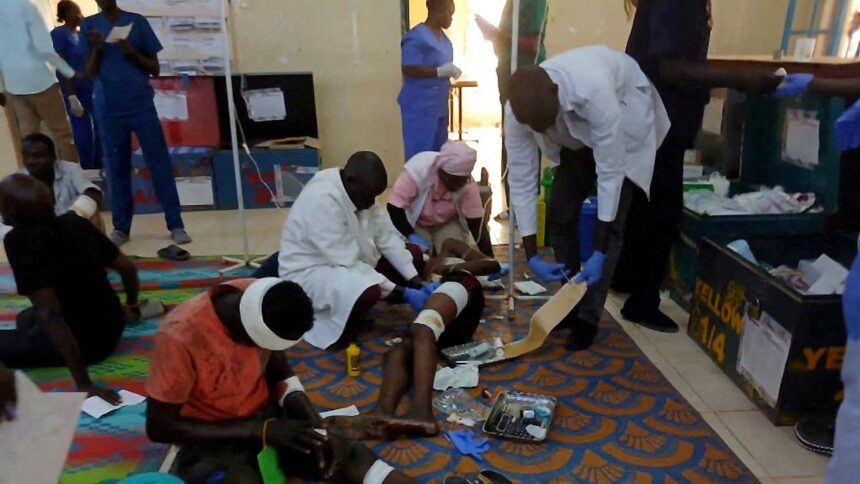
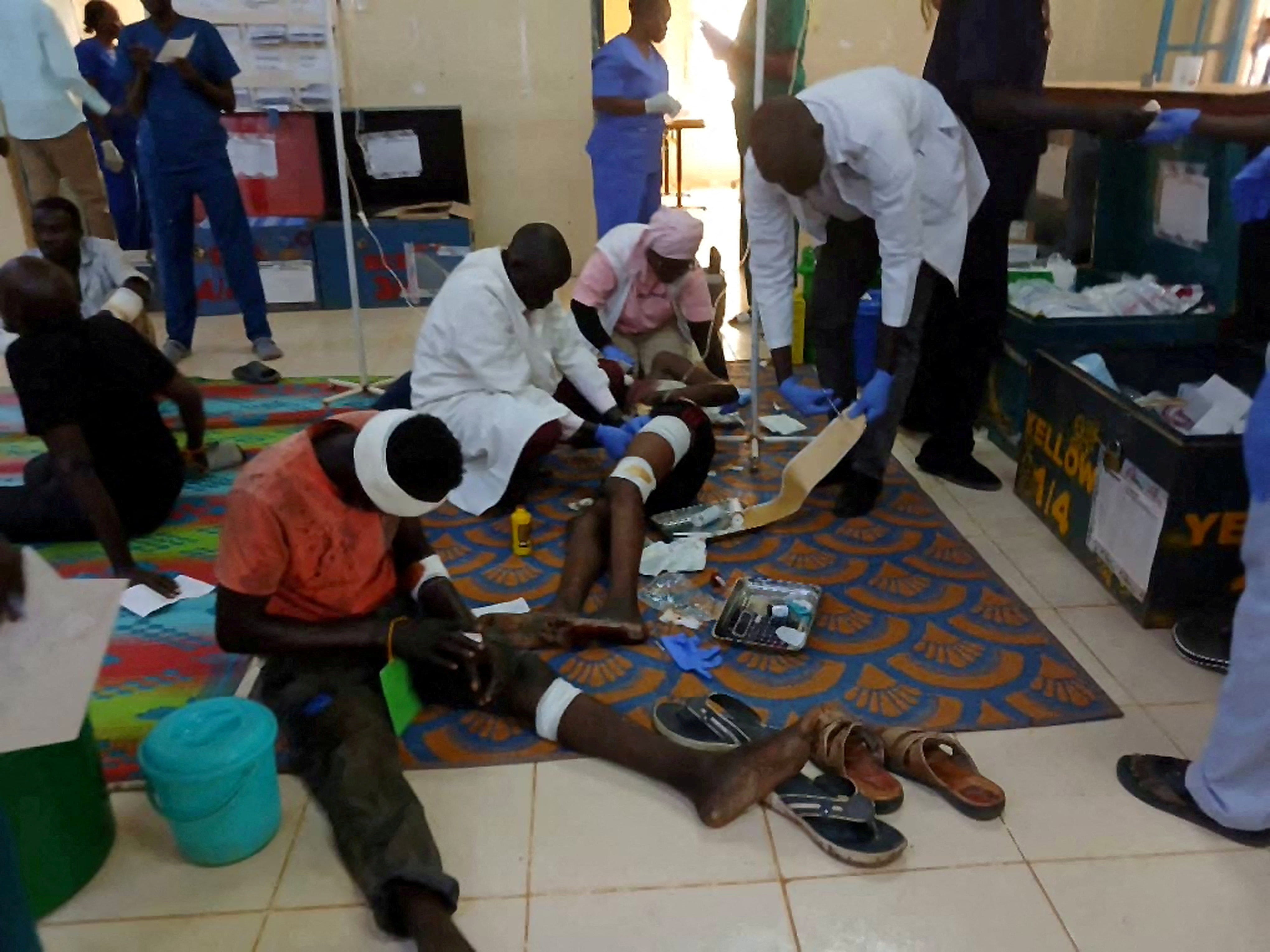
Adam was killed in the attack along with another cousin, Al-Fatih Daoud Adam, the Somali trader, and two of the trader’s brothers. The strikes, which occurred at approximately noon local time, killed at least 152 people and wounded 47, Murtada Ahmed, spokesperson for the Kordofan Observatory, a field monitoring and human rights group, told Drop Site. Ahmed blamed the attack on the Sudanese Armed Forces (SAF).
The same toll was confirmed by Saif al-Din David, director of the Free Pens Human Rights Observatory, which also operates in the Kordovan region. He added that the strikes also burned around 500 shops. ACLED, an organization that monitors violence, put the toll even higher, at between 150 and 220 people and displacing around 8,000.
“Initial findings indicate that a military aircraft deployed an estimated 22 munitions directly into a heavily populated commercial area demonstrating a flagrant disregard for human life and international legal norms,” the Abyei Special Administrative Area (ABAA) said in a statement that also blamed the SAF.
Adam was one of many traders from Nyala, in South Darfur, who worked the route south to the border. “They carried onions and some local products to al-Na’am, and brought back food and fuel to Nyala, Ed Daein, El Geneina, Zalingei, and other localities,” Al-Shafie said. “To me, that moment sums up Mubarak’s honesty and decency,” Al-Shafie added. “He made sure to give people what they were owed before he left this life.”
Al-Shafie was elsewhere at the time of the attack. “Most of the survivors were people who were outside the market when the attack happened, and I was one of them,” he said. “I had malaria and went for tests at the hospital in Abyei. When we came back, we found the bodies of the victims burned and charred: Somalis, Sudanese from the north and from the south, and people from the Dinka and Misseriya, the two communities who share this area.”
Targeting a Vital Crossing
Abyei is a disputed region between Sudan and South Sudan, and its administrative and political status remains contested. The market at Al-Na’am sits in a demilitarized zone that has been administered and monitored by the United Nations Interim Security Force for Abyei (UNISFA) since its formation in June 2011.
“Al-Na’am is one of the vital trade crossings that supply Darfur and Kordofan with food, medicine, fuel, and other basic needs. It is a lifeline for western Sudan,” Murtada Ahmed, spokesperson for the Kordofan Observatory, a field monitoring and human rights group, said. “Targeting it with drones threatens to cut that lifeline and besiege the people of Kordofan with hunger and disease.”
Darfur and Kordofan are under the control of the Rapid Support Forces (RSF), the paramilitary group led by General Mohamed Hamdan Dagalo, known as Hemedti, that has been locked in a brutal conflict for the past three and a half years with the SAF, led by General Abdel Fattah al-Burhan. The war erupted in April 2023 when a long simmering rivalry between the two factions exploded into fighting four years after protesters toppled longtime president Omar al-Bashir following a 2019 popular uprising.
At least 150,000 people have been killed, with some estimates running far higher. Some 14 million have been forced from their homes, more than 4.5 million of them across Sudan’s borders, and the International Rescue Committee says more people face famine in Sudan than in the rest of the world combined.
The RSF and its allies, now organized in the Sudan Founding Alliance with the Sudan People’s Liberation Movement–North and Darfuri armed groups, hold Darfur and large parts of Kordofan, the regions that depend on the border trade. The SAF, whose government is based in Port Sudan, is pushing back into Kordofan, recently capturing towns such as al-Mazroub.
The RSF has been accused in some of the worst atrocities of the conflict, with a UN fact-finding mission concluding earlier this year that the RSF takeover of El Fasher, the capital of North Darfur, in October 2025 “bore the hallmarks of genocide.”
However, the SAF has also committed atrocities of its own, and the UN has found it responsible for direct and large-scale attacks against civilians and other war crimes.
For the past two weeks, the SAF has been conducting a large-scale aerial operation—launching near-daily attacks on RSF-controlled cities in Darfur, Kordofan, and other parts of Sudan—that has killed scores of civilians.
“Although the attack is the first round of drone strikes recorded at Amieth Market since the Sudan war began in April 2023, ACLED data shows that it was not the first instance of political violence at the site during the conflict,” Kelvin Karingithi, South Sudan Analyst at ACLED told Drop Site.
“The region continues to experience intercommunal clashes, mainly involving the local Ngok Dinka and Misseriya communities, with the most recent incidents occurring in and around Amieth Market on September 15 and 16, resulting in at least 40 killed and over 100 injuries,” he added.
The majority Ngok Dinka population has historically favored joining South Sudan, while the seasonal Misseriya pastoralists from Sudan, who are backed by the RSF, have not. The members of the Ngok Dinka and Misseriya communities agreed to reopen the Amiet joint border market on September 28, following its closure due to the two-day clash in mid-September.
“The rivalry between the two communities centers largely on land, grazing, and resources, as well as broader political issues. South Sudan plans to include Abyei in its first elections since independence scheduled for December 22, 2026, despite Sudan’s opposition and the area’s unresolved status,” Karingithi explained.
SAF Attacks in West Kordofan
On October 18, the day before the strike on Al-Na’am market, a drone strike blamed on the SAF hit al-Debab, a town in RSF-controlled West Kordofan, south of Mujlad city. The strike hit a truck stop beside the market, where people gathered at the end of the market day to board trucks and private vehicles back to their villages.
The Sudan Founding Alliance, a political coalition headed by the RSF, described the attack that killed scores of people as a double-tap strike. “The drone first struck a gathering of people preparing to board a truck after attending a funeral gathering. It then waited for others to arrive to help the wounded and struck a second time. The double-tap attack killed 80 people and wounded many more, including children, women and men,” the coalition’s spokesperson Ahmed Tagad Lisan said in a statement.
The same drone also fired a missile at the town of al-Muglad, which landed near a girls’ school and wounded at least two people, he added.
The death toll in the attack on Al-Debab increased to 120 three days later as dozens of critically wounded victims succumbed to their injuries, according to David of the Free Pens Human Rights Observatory, who noted that SAF drone strikes occur almost daily in the region.
Another drone strike in West Kordofan, also attributed to the SAF by the Kordovan Observatory, killed four people of the same family when their truck was hit on a road linking Abu Qalb, in Abu Zabad locality, and Al-Mazroub, a town the army recently captured.
Mustafa Kuku, 28, lost four of his relatives in the attack. His maternal aunt, Hajja Maryam Ali, 82, was sick and could not find treatment near home, so the family set out from Abu Qalb to Al-Mazroub. “The drone hit the vehicle while it was moving,” Kuku told Drop Site. His aunt, Maryam, was killed with her daughters, Um Khamisa Ali, 48, and Al-Tomah Ali, 46, along with her grandson, Fadl al-Sayed, 27. Two of the four other passengers were wounded.
“Fadl was a groom about to be married. His wedding was set for December,” Kuku said. “They were a simple family: two sisters who went with their mother and her grandson, and they were all killed together.”
The truck, a Nissan cargo vehicle known locally as a “lorry,” belonged to Al-Tomah’s husband, Habiballah Mohamed Ali, who is now left with their two sons, Mohamed, 16, and Ahmed, 8.
“In the first two years of the war we could still farm, but in the last two years the front lines reached us, and the drones fly over civilians’ heads day and night,” Kuku said. “The family went out looking for treatment and survival, and the journey ended with all of them dead.”
This article is published in collaboration with Egab.